

Last updated October 30, 2026
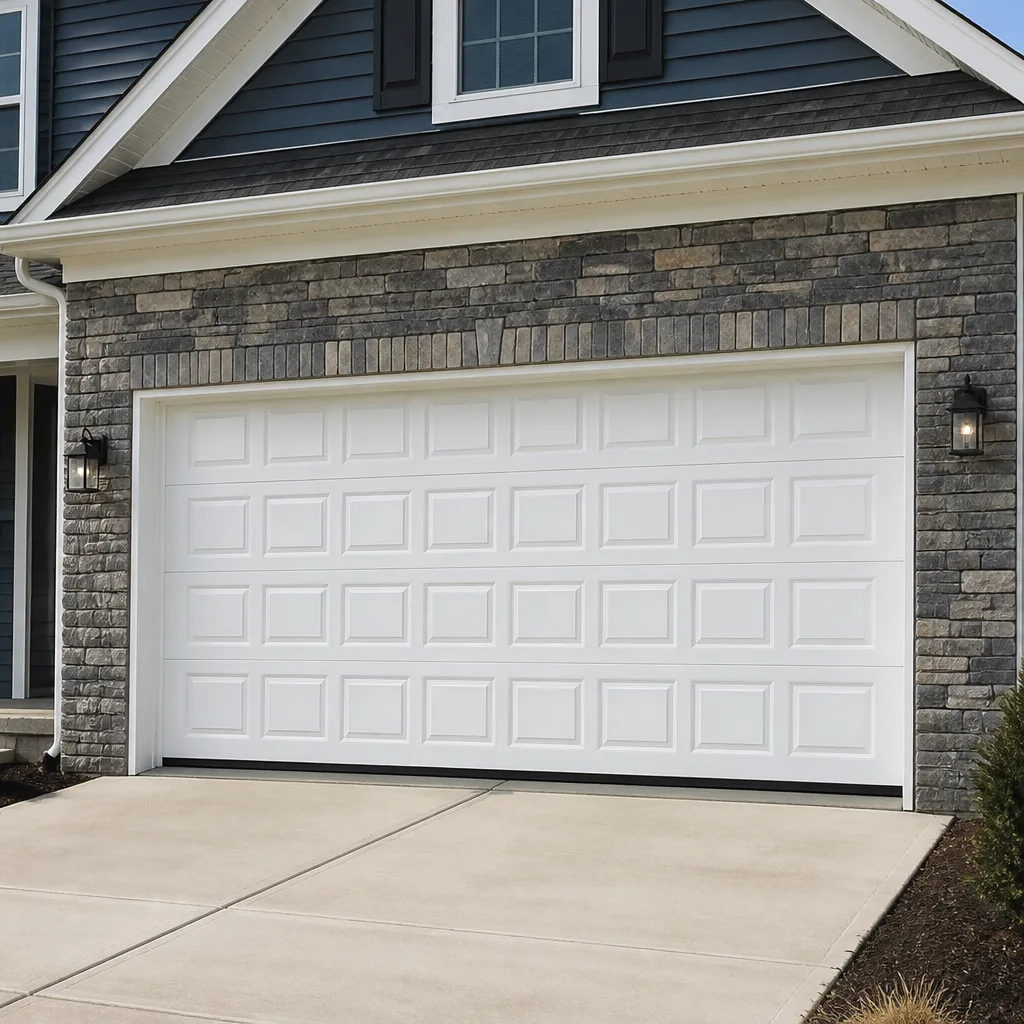 Raised-panel steel
 Carriage house
 Modern flush
 Full-view glass
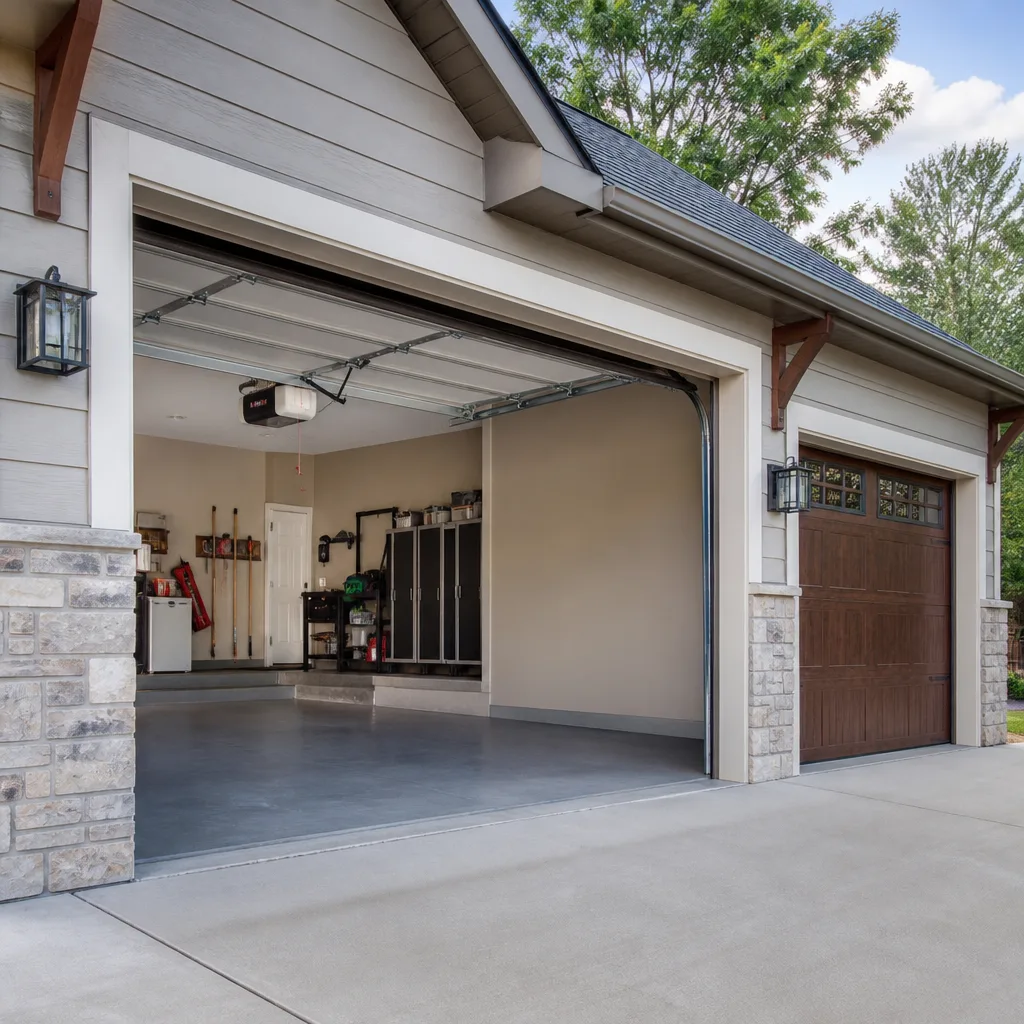 LiftMaster openers
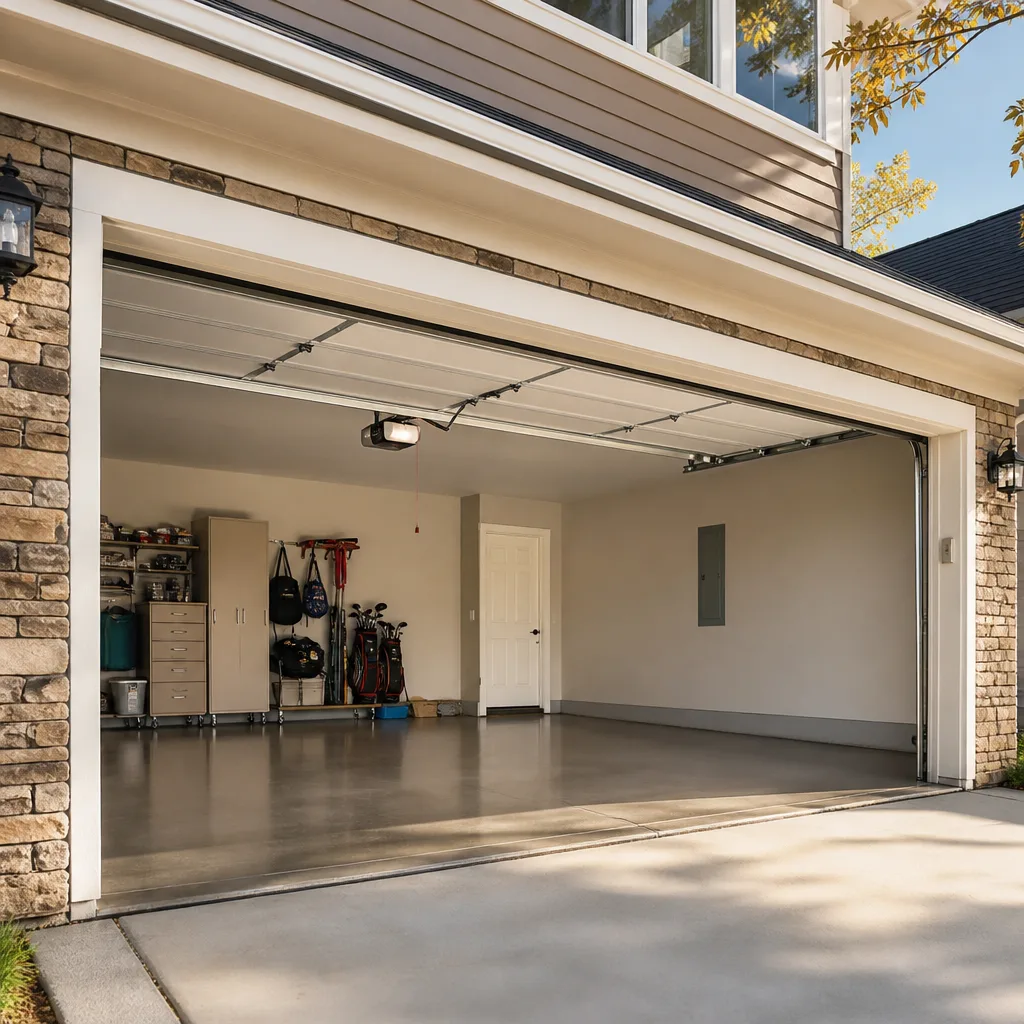 Chamberlain openers
Full 25-point door and opener safety check with every visit - springs, cables, rollers, tracks, and your LiftMaster or Chamberlain opener included
You get a price before we start. It does not change when the truck arrives.
Get your free estimateSeasonal Garage Door Care for Brushy Creek: Year-Round Homeowner’s Guide
Brushy Creek averages fewer than ten freezing days per year, which is exactly why most homeowners are unprepared when one of them seals their door to the ground at 7 a.m. A garage door that worked flawlessly through spring, summer, and fall suddenly refuses to budge, and the reason usually traces back to a maintenance gap most seasonal guides never mention. This guide is built around the specific climate realities of Williamson County: two danger windows (summer heat stress and winter ice events) and two maintenance windows in between. We’ll walk you through exactly what to check, when to check it, and why ordering your tasks around Brushy Creek’s actual weather patterns will save you hundreds in avoidable repairs.
Styles & brands we work with
Quick Answer
Seasonal garage door care in Brushy Creek means concentrating your biggest maintenance effort in October (fall prep) and April (spring storm prep), while running quick monthly checks on balance, lubrication, and weatherstripping. The two critical danger periods are sustained 95°F+ heat in July and August, which affects torsion spring tension and opener circuit boards, and the rare but damaging ice events from December through February. Homeowners who complete two focused maintenance sessions per year spend significantly less on repairs than those who wait for a failure.
Table of Contents
- Why Brushy Creek’s Climate Demands a Different Maintenance Calendar
- Fall: The Primary Maintenance Window (October)
- Winter Ice Events: The 7 A.M. Door Seal Problem
- Spring Storm Prep: Seals and Track Alignment (April)
- Summer Heat Stress: Torsion Springs Above 95°F (May-June Prep)
- Year-Round Opener Care Through 60°F Thermal Swings
- The 10-Minute Monthly Safety Check
- Common Mistakes to Avoid
- When to Call a Professional
- Frequently Asked Questions
- The Bottom Line
Why Brushy Creek’s Climate Demands a Different Maintenance Calendar
Most garage door maintenance guides are written for places with four distinct seasons. Brushy Creek does not have four seasons. It has two long stretches of relatively mild weather punctuated by two brutal extremes: a summer that pushes garage interiors past 110°F and brief winter freezes that catch everyone off guard. This pattern changes what actually fails on your door.
In northern climates, the dominant garage door problems are snow load on the header, road salt corrosion on the track hardware, and extreme cold thickening the grease in the rollers. None of those apply here. What we see in Brushy Creek instead is weatherstripping adhesion during ice events, heat-related lubrication breakdown in July, and thermal expansion that gradually loosens track brackets over several seasons. The failure modes are different, which means the maintenance calendar has to be different too.
Think of the year in four blocks:
- October: The primary maintenance month, before the first freeze hits
- December-February: Ice event watch, focused on seal care and opener responsiveness
- April: Storm prep before the heaviest rain months of May and June
- July-August: Heat stress monitoring, with spring and opener checks in the morning before garages bake
If you only complete two sessions per year, make them October and April. That cadence aligns with the two maintenance windows when temperatures are comfortable enough for a thorough inspection and the problems of the coming season are predictable. This guide covers what to do in each block, plus the monthly checks that prevent small issues from becoming breakdowns. For homeowners who want a full system evaluation rather than a self-inspection, our Garage Door Repair in Brushy Creek service covers every component from panels to track hardware.
Fall: The Primary Maintenance Window (October)
October is the single most important month for garage door maintenance in Brushy Creek. The summer heat has just finished stressing every metal component, and the first freeze of winter is only weeks away. This is the window to catch heat-related damage before cold weather compounds it.
Here is the complete October task list, in order of importance:
- Test the balance. Disconnect the opener (pull the red release handle) and manually lift the door halfway. A properly balanced door stays in place. If it drops or rises, the torsion springs are wearing out. This is a critical check because a door that drops fast in October will be dangerously heavy when the cold contracts the metal come December.
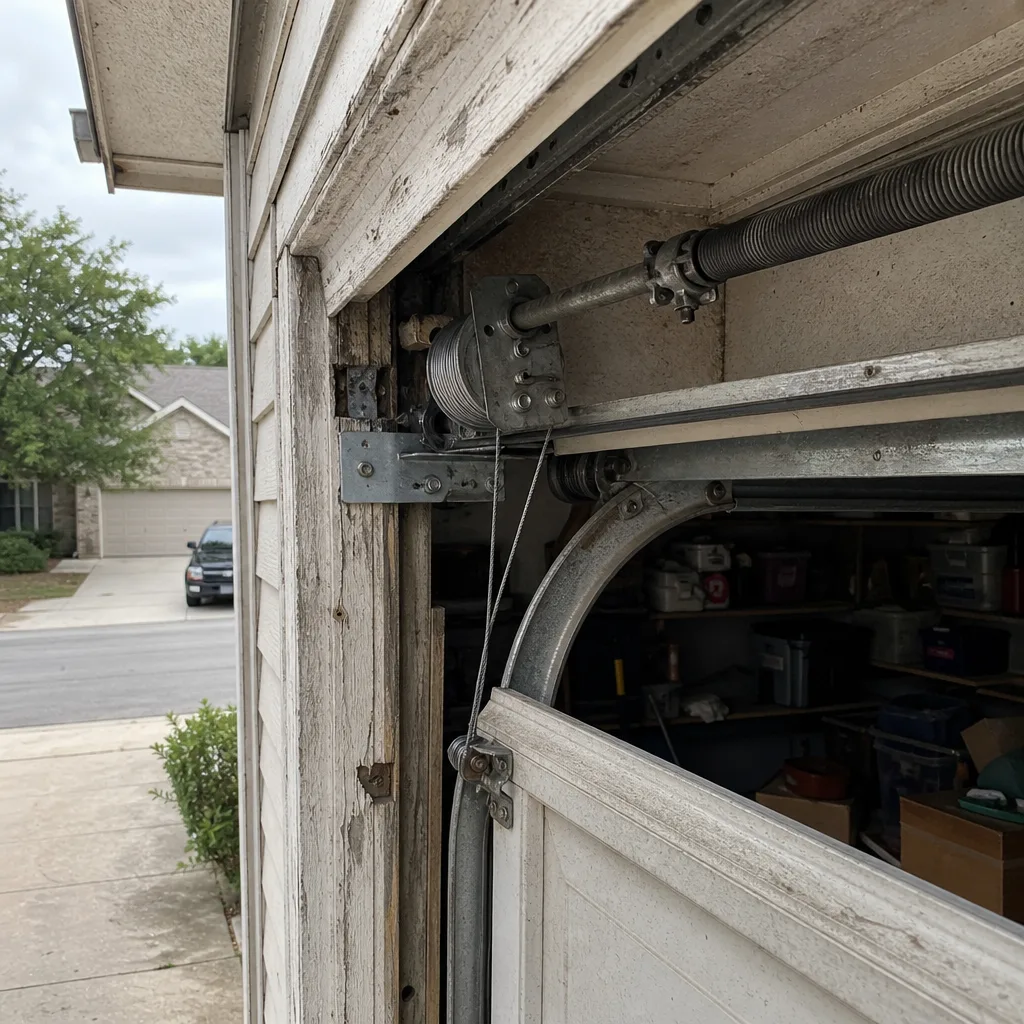
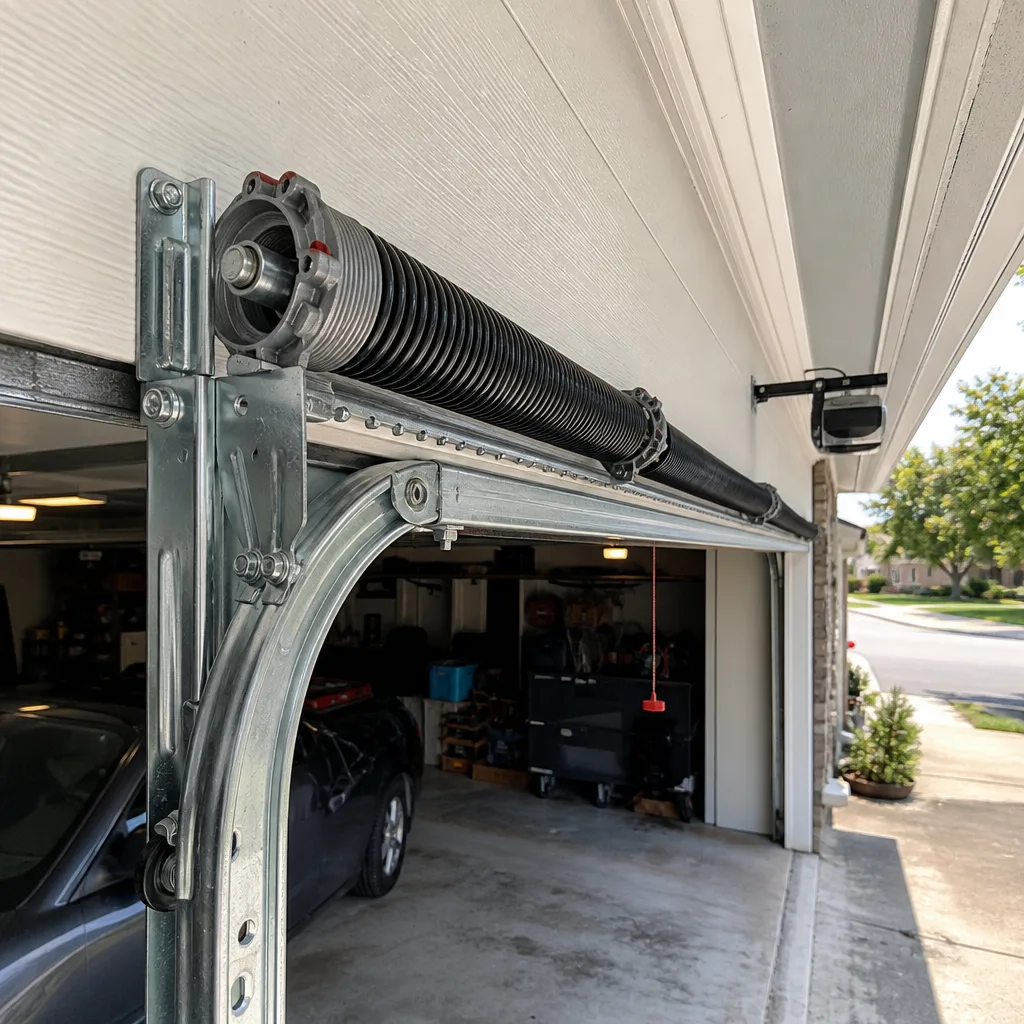
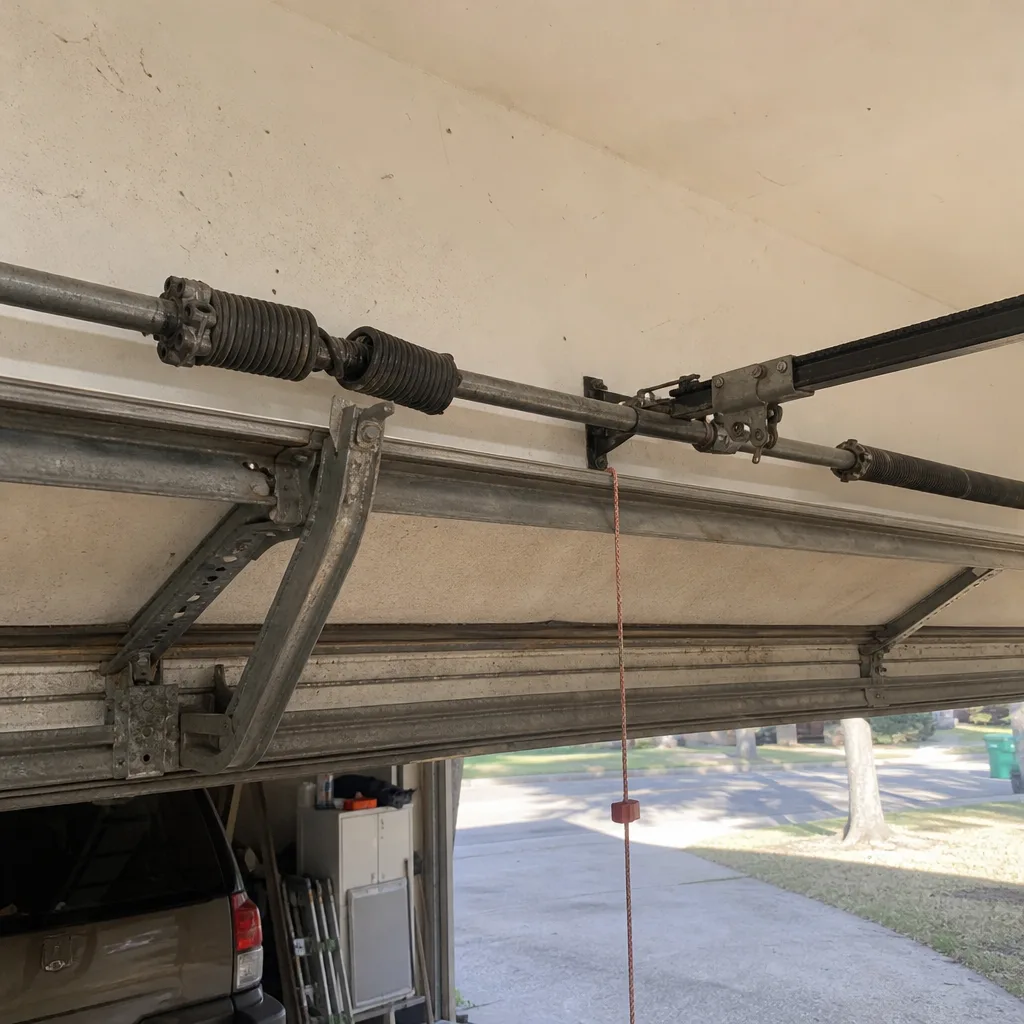
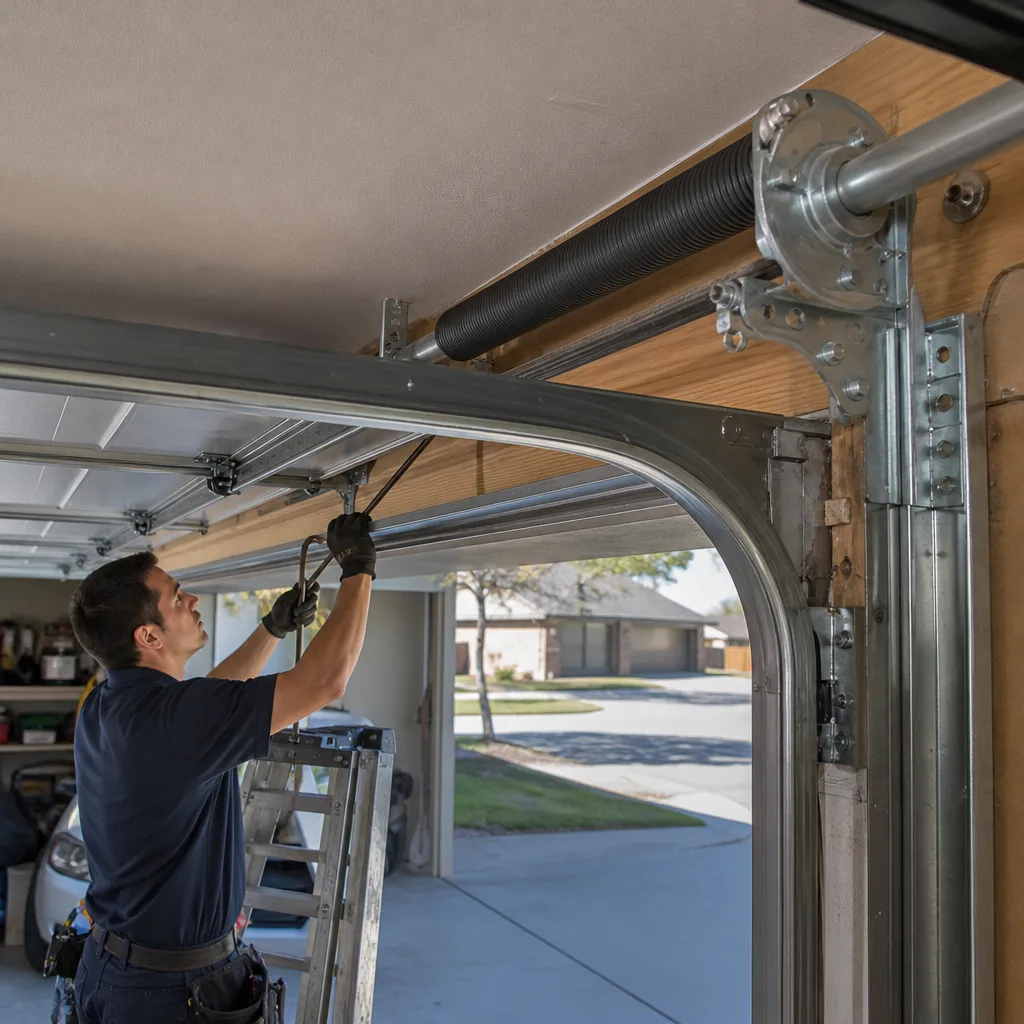
- Inspect torsion springs for gaps or corrosion. Look at the spring coil itself. Any visible gap between coils, any rust, or any deformation means the spring is approaching failure. Do not attempt to adjust or replace torsion springs yourself. These springs hold hundreds of pounds of tension, and a failure during adjustment can cause severe injury. This is a job for a technician with the right tools and training.
- Clean and lubricate rollers, hinges, and tracks. Use a silicone-based lubricant, not WD-40 or grease. Grease traps dust and debris, turning into a grinding paste by spring. Spray the roller stems, the hinge pins, and the track where the rollers travel. Wipe away any excess.
- Check weatherstripping along the bottom of the door. This is the single most important component for winter ice protection in Brushy Creek. Replace any section that is cracked, flattened, or pulling away from the door. A complete seal is what prevents the door from freezing shut.
- Tighten track brackets and hardware. Brushy Creek’s clay soil expands and contracts with moisture, and over time this shifts the framing slightly. Loose track brackets let the track angle drift, which causes the rollers to bind. Check all bolts.
- Test the auto-reverse safety feature. With the door closing, place a 2×4 on the ground in the door’s path. The door must reverse within two seconds of contact. If it does not, adjust the opener’s force settings or call a professional.
If the October check reveals a spring problem or significant track misalignment, scheduling the repair before December is cheaper and easier than waiting for an ice morning when the door will not move at all. Goldleaf Garage Door Repair is familiar with the spring systems on every major residential brand, including Clopay and Amarr doors commonly installed in Brushy Creek homes. For full-system issues that go beyond a single component, our Garage Door Installation in Brushy Creek service handles complete door replacement, always with the correct hardware spec for the existing opening.
Winter Ice Events: The 7 A.M. Door Seal Problem
Central Texas ice behaves differently than northern ice. In Brushy Creek, a winter storm often arrives as rain, then the temperature drops below freezing overnight. The result is a thin film of ice that forms between the rubber weatherstripping and the concrete floor. When you open the door, the seal rips. Or worse, the door does not open at all because the seal is frozen solid to the slab.
This is not a northern-weather problem. In Minnesota, the air is dry, and snow does not create the same water-to-ice seal. In Brushy Creek, the precipitation is liquid before it freezes, and that is what causes adhesion. The fix starts long before the storm arrives.
Here is what to do during the December through February window:
- Apply a silicone lubricant to the bottom seal before a forecast freeze. A thin coat keeps ice from bonding to the rubber. Do not use petroleum-based products (Vaseline, WD-40), which degrade the rubber over time.
- Clear standing water from the garage floor before a freeze. Water pooling at the threshold is the direct cause of seal adhesion. After the car comes in wet, squeegee or mop the affected area if a freeze is forecast.
- Avoid forcing the opener if the door will not move. A seized seal will resist the opener, and the opener will keep pulling until something fails: the belt, the chain, the gear, or the seal. If the door refuses to open on an ice morning, gently break the seal with warm (not boiling) water at the threshold, then operate the door manually first.
- Keep the opener’s force settings correct. If the opener is set too high, it will not reverse when the frozen seal resists. This is how a $15 seal replacement becomes a $300 opener gear replacement.
The long-term fix for freeze-prone doors is a properly fitted bottom seal with no gaps, and that goes back to the October checklist. We have also seen doors in Brushy Creek benefit from a threshold seal installed on the concrete itself, which creates a raised lip that water cannot pool against. The important thing is to address the seal before the first freeze, not during the freeze. Our Garage Door Repair in Brushy Creek team replaces weatherstripping year-round and can match the correct profile for any door brand.
Spring Storm Prep: Seals and Track Alignment (April)
April is the second maintenance window. May and June are consistently the heaviest rain months in Williamson County, and Brushy Creek’s position along the creek means some homes deal with wind-driven rain coming at the garage door horizontally. A bottom seal that survived winter may be marginal for what spring brings.
The focus in April is water protection and structural alignment:
- Inspect the bottom seal for winter damage. Ice adhesion can rip small tears in the seal that you will not notice until a spring storm drives water straight inside. Run your hand along the full length of the seal. Replace if any section is torn, flattened, or no longer makes full contact with the floor.
- Check the track alignment on both sides. Measure the distance from the track to the door edge at three points on each side. The gap should be consistent. After a winter of thermal cycling, brackets often loosen slightly, throwing the track out of parallel by an eighth of an inch or more. This causes the door to shake or stutter on the way up.
- Verify the door’s weather seal flaps (the side and top seals) are intact. Oak pollen, dust, and winter winds in the Brushy Creek area will strip away any dry-rotted rubber. These side seals are what keep rain from blowing in around the door’s edges.
- Inspect the header seal. The top of the door is the most overlooked entry point for wind-driven rain. If light leaks through above the door when it is closed, the header seal is shot.
- Lubricate all moving points for the coming heat. Use a light silicone spray. This is preventive: lubrication breaks down faster in heat, so the April coating is what carries you through July.
If the door shows any hesitation, grinding, or uneven movement during the April check, address it now. Repairs are faster and less expensive during the spring window than during the peak summer demand when every garage door company in the region is running a week out. For track issues, alignment problems, and seal replacement, the technicians who handle our Garage Door Repair in Brushy Creek calls use the correct replacement hardware for the door brand already installed, rather than forcing a universal part that will slip again in six months.
Summer Heat Stress: Torsion Springs Above 95°F (May-June Prep)
The May heat threshold is a real thing for garage door springs. Sustained daytime temperatures above 95°F in Brushy Creek mean the garage interior can reach 115°F or higher, especially in west-facing garages with no ventilation. That heat does two things to a torsion spring: it accelerates the metal fatigue cycle and it thins the protective oil film on the spring coil.
Torsion springs are rated for a finite number of open-close cycles, typically 10,000 for a standard spring. Heat stress effectively consumes those cycles faster because the metal expands and contracts daily, and the spring works harder when the door is hotter. It is not unusual in Brushy Creek for a spring rated for 10,000 cycles to fail well before that mark if it is exposed to years of intense summer heat without lubrication.
What to check before summer peaks:
- Look for rust or discoloration on the spring coil. Dry, untreated metal rusts faster in the humid months before summer, and rust is the starting point for spring fractures.
- Run the door through a full cycle and listen. A rough, grinding sound or a “clunk” near the top of the opening arc often means the spring is losing tension. A healthy spring should produce a smooth, even sound on both open and close.
- Check the gap between coils. Coils should touch. Any visible gap means the spring has deformed and is in the late stages of its life.
- Lubricate the spring. A light coat of silicone spray on the coils once in May reduces friction and heat buildup. Do not use grease.
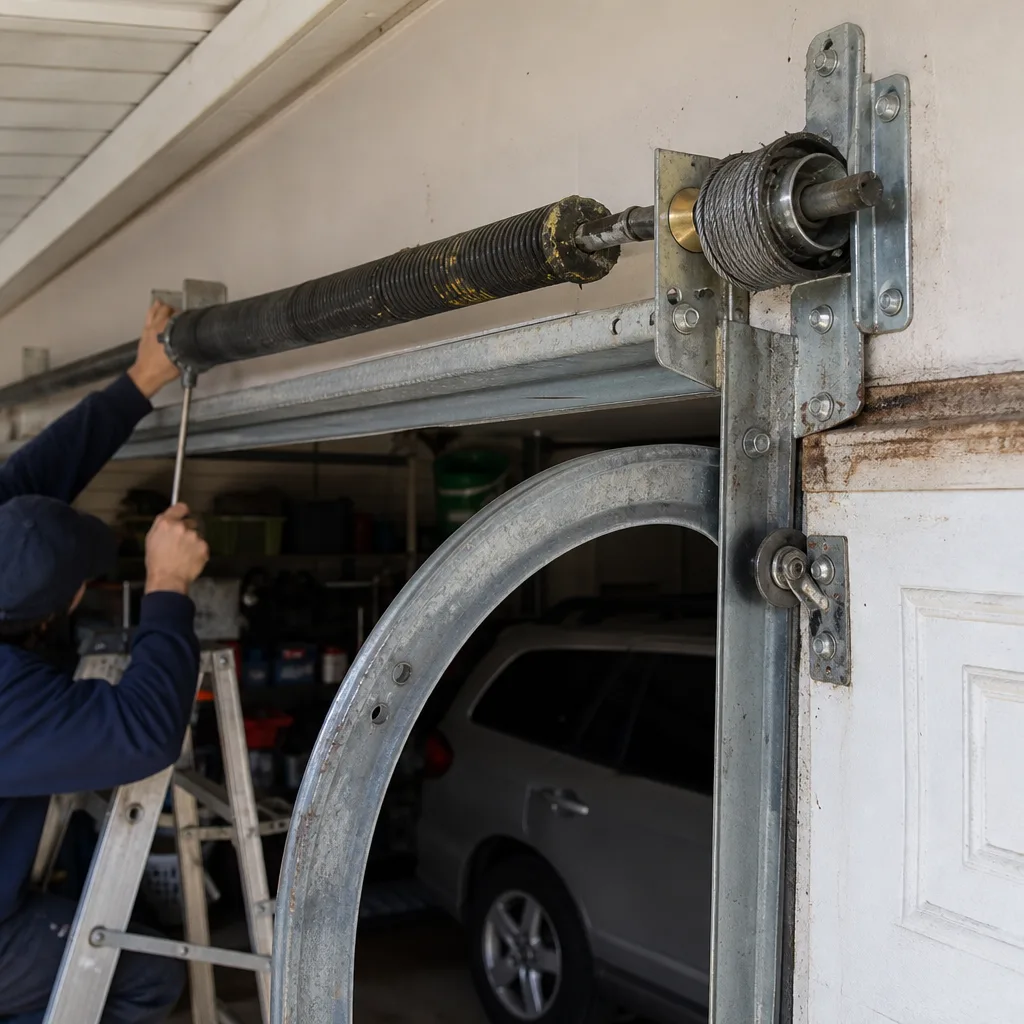
This is the section where we have to be direct: torsion springs are dangerous. They hold hundreds of pounds of loaded tension, and when a spring lets go, the release is instantaneous and can seriously injure anyone standing nearby. We mention this not to alarm you but to keep you from attempting a spring repair or adjustment with a YouTube guide. In our experience, a homeowner who replaces their own weatherstripping is fine. A homeowner who attempts their own torsion spring is not. The job takes a professional with the correct winding bars, the correct replacement spring, and the experience to match the spring to the door’s exact weight and height. That is what we do every day on doors from Raynor, Amarr, and every major brand found in Brushy Creek garages.
Year-Round Opener Care Through 60°F Thermal Swings
The garage interior in Brushy Creek swings 60°F between a February night and an August afternoon. That thermal cycling is hard on garage door openers, particularly the circuit boards and the plastic gears in the operator head. Components expand and contract daily, and solder joints on circuit boards eventually develop micro-fractures that cause intermittent opener failures.
Opener problems in this climate tend to present in one of three ways:
- Intermittent non-response: The opener works most of the time but occasionally ignores the remote. This is often a circuit board failure brought on by thermal cycling. The fix is a board replacement, not a new remote battery.
- Grinding or slipping during operation: The plastic drive gear inside the opener wears out from heat and age. If the opener motor runs but the door moves slowly or not at all, the gear is stripped.
- False safety reversal: The opener reverses mid-cycle for no apparent reason. In a thermally stressed opener, this often traces to a failing logic board or a misaligned safety sensor.
- Open and close the door once, and listen. The sound of a healthy door is smooth and even. A grinding or metallic scraping sound means a roller or hinge is failing.
- Watch the door move. It should not shake, hesitate, or jerk. Any of those movements indicates a track or balance issue.
- Look at the springs. No visible gaps, rust, or deformities. If anything looks wrong, call a professional. Do not touch.
- Check the weatherstripping. The bottom seal should touch the floor evenly across the full width. The side seals should not be folded or torn.
- Test the auto-reverse. Place a roll of paper towels on the floor under the open door and close it. The door should reverse when it touches the roll. That ten-second test protects every person and pet in your household.
- Check the safety sensors. The two sensors near the floor on either side of the door should have steady lights. If one is blinking or dark, the door may not close properly.
- Skipping lubrication because “it still works.” Lubrication is preventive, not corrective. By the time a roller or spring is squeaking, the wear has already started. Brushy Creek’s summer heat burns through lubricant faster than most climates, so skipping the May and October lubrication sessions means you are effectively running the door dry for six months at a time.
- Using WD-40 as a lubricant. WD-40 is a solvent and water displacer. It strips lubricant and leaves metal surfaces dry. Use a silicone-based spray designed for garage doors.
- Ignoring a slow or hesitant door. A door that pauses or struggles is sending you a signal. The longer you wait, the more components get pulled into the failure. A sticking door is often a balance issue, and the opener is compensating by working harder, which shortens its life.
- Replacing only the broken spring. Torsion springs wear at roughly the same rate. If one breaks, the other is close behind. Replacing both at once costs more up front but avoids a second service call within a year. This applies to any door in Brushy Creek that has been through more than a few Central Texas heat cycles.
- Painting over weatherstripping or hardware. Paint dries out rubber seals and can gum up track hardware. When repainting the garage, tape off the seals and any moving parts.
- Attempting torsion spring work without training. We said it before and we’ll say it again: do not touch the springs. The force stored in a loaded torsion spring is enough to break bones or worse. This is the one component where DIY is never worth the risk, no matter how many YouTube videos convince you otherwise.
The care routine that keeps an opener healthy in Brushy Creek is simple: keep the opener housing clean and dust-free (a can of compressed air through the vents once a year), verify the safety sensors stay aligned after any door or track service, and replace the backup battery if the opener has one. Most homeowners never touch their opener until it fails, and by that point the failure is usually cascading: a worn gear puts extra load on the motor, which draws more current, which overheats the board. The fix becomes a full opener replacement instead of a single gear.
Goldleaf’s distinctive service area is opener repair. Many door-repair companies will send you to a separate opener specialist, which means two appointments, two diagnoses, and two bills. We work on the opener brands already installed in most Brushy Creek homes: LiftMaster, Chamberlain, Genie, and Craftsman. Our Garage Door Opener Repair in Brushy Creek service diagnoses the full smart-home and mechanical side of the system in one visit. The problem could be the opener itself, or it could be a door balance issue that is overloading the opener. One call, full system.
The 10-Minute Monthly Safety Check
Seasonal maintenance is the heavy lifting, but a monthly visual inspection catches problems before they become emergencies. This is a ten-minute check you can do on a weekend morning, and it applies year-round in Brushy Creek.
This monthly check is the difference between a $150 repair and a $900 emergency call. It costs you ten minutes. It catches the loose bolt before it bends the track, the dry roller before it grinds the track surface, and the seal tear before a rainstorm soaks your garage.
Common Mistakes to Avoid
When to Call a Professional
Some maintenance tasks are homeowner-friendly: lubrication, cleaning, seal inspection, visual checks. Others are not. Call a professional when you see a visible gap in a torsion spring, when the door is off-balance and will not stay in place when manually lifted, when the track is visibly bent or loose, when the opener produces a grinding sound, or when the door has come off its track entirely. These situations involve stored mechanical force or structural misalignment, and the safe fix requires training and specialized tools. Goldleaf Garage Door Repair offers free estimates in Brushy Creek. Call (855) 412-0407 and a technician will diagnose the issue, explain what is needed, and quote the work before anything is done.
Frequently Asked Questions
Twice a year is the minimum for Brushy Creek’s climate: once in April before the summer heat and once in October after the heat breaks. Use a silicone-based spray on the rollers, hinges, springs, and track. Heavy-use doors (three or more cycles per day) benefit from a third lubrication in July. Call us at (855) 412-0407 if you are unsure which lubricant to use or want the job done as part of a full seasonal service.
Brushy Creek’s winter storms usually arrive as rain before temperatures drop below freezing overnight. The liquid water pools at the bottom seal and freezes into a bond between the rubber and the concrete. Prevent it by keeping the seal clean and lightly coated with silicone before a forecast freeze, and by clearing standing water from the threshold. If your seal is damaged or worn, a replacement is the permanent fix.
A seasonal tune-up and inspection in Brushy Creek typically runs between $85 and $165, depending on the door type and what needs adjusting. Parts like weatherstripping, rollers, or hinges are quoted separately before any work begins. We give you the full price up front before we touch the door. Call (855) 412-0407 for an exact quote.
Most of it, yes. The October list (balance test, visual inspection, lubrication, weatherstripping check, hardware tightening, auto-reverse test) is designed for the average homeowner. The one exception is torsion spring work: any spring repair or replacement is a professional job. If your October check reveals a spring issue, call us before attempting anything.
In Brushy Creek, the most common outcomes we see are: a frozen or torn bottom seal during a winter ice event, a stripped opener gear during the summer heat, and a snapped torsion spring at the least convenient time. These failures are almost always preventable with the seasonal routine described in this guide. The repair bill after a cascade failure is typically three to five times the cost of maintenance.
We work on LiftMaster, Chamberlain, Genie, Craftsman, Raynor, and the other major residential brands installed in Brushy Creek homes. Our technicians are trained on the specific electronics and mechanics of each brand rather than applying a one-size-fits-all approach. Garage Door Opener Repair in Brushy Creek covers everything from wall-button switches to smart-home integration.
The Bottom Line
Seasonal garage door care in Brushy Creek is not complicated once you know the calendar: October for fall prep, April for storm prep, and a ten-minute monthly check in between. The specific threats of this climate (heat-stressed springs, ice-adhered seals, thermal cycling on openers) are all predictable and largely preventable. The homeowners who spend the least on garage door repairs are the ones who do the two focused maintenance sessions per year and act on what they find. Our Goldleaf Garage Door Repair home page covers the full range of repair and installation services available in the Brushy Creek area. If your seasonal check turns up anything concerning, call (855) 412-0407 for a free estimate. We work on the brand already in your garage, and we fix it right the first time.
Written by the team at Goldleaf Garage Door Repair, serving Brushy Creek since 2012.
See the difference
 Before
 After
 Before
 After
 Before
 After