

Last updated October 30, 2026
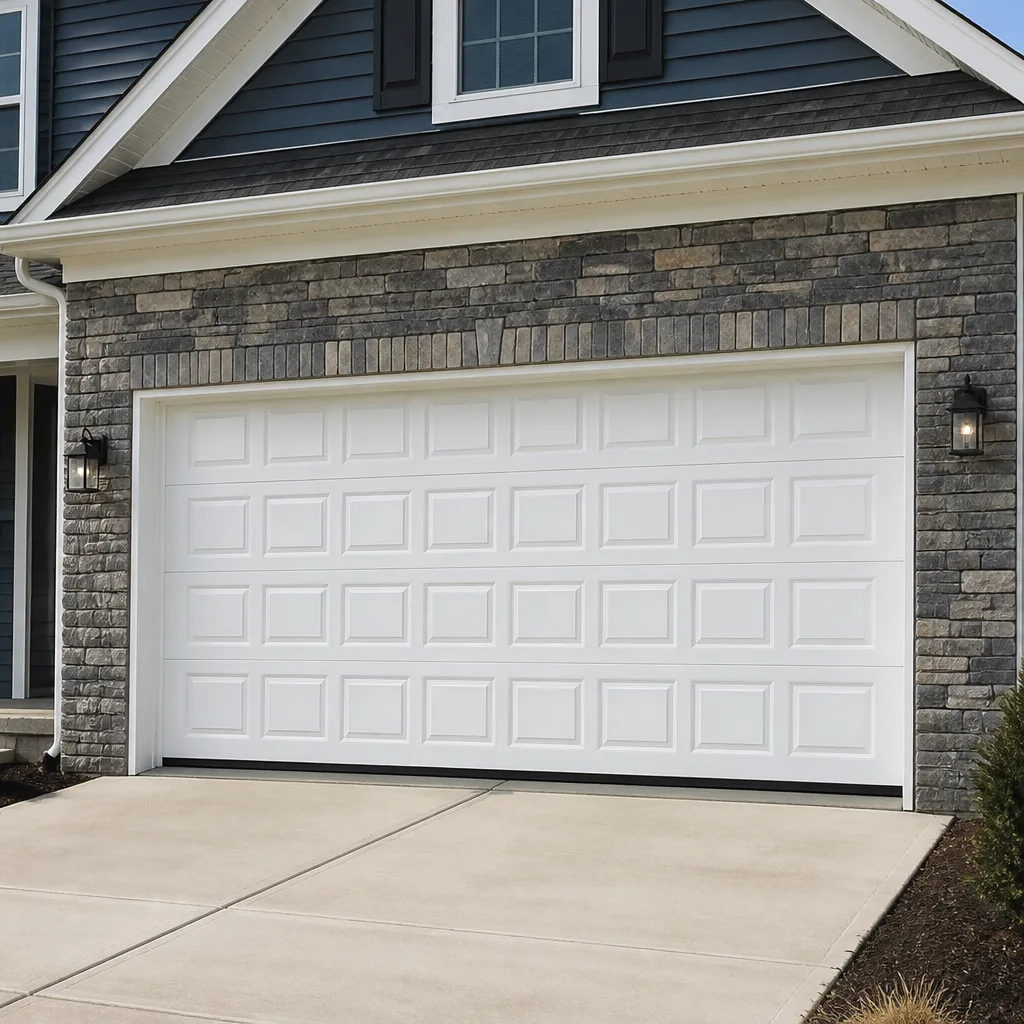 Raised-panel steel
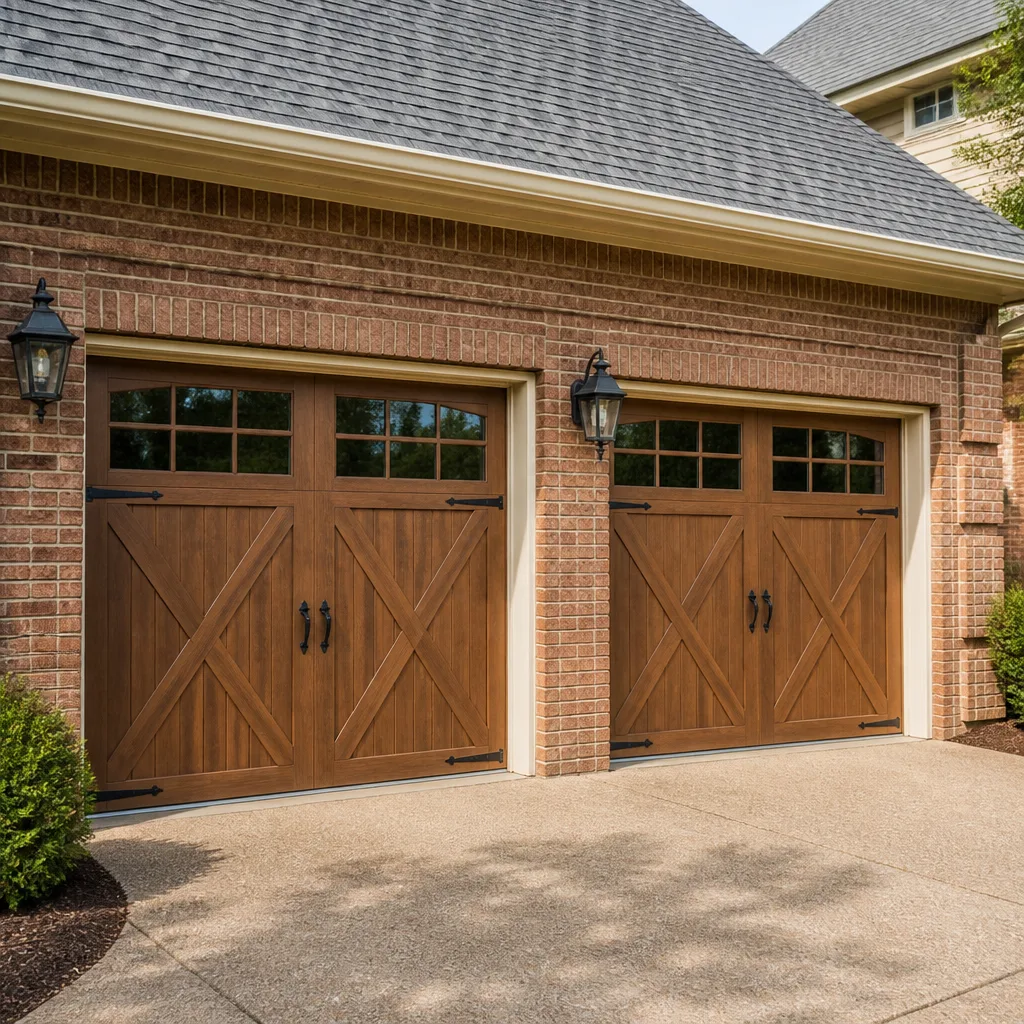 Carriage house
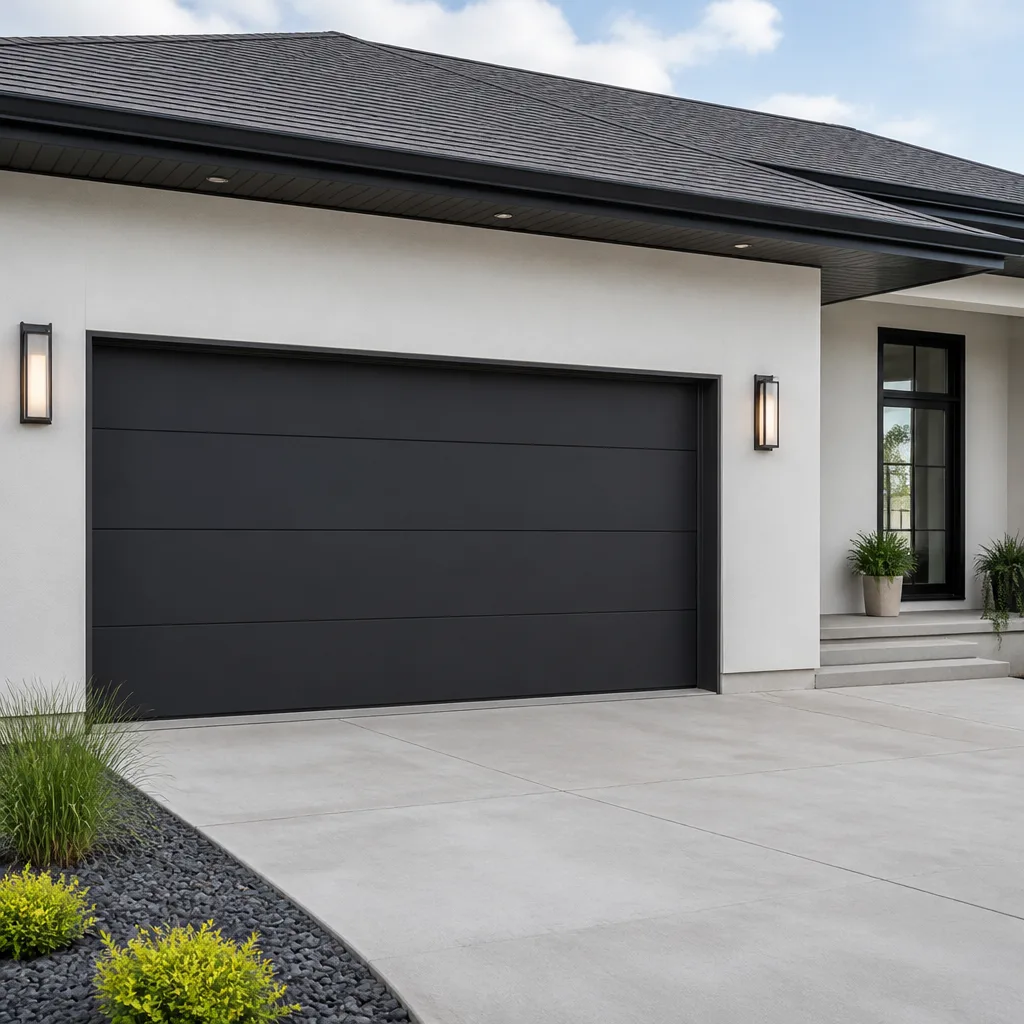 Modern flush
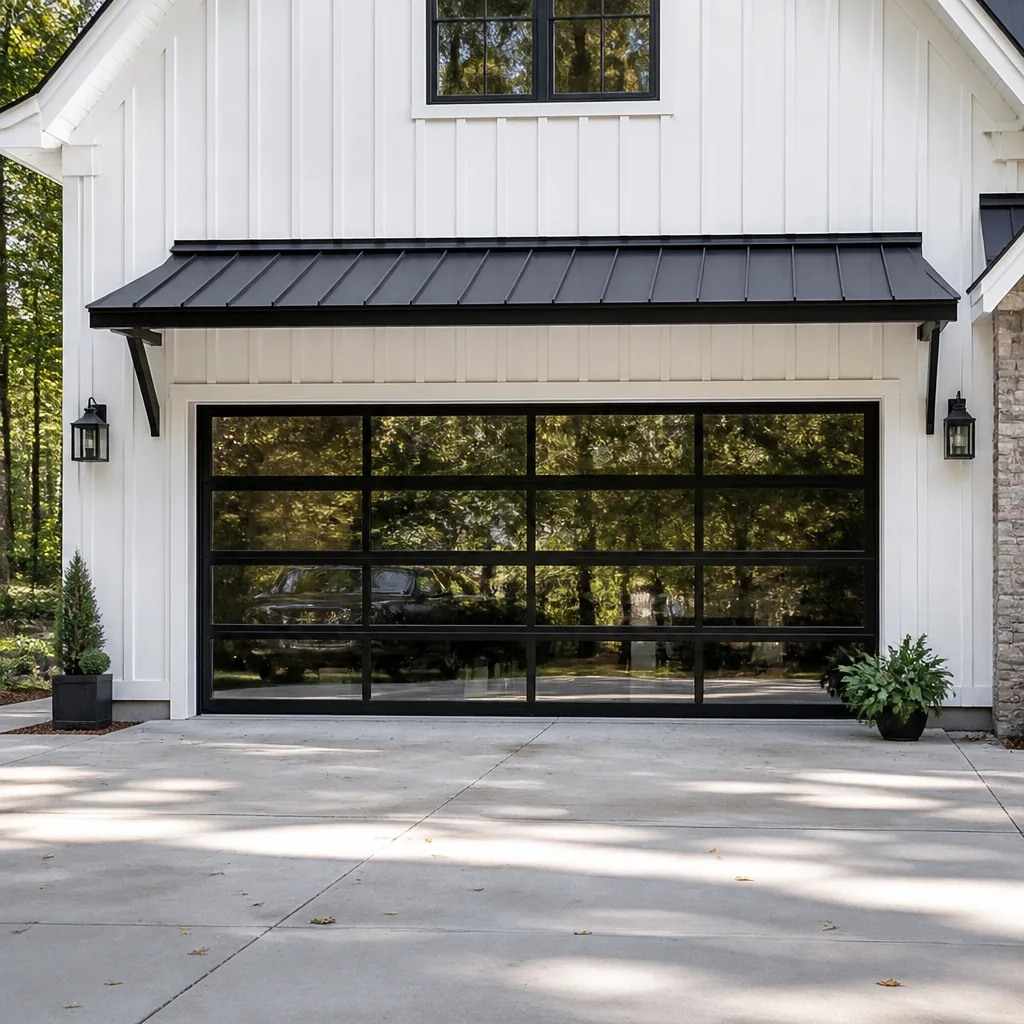 Full-view glass
 LiftMaster openers
 Chamberlain openers
Full 25-point door and opener safety check with every visit - springs, cables, rollers, tracks, and your LiftMaster or Chamberlain opener included
You get a price before we start. It does not change when the truck arrives.
Get your free estimateThe Complete Garage Door Repair Guide for Brushy Creek Homeowners
The average Brushy Creek garage door cycles through more thermal expansion and contraction in a single year than a door in Chicago does in five. Not because of snow, but because of the 50-degree swings between February nights in the low 40s and May afternoons near 95 that warp track brackets, fatigue torsion springs, and loosen hardware faster than most manufacturers’ warranties account for. For The Complete Guide to Garage Door in Brushy Creek, we’ll walk through the entire door system the way a trained technician sees it – not as a collection of parts, but as one interdependent mechanism with predictable failure points in the Brushy Creek climate. You’ll learn which problems follow which, what you can safely handle yourself, and how to describe a symptom so the first service visit actually fixes it.
Styles & brands we work with
Quick Answer
Garage door problems in Brushy Creek, TX most often trace to spring fatigue from thermal cycling, track misalignment from foundation movement in Williamson County’s clay-over-limestone soil, or opener component wear from high-humidity summers. A full-system inspection covering panel, track, spring, cable, opener, and weatherseal – performed in that order – catches developing failures before they lock your door shut. Most Garage Door Repair work by a qualified Brushy Creek specialist costs $150 to $450, while full spring replacement runs $250 to $500, and complete door replacement typically lands between $1,100 and $3,500 depending on material and insulation.
Table of Contents
- The Brushy Creek Failure Sequence
- Springs: The Part That Fails First – and Why
- Foundation Movement and Frame Misalignment
- Tracks and Rollers: The Alignment Check
- Cables and Drums: The Quiet Safety System
- Opener Repair: Motor, Logic Board, and Gear Wear
- Weatherseals and High-Humidity Summers
- DIY-Safe Repairs vs. Professional-Only Work
- A Seasonal Maintenance Calendar for Brushy Creek
- How to Document Symptoms for the First Visit
- Common Mistakes to Avoid
- When to Call a Professional
- Frequently Asked Questions
- The Bottom Line
The Brushy Creek Failure Sequence
Most garage door guides treat every component as its own chapter, as if a broken spring has nothing to do with the opener motor that suddenly sounds strained. In Brushy Creek, failures happen in a recognizable order, and understanding that order is the single biggest advantage a homeowner can have. Here’s the sequence we encounter most often in neighborhoods like Cat Hollow, Brushy Creek North, and Sendero Springs, and across the wider Round Rock and Cedar Park borders of the Brushy Creek Municipal Utility District.
Stage One: Weatherseal Deterioration
The bottom seal and perimeter weatherstripping dry and crack first, usually within four to seven years of installation. Central Texas UV exposure is relentless even on overcast days. Once the seal fails, humid outside air enters the garage, accelerating everything downstream. You’ll see cracking along the bottom edge, light visible under the door, and after a hard Brushy Creek rain, a damp line on the concrete floor.
Stage Two: Hardware Loosening
Thermal expansion cycles work bolts and lag screws loose faster here than in climates with stable daily temperatures. Hinges, track brackets, and opener rail bolts are the usual culprits. The symptom is a rattle that shows up first as a subtle clatter on certain parts of the travel, then becomes constant. Loose hardware changes the door’s geometry by fractions of a degree – enough to put uneven load on the spring.
Stage Three: Spring Fatigue
Torsion and extension springs are rated in cycles, typically 10,000 for standard springs, 20,000 to 30,000 for high-cycle options. Research from the International Door Association suggests that a garage door with two torsion springs may last 15 to 20 years in moderate climates, while a single-spring design may last only 6 to 8 years – but temperature extremes can dramatically reduce spring life well before those averages. A 50-degree swing in 48 hours, common along the Brushy Creek corridor in March and October, stresses spring wire at the molecular level. When one spring breaks, the remaining spring takes the full load and typically follows within weeks. If your door has two springs and one snaps, replace both on the same visit. The labor is already there, and the second failure is not a matter of if.
Stage Four: Opener Strain
By the time the spring weakens, the opener motor has been compensating for months. LiftMaster, Chamberlain, and Genie openers all have internal current sensors that shut the motor down when it draws too much amperage – a safety feature that prevents motor burnout but also masks the underlying problem. If your opener trips its thermal overload on a warm afternoon, suspect the spring, not the motor.
Stage Five: Cable and Drum Wear
Now the failure compounds. A weakened spring lets the door travel unevenly. Cables wear against damaged or misaligned drums. Fraying appears. This is the point where a $80 spring replacement becomes a $300 cable-and-drum job because the secondary damage was allowed to develop. Early intervention at Step Two or Three is always cheaper.
Springs: The Part That Fails First – and Why
Torsion springs carry the full weight of the door – anywhere from 130 to 400 pounds on a double-car residential door. They are the highest-stress component in the system and the one most likely to fail in Brushy Creek, not because of age alone, but because of thermal cycling. Spring wire expands and contracts minutely with every temperature change. Over ten years in Central Texas, that’s roughly 4,000 cycles of expansion stress on top of the 10,000 open-close cycles the spring was rated for.
Here’s what to listen for and look at:
- A loud bang from the garage – the classic sound of a torsion spring snapping. It sounds like a gunshot or a car backfiring. The door will not open, even with the opener running.
- A visibly split spring – look at the torsion bar above the closed door. A gap in the coil winding, usually about 1/4 to 1/2 inch, means the spring has broken.
- Door opens a foot, then stalls – a weakened spring can’t lift the weight. The opener strains and gives up. This can also be a cable issue, but spring fatigue is the leading cause in Brushy Creek homes over five years old.
- Uneven door travel – one side rising faster than the other points to a failed spring on one side of a two-spring system or a broken cable on the opposite side.
Spring replacement in the Brushy Creek area typically runs $250 to $500 including parts and labor for a two-spring torsion system. Higher-cycle springs – the 20,000 to 30,000 cycle options – add $50 to $100 and are worth it if you plan to stay in the house more than five years. On the door brands most common in Brushy Creek – Amarr, Clopay, and Wayne Dalton – spring specs vary by door weight, not just size, so an exact match matters.
We’ll say this directly because it needs saying: do not attempt a torsion spring replacement yourself. The stored energy in a wound torsion spring can release in a fraction of a second, and the injuries we’ve seen from spring accidents are life-altering. This is the single repair on the list where the risk-to-cost math is starkly against DIY. The tools alone – winding bars of the right diameter, never screwdrivers – cost $30 to $50, and the technique has no room for first-time error.
If your door failed during a cold snap and you’re using the manual release to open it, have a neighbor help you. The door will be deceptively heavy, and without a functioning spring, even two people can lose control of a 200-pound panel.
Foundation Movement and Frame Misalignment
Williamson County’s clay-over-limestone geology is the silent variable in half the Brushy Creek garage door issues we diagnose. Clay soil expands when wet and contracts when dry. Over a decade of wet springs followed by dry, 100-degree summers, the soil under a slab can shift by fractions of an inch per year. That’s enough to rack a garage door frame out of square by 1/8 to 1/4 inch – which doesn’t sound like much until you realize a garage door’s track system tolerates less than 1/8 inch of deviation before binding.
The symptom pattern looks like this:
- Door rubs or scrapes on one side, usually the hinge side, with a visible wear mark on the panel edge.
- The door binds at roughly the same point mid-travel, every time, regardless of spring condition.
- Gaps appear at the top corners when the door is closed – light visible on one side but not the other.
- The opener rail appears level, but the door itself sits visibly tilted in the opening.
Here’s the critical distinction: this is not a spring problem. A technician who replaces springs on a racked frame will be back in six months doing the same repair. The fix is to re-shim the track brackets or adjust the frame, and on a modern insulated Amarr or Clopay door, it’s a careful, measured process. Doors with vinyl trim along the header at Brushy Creek homes built in the late 1990s and 2000s are particularly prone, as the trim itself is often what’s holding the frame true – and it was never designed for structural duty.
If you’re in an older section of the Brushy Creek area around O’Connor Drive or along Great Oaks Drive, where homes are 20 to 30 years old, foundation movement is a factor more often than not. The good news is it’s correctable, and the correction doesn’t require geotechnical work – it requires a garage door specialist who knows the difference between a mechanical failure and a structural one.
Tracks and Rollers: The Alignment Check
Track and roller problems in Brushy Creek almost never appear by themselves. They follow something else: a foundation shift, loose hardware, or a spring failure that let the door run out of true long enough to damage the rolling path. But because the symptom is physical – a visible misalignment, a roller popping out of the track, a grinding sound – it’s often the first thing a homeowner notices.
The track system has two sections on each side. Vertical tracks guide the door up from the closed position. Horizontal tracks carry the door back into the garage along the ceiling. The curved section joining them is where most problems concentrate. Rollers here experience the highest lateral load, and in Brushy Creek’s humid summer air, unsealed steel rollers rust – first on the bearing surface, then on the wheel body itself. Rusted rollers grind against the track, wearing grooves into the steel.
A proper inspection checks these items, in this order:
- Track bracket tightness – grasp the vertical track at mid-height and try to move it side to side. Any movement means the lag screws have loosened or stripped out of the wood or steel framing.
- Track-to-frame gap – the gap between the door edge and the track should be consistent from floor to header. A gradual widening or narrowing indicates the track has moved relative to the frame.
- Roller condition – nylon-coated steel rollers are standard on quality doors. Look for chips in the nylon, wobble in the wheel, or visible rust on the stem.
- Curve wear – use a flashlight to inspect the inside of the curved track section. A polished stripe means the roller is carrying load off-axis. A groove in the steel means the track is damaged beyond adjustment.
Roller replacement on a residential door costs $80 to $150 for a full set, with nylon-bearing rollers toward the top of that range. Track realignment or bracket re-shimming runs $100 to $180. Both are professional jobs in our book – not because the individual steps are dangerous, but because the whole system has to be rebalanced after any track adjustment, and getting that balance wrong shortens the life of every other component.
We work on the door brand already in your garage. Clopay doors, for instance, use a specific roller diameter and track profile that differs from Wayne Dalton’s TorqueMaster system, and using the wrong roller type in a Brushy Creek two-car door is a call-back waiting to happen. This is one of the clearest places that brand-specific familiarity pays off in a faster, cleaner repair.
Cables and Drums: The Quiet Safety System
Lift cables work in tension alongside the springs. On a torsion system, the cables wind around drums at each end of the torsion bar. As the spring winds up, the drums take up cable. The system only works if the drums are properly timed to each other and to the spring. A cable that’s a single revolution out of sync means the door rises unevenly – and the stress follows the same pattern as the failure sequence we described earlier.
In Brushy Creek, cable problems are almost always downstream of something else. A broken spring lets the door drop onto one cable, fraying it. A worn drum lets the cable slip. A misaligned track puts the door on an angle, and the cable on the high side carries more than its share. What we rarely see is a cable failing on its own in an otherwise healthy system.
Signs of cable trouble:
- Visible fraying – loose strands near the bottom bracket or at the drum. This is the most common early warning. It doesn’t resolve on its own.
- Door hangs unevenly when partially open – look at the bottom edge from across the street. An off-level door with an intact spring points to a cable or drum issue.
- A loose cable hanging from the drum – the cable has slipped off the drum entirely. The door will not operate safely.
- Rubbing or scraping from the cable drum area – the drum itself may be shifting on the torsion bar.
- Gear and sprocket wear – the plastic drive gear on Chamberlain and LiftMaster chain-drive openers is a designed wear point. It strips gradually, and the symptom is a motor that runs but a door that barely moves, often with a grinding sound from the drive head. Replacement runs $130 to $200 including the gear kit and labor – a far better investment than a new opener at $350 to $700, assuming the motor and logic board are sound.
- Logic board failure – humidity is the enemy here. Brushy Creek’s summer dew points in the 70s mean condensation on cold surfaces inside the opener head. Over time, corrosion kills capacitors and solder joints on the control board. Symptoms include random operation, the opener not responding to remotes or wall buttons, or lights that flicker without the motor engaging. Logic board replacement, where available, costs $90 to $140. On openers older than 12 to 15 years, full replacement is usually the smarter call.
- Travel limit and force setting drift – this is less a failure and more a maintenance issue. As the door’s weight changes with temperature and spring tension shifts seasonally, the opener’s limit settings need re-tuning. An opener that reverses before the door fully closes, or that stops an inch short of the floor in summer but over-travels in winter, usually needs a limit adjustment, not a new board. This is a 20-minute service call.
- Visible light under the closed door at the floor. A properly sealing door lets in no light along the bottom edge.
- Cracking or splitting in the rubber when you press it – UV damage shows as small crazing cracks on the surface.
- The seal is flattened. Pressure from the door sitting closed compresses the rubber over time. When it no longer rebounds, it’s stopped sealing.
- A visible gap at the corners. The concrete floor at the door opening isn’t perfectly level in many Brushy Creek homes, and corner gaps often develop as the door settles.
- Lubrication – spray white lithium grease on hinges, rollers, and the torsion spring every six months. Use a silicone spray on the weatherseal. Total time: 20 minutes. Cost: $10.
- Photo-eye sensor alignment – if the door reverses immediately after touching the floor, check that the sensors on each side of the opening are pointing at each other. Realigning them involves loosening a wing nut and tilting the bracket until the indicator light goes solid. This fixes roughly 40% of “door won’t close” calls.
- Manual release operation – pulling the red release cord detaches the door from the opener so you can operate it by hand during a power outage. Every member of the household should know where this cord is and how it works.
- Weatherseal replacement – as described above, this is a low-skill, low-risk task.
- Remote and keypad battery replacement – self-explanatory, and often overlooked.
- Torsion spring replacement – the stored energy risk is severe. Never attempt this yourself.
- Cable repair or replacement – cables are under the same spring tension. A slipped cable during a repair attempt can cause the door to drop.
- Drum re-timing – the drums have to be removed and re-installed with the spring tension precisely balanced. Getting this wrong creates an imminent failure, not a gradual one.
- Track realignment requiring bracket re-shimming – this affects the entire door’s geometry. It’s not just moving a bracket; it’s re-balancing the whole system afterward.
- Opener logic board or gear replacement – while the electrical risk is low (these are low-voltage systems), the mechanical re-installation and force-setting calibration require specific knowledge of the opener’s limits and the door’s actual weight.
- Record exactly what the door does, not what you think is wrong. “The door opens 18 inches, stalls for 2 seconds, then the opener reverses” is diagnostic. “The spring is broken” is a conclusion. The technician will make the diagnosis. Your job is to provide the observation.
- Note the time of day and recent weather. If the failure happens only after 5 pm on 100-degree days, that points to thermal expansion in the track or opener limit drift. If it only happens on cold mornings, spring tension is the prime suspect.
- Capture a phone video. A 10-second clip of the door’s behavior is more useful than any written description. Film the door from the outside, showing the full travel from closed to open. Include the sound.
- Identify the make and model of the opener and, if visible, the door. The opener brand is on the motor head. The door brand is usually on a sticker at the top of a panel or on the lock handle. This lets the technician arrive with the right parts on the truck.
- List anything else that changed recently. New flooring in the garage? A car that bumped the door? New landscaping that changed drainage? A neighborhood construction project that’s been driving heavy trucks down your street? These are all data points.
- Ignoring a rattle or squeal for more than a month. The sound is the canary. A rattle that persists for 30 days is a loose component that’s wearing whatever it’s attached to. The longer it runs, the larger the eventual repair.
- Replacing only one spring in a two-spring system. The remaining spring is at or near failure if the matched pair was installed together. Replacing both resets the cycle count for the entire balance system.
- Forcing the door open after a spring failure. Pulling the manual release and lifting a 250-pound door without a functioning spring is how shoulders get injured and panels get bent. Wait for help or the technician.
- Using WD-40 on rollers and hinges. WD-40 is a solvent, not a lubricant. It washes away the existing grease and leaves the surface dry. White lithium grease is the correct product for metal garage door components.
- Adjusting the opener force settings to compensate for a tired spring. Crank up the force to get the door moving, and you’re masking the spring’s failure. That’s a temporary fix with an ugly ending when the spring finally lets go mid-cycle.
- Assuming a misaligned track means the door is broken. In Brushy Creek, track misalignment is often a foundation symptom, not a door failure. Fixing the track without understanding why it moved is half a repair.
- Calling a general handyman for a spring or cable job. Garage doors are a specialized trade. The margin for error on torsion systems is slim, and the cost of a mistake lands on the homeowner, not the handyman.
Cable repair is not a safe DIY task on a torsion system. The cable is under the same spring tension that makes spring replacement dangerous. Even on an extension-spring system – found on some older Brushy Creek homes – the cable runs through a pulley system under load, and the safety cables inside the springs themselves have to be replaced every time the springs are. A cable replacement with drum re-timing runs $150 to $250, and a worn drum set adds $60 to $100. The technician’s labor here is not expensive. The expertise in re-timing the drums correctly is what you’re paying for – and why this job has to be done by someone who understands the whole system, not just the part that broke.
Opener Repair: Motor, Logic Board, and Gear Wear
Most garage door opener failures in Brushy Creek are electrical, not mechanical. The motor itself – on a quality LiftMaster, Chamberlain, or Genie unit – is typically rated for 15,000 to 20,000 cycles and rarely fails outright before the surrounding electronics and gearing do. Here’s the breakdown of what actually breaks and what it costs.
The three most common opener failures we diagnose in Brushy Creek:
Here’s what Brushy Creek homeowners should know about their opener, regardless of brand: opener problems are included in what a complete garage door company does. For more guides & resources, see our blog. Not every shop works on openers – many door companies will hang the door and call an electrician for the opener, or refer you to a brand dealer who only services one product line. A full-system company diagnoses and repairs through the closed loop: the motor signals to the logic board, the logic board reads the sensor, the sensor reads the door position, and the door itself responds to the spring. Fixing one part of that loop without checking the others is how you get a repeat visit for the same complaint.
If your opener is less than 10 years old and you’re hearing grinding, the drive gear is the likely culprit and worth repairing. If the opener is past 15 years and showing intermittent logic board behavior, consider replacement – the new generation of openers from LiftMaster and Chamberlain includes built-in battery backup and smart-home integration that weren’t standard a decade ago.
Weatherseals and High-Humidity Summers
The weatherseal is the cheapest part of the entire system and the one that gets ignored the most in Brushy Creek. It’s also the part that most directly affects everything else. A failed bottom seal allows humid air, rainwater, dust, and pests into the garage year-round. In a Brushy Creek July with dew points in the 70s, that means condensation on the opener head, rust forming on roller bearings, and cardboard boxes on the garage floor wicking moisture up through the slab. The seal prevents all of that – and it costs $20 to $60 to replace.
Signs your seal has failed:
Replacing a bottom seal is one of the few genuinely DIY-friendly repairs on this list. The seal slides out of the retainer channel on the bottom panel, and a new one slides in. The job takes 15 minutes with a utility knife. What’s not DIY is diagnosing whether the seal failed on its own or whether the door is sitting out of level because of a track or spring issue. If you replace the seal and see light again in three months, something else is moving the door out of contact with the floor.
One Brushy Creek-specific note: the dust from May construction season mixes with the humidity to create a gritty film on the interior track. Wipe the vertical tracks down twice a year with a dry cloth. The dust itself is not the problem. The problem is the rollers grinding that dust into the track surface, which creates a sandpaper effect that shortens roller life.
DIY-Safe Repairs vs. Professional-Only Work
The line between what a homeowner can do and what requires a professional is not about skill. It’s about stored energy and system integrity. A garage door spring stores enough energy to lift a 300-pound door – and that energy has to go somewhere if a component fails during a repair. Here’s the honest breakdown we give Brushy Creek homeowners, including what we’d tell a family member.
DIY-Safe (low risk, high clarity):
Professional-Only (high stored energy, cascading failure risk):
The safety note here is not a sales tactic. The Consumer Product Safety Commission has tracked garage door-related injuries for decades, and the overwhelming majority involve untrained individuals working on springs or cables. We’d rather you know where the line is and call us from the right side of it.
A Seasonal Maintenance Calendar for Brushy Creek
Brushy Creek’s climate has two stress seasons: spring storm season and the August heat peak. Here’s a maintenance rhythm that matches the actual weather pattern, with what to check and when.
March – Pre-Storm Season
Before the first severe thunderstorm cells roll through in late March and April, check the bottom seal for gaps that would let wind-driven rain into the garage. Test the auto-reverse function by placing a roll of paper towels in the door’s path. If the door doesn’t reverse on contact, the force settings need adjustment – that’s a service call. Lubricate hinges and rollers. This is also the right time to address any track looseness before the temperature swings of spring put extra load on the hardware.
May to June – First Heat Spike
The first week of sustained 95-degree days is when weakened springs announce themselves. Heat makes steel slightly softer, which is why spring failures cluster on hot afternoons, not cold mornings, in Central Texas. Listen for a bang, check the door balance by disengaging the opener and lifting manually – the door should stay level at half-height with one hand. If it drifts down, the spring is losing tension.
August – Post-Peak Heat Stress
After six weeks of 100-degree days, hardware that’s been expanding and contracting daily is at its loosest. Go around the door with a socket and check hinge bolts, track brackets, and the opener rail. If you can turn any fastener with finger pressure, it needs tightening. This is also when weatherseals show UV fatigue – inspect for cracking and flat spots.
October – Pre-Winter Adjustment
The first 40-degree nights of the year cause metal contraction. Doors that worked fine through August will suddenly bind. This is normal thermal movement, not a failure – but it means the travel limits on the opener may need a small adjustment. Run the door a full cycle and listen for the opener straining at the same point each time. If it strains, the limit settings or the spring balance is off.
January to February – Cold Snap Response
Brushy Creek gets maybe eight to twelve nights below freezing a year, and that cold is brutal on older springs. If your door starts acting up on a 25-degree morning, don’t force it. Disengage the opener and try to lift the door manually. If it’s heavy, the spring is losing tension. If it won’t lift at all, the spring has failed. Call before forcing it – pulling a door against a broken spring will bend the top panel.
How to Document Symptoms for the First Visit
This is the section most guidebooks skip, and it’s the difference between a first-visit fix and a two-call repair. When a technician arrives without good symptom data, the first visit becomes diagnosis. That’s fine if the problem is obvious. It’s expensive if the problem is intermittent. Here’s the system we recommend to Brushy Creek homeowners before booking any garage door repair visit.
In our experience, the five minutes it takes to document symptoms well saves an average of one return visit and $75 to $150 in redundant diagnostic labor. Your door, diagnosed correctly the first time, is the fastest path to a lower invoice. We carry parts for the brands most homes in Brushy Creek already have installed – LiftMaster, Chamberlain, Genie, Amarr, and Clopay among them – so a well-documented call is usually a one-trip resolution.
Common Mistakes to Avoid
When to Call a Professional
Call a garage door specialist the day you hear a bang from the garage, see a visible gap in a spring, or notice frayed cables at the drum. Call when the door binds mid-travel and stays bound after a weather change, when the opener runs but the door barely moves, and when the door hangs visibly unlevel. If any member of your household is unsure whether the door is operating safely, that uncertainty is enough of a reason – a door that drops off its track into a car, or worse, can happen without warning. Goldleaf Garage Door Repair offers free estimates in Brushy Creek and the surrounding area. One call, full system – from the panel to the opener. Reach us at (855) 412-0407 and we’ll walk you through the symptom checklist on the phone before we even roll a truck.
Frequently Asked Questions
Most individual repairs in the Brushy Creek area run $150 to $450, with spring replacement at $250 to $500 for a complete two-spring torsion system and full door replacement between $1,100 and $3,500 depending on material, insulation, and window options. The price is always quoted and agreed before work begins. For a specific quote, call (855) 412-0407.
For spring failures, cable breaks, and doors stuck open, we prioritize same-day and next-day visits in Brushy Creek because a door that can’t close is a security risk, not just an inconvenience. The best move is to call (855) 412-0407 and describe the symptom – we’ll tell you over the phone whether it’s urgent or can wait for a scheduled slot.
We stock common spring sizes, cable assemblies, rollers, drums, and opener components for the brands most often installed in Brushy Creek homes – LiftMaster, Chamberlain, Genie, Amarr, and Clopay. Documenting your door and opener make and model before the visit helps us arrive with the right parts the first time.
No. Torsion springs hold enough stored energy to cause catastrophic injury if they release during a repair attempt. The tools, the technique, and the consequence of error make this the one repair where DIY risk is never worth the money saved. A professional spring replacement in Brushy Creek costs $250 to $500 – a fraction of the cost of an emergency room visit.
In Brushy Creek’s climate, that pattern almost always points to thermal expansion. The metal track and door panel expand as the day heats up, and if the track is marginally tight from hardware loosening or foundation movement, the expansion is enough to cause binding. It’s not a failure yet – but it will be, and it’s a simple service call to correct the underlying misalignment before it becomes a full-blown repair.
At 15 years, a logic board or gear failure usually signals that other components are nearing the end of their service life too, and replacement with a current LiftMaster or Chamberlain unit makes more sense than a $200 repair on a door that will need another $200 repair in six months. On openers under 10 years old, a gear or board replacement is usually the right call. The math changes based on the specific model and its condition, and we’re happy to walk you through it on the phone.
The Bottom Line
Brushy Creek garage doors fail in predictable ways, and the predictability is your advantage. Weatherseal deterioration leads to hardware loosening, which leads to spring fatigue, which leads to opener strain, which leads to cable and drum damage. Catching the sequence at step one or two costs under $100. Catching it at step four costs $400 or more. The most useful thing any homeowner can do is check the system as a system – panel, track, spring, cable, opener, weatherseal – twice a year, in March and August, and document exactly what the door does when it misbehaves. For everything beyond lubrication, sensor alignment, and seal replacement, the pro’s knowledge matters more than the parts. Goldleaf Garage Door Repair handles garage door repair in Brushy Creek from diagnosis to done, including opener repair and full garage door installation when replacement is the better investment. We work on the brand already in your garage – LiftMaster, Chamberlain, Genie, Clopay, and the rest – and we fix it right
See the difference
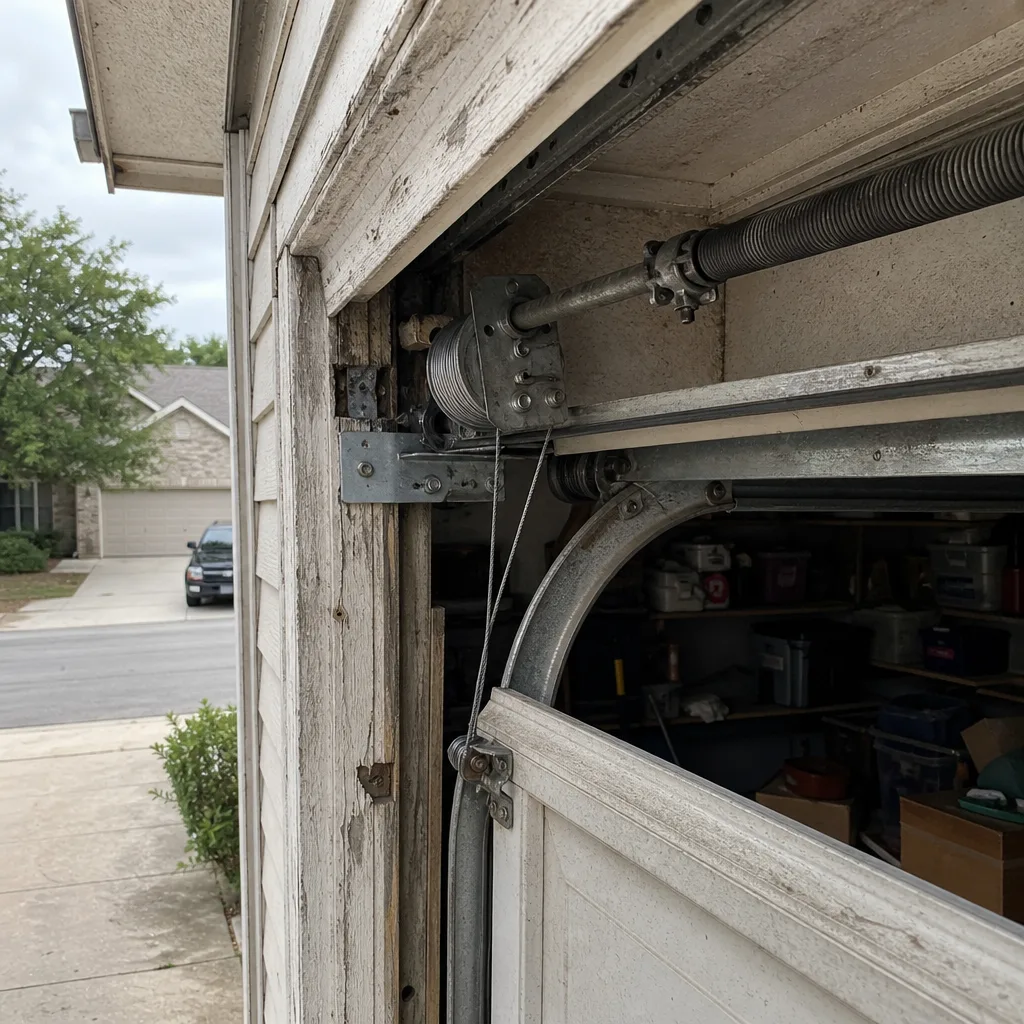 Before
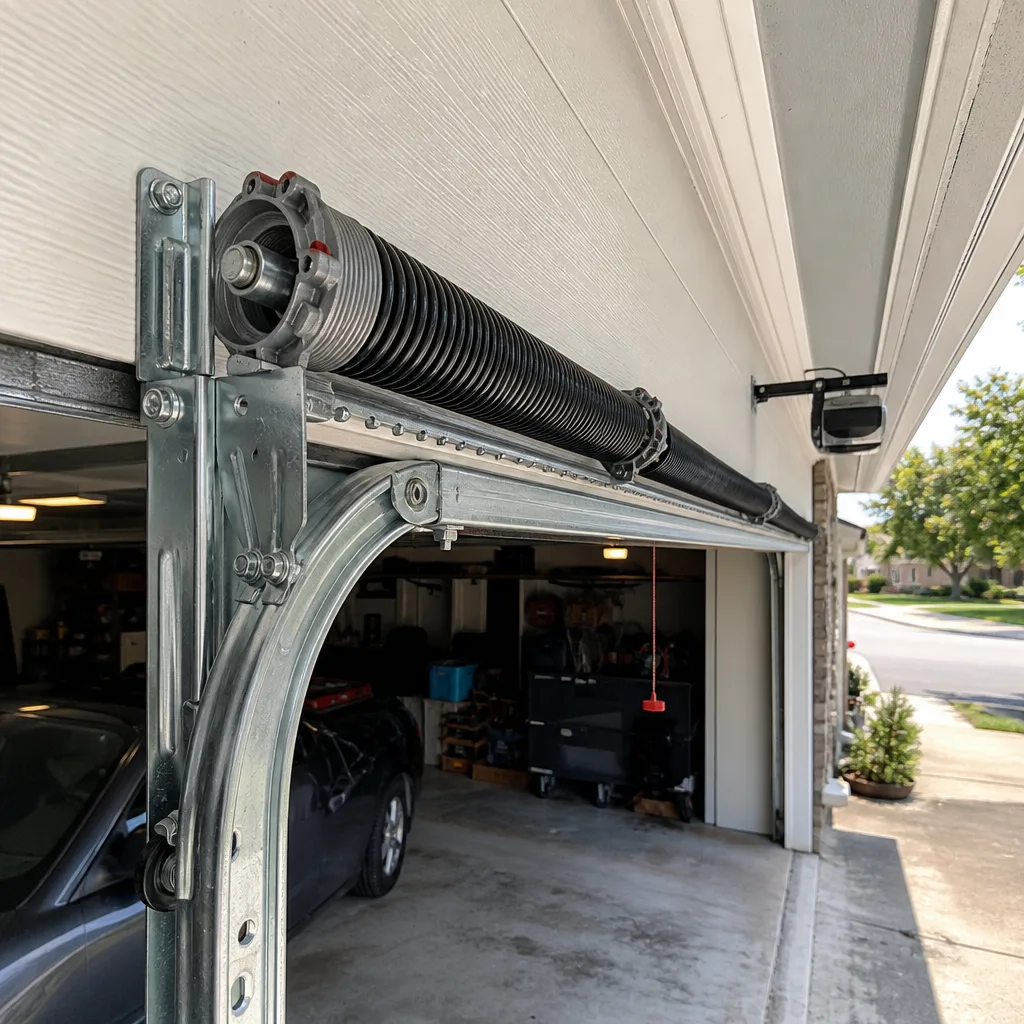 After
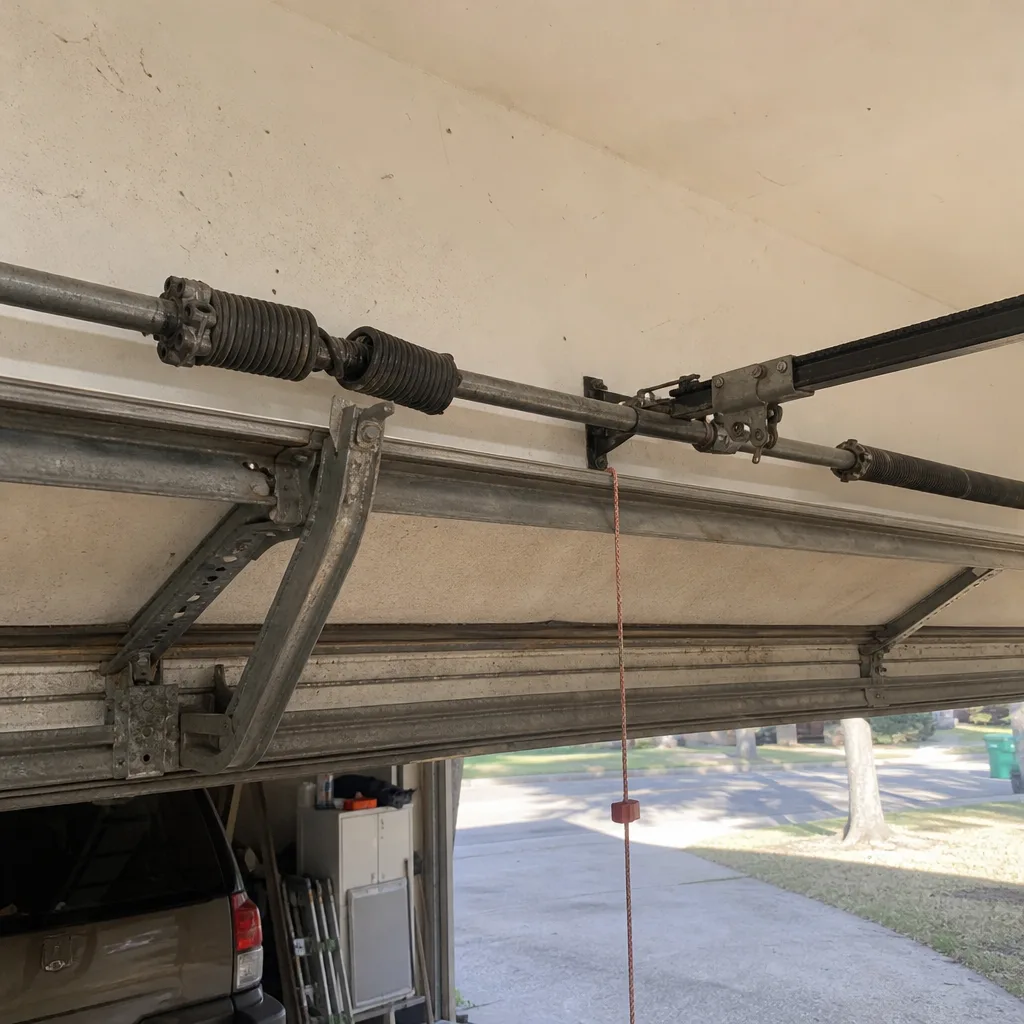 Before
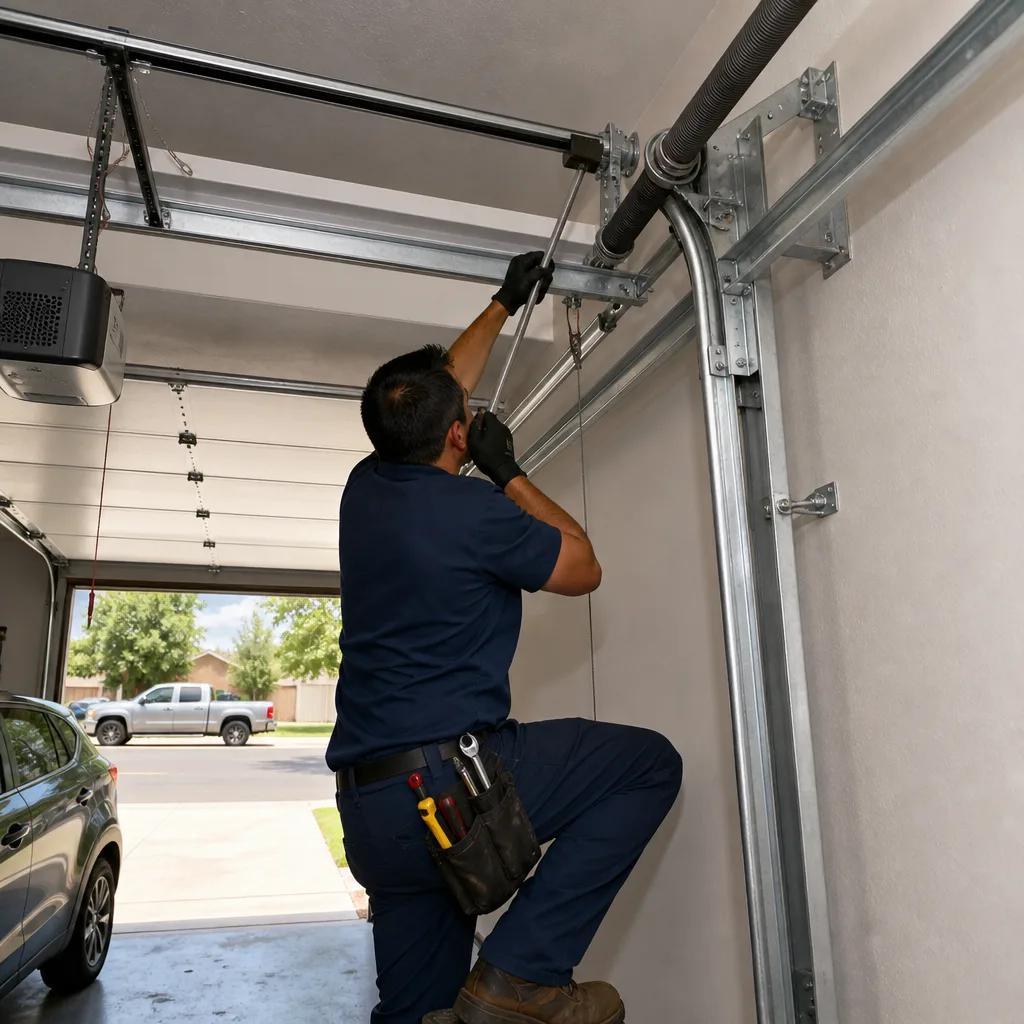 After
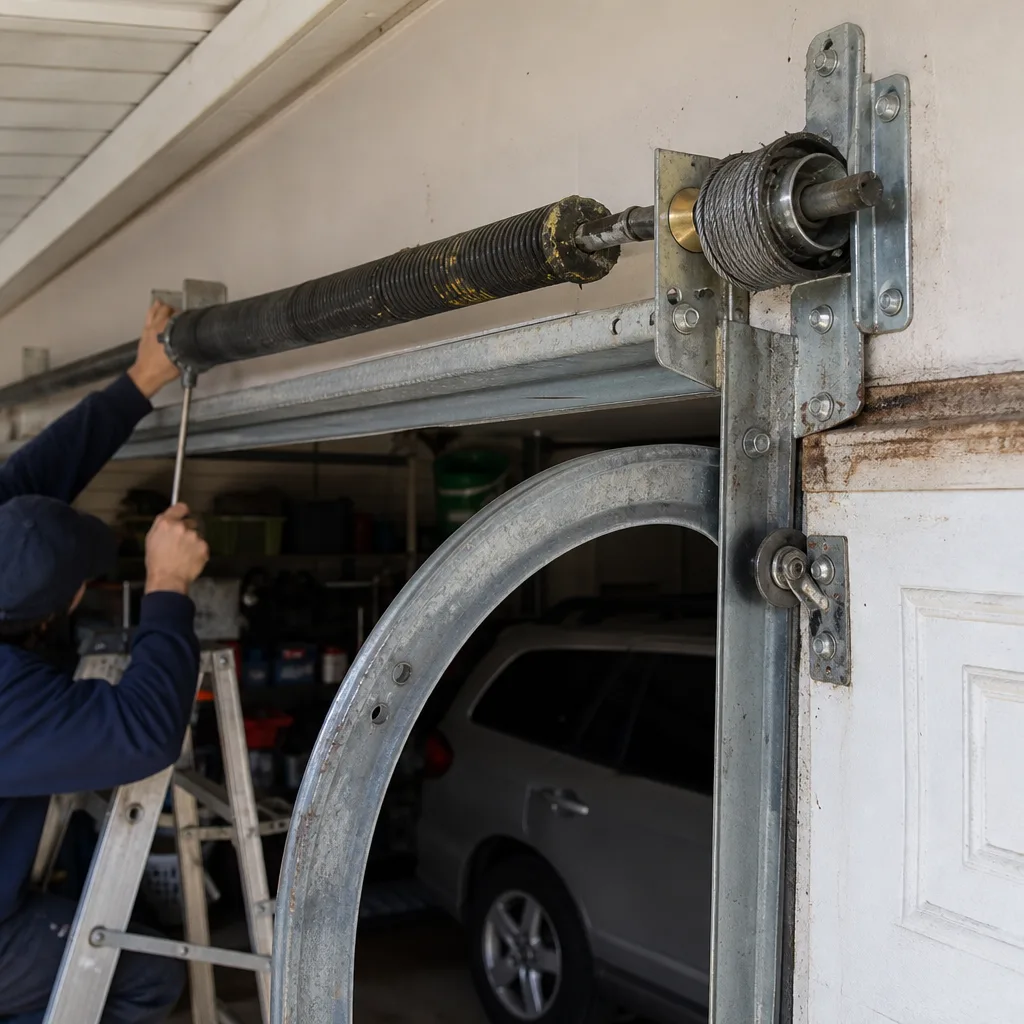 Before
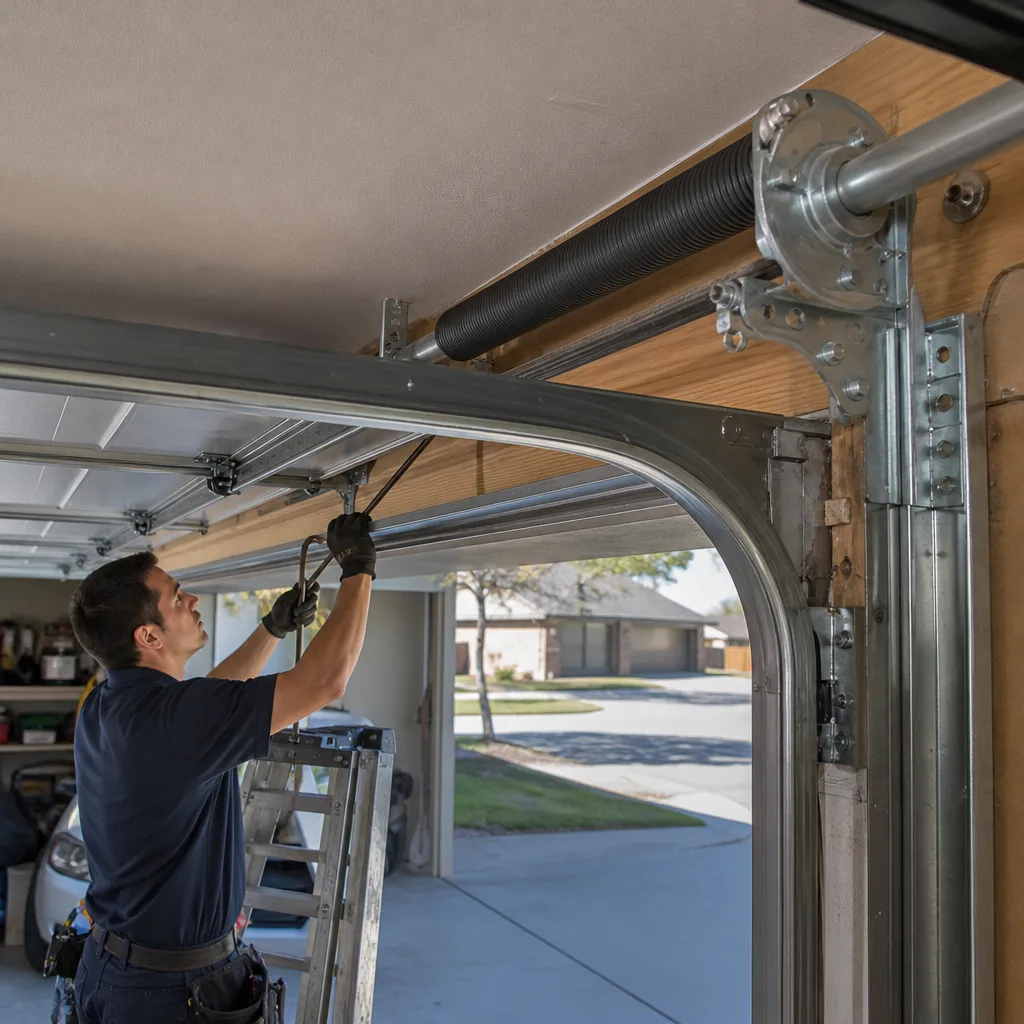 After