

Last updated October 30, 2026
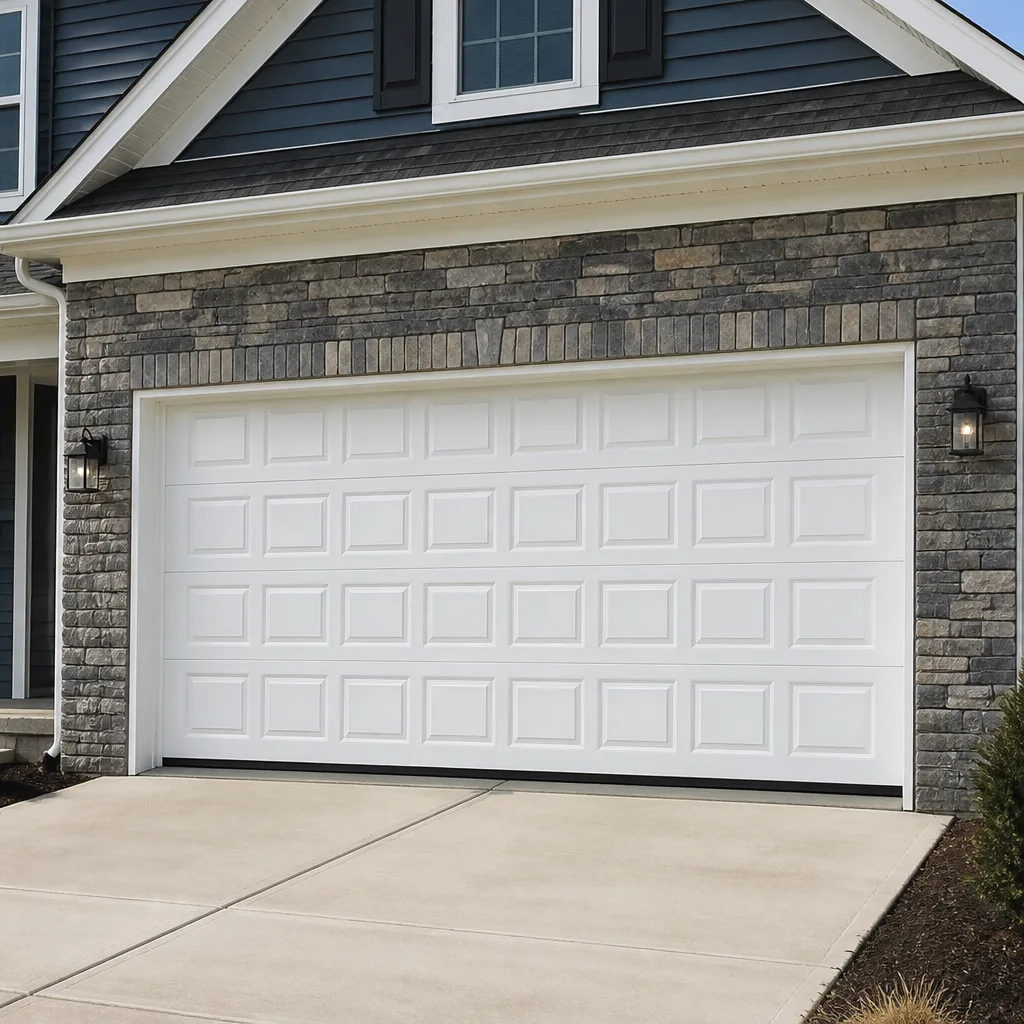 Raised-panel steel
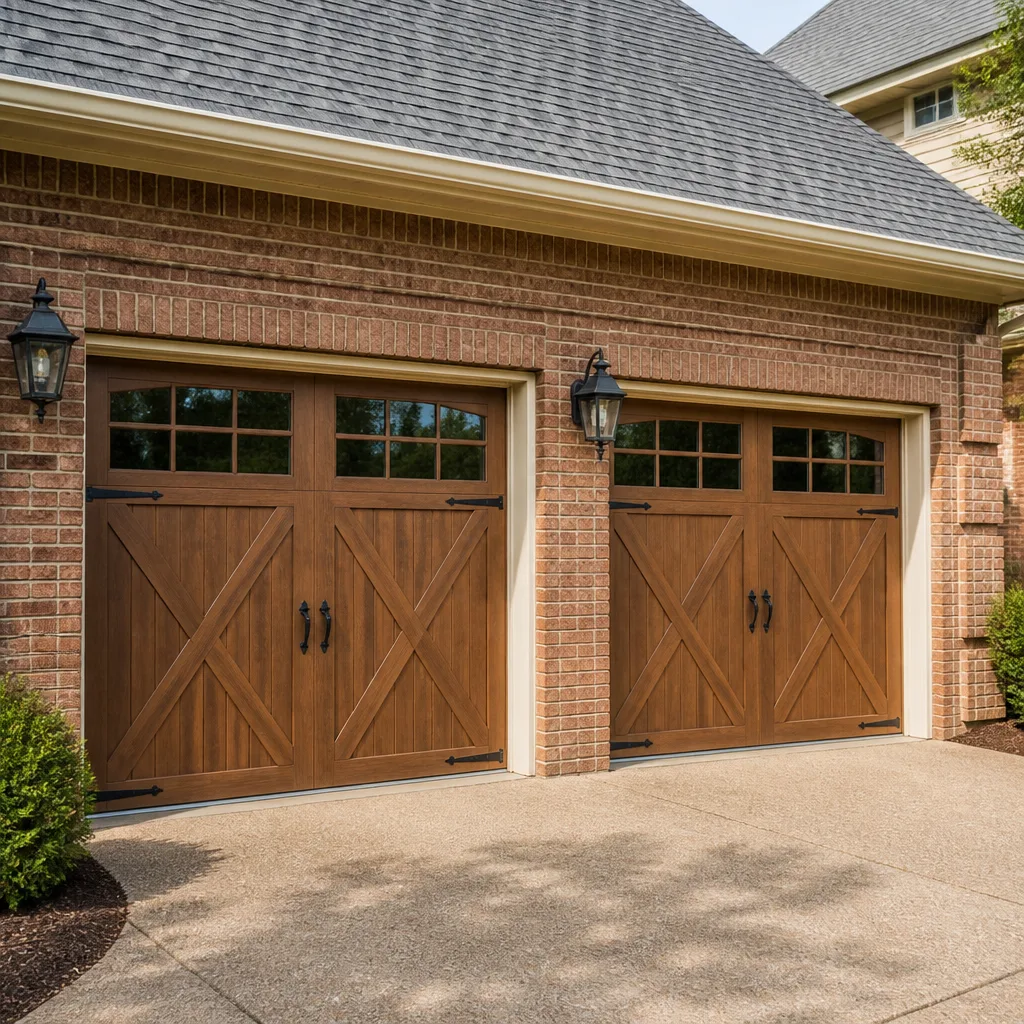 Carriage house
 Modern flush
 Full-view glass
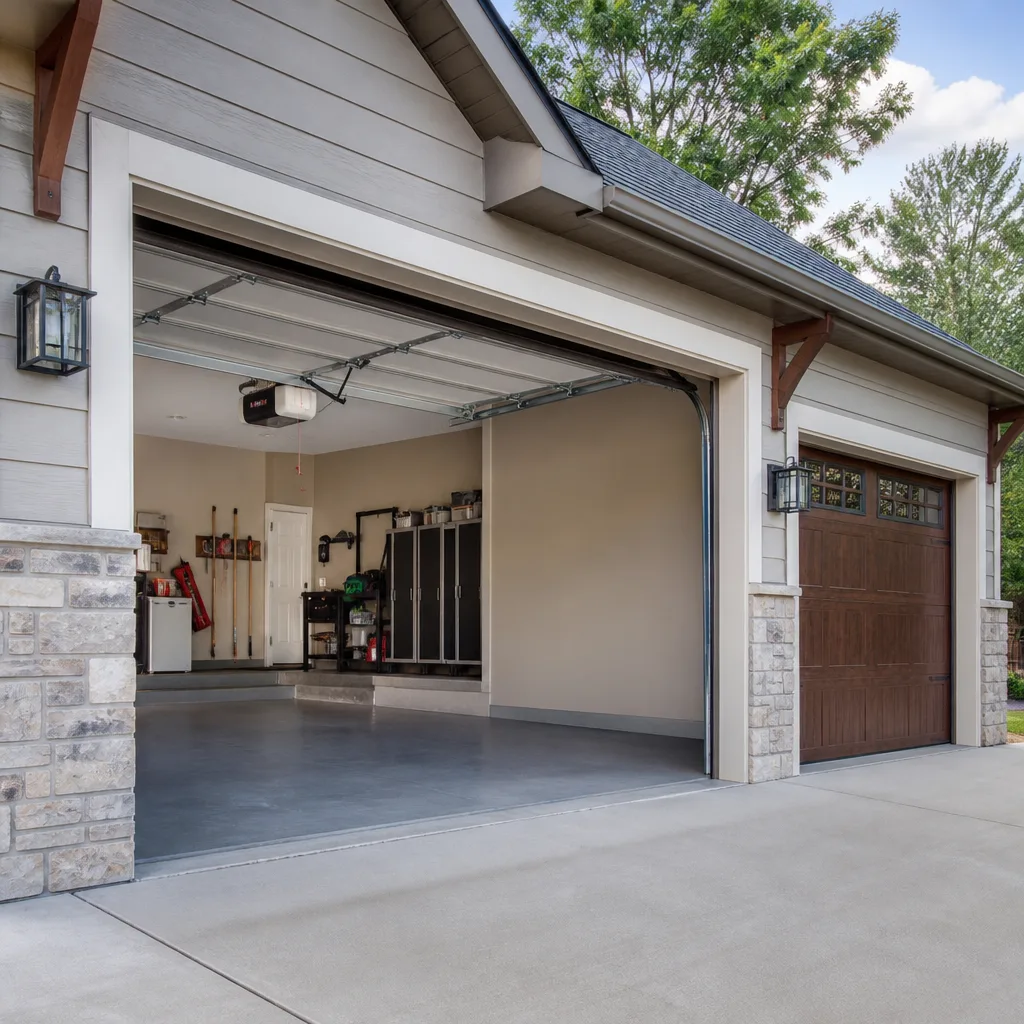 LiftMaster openers
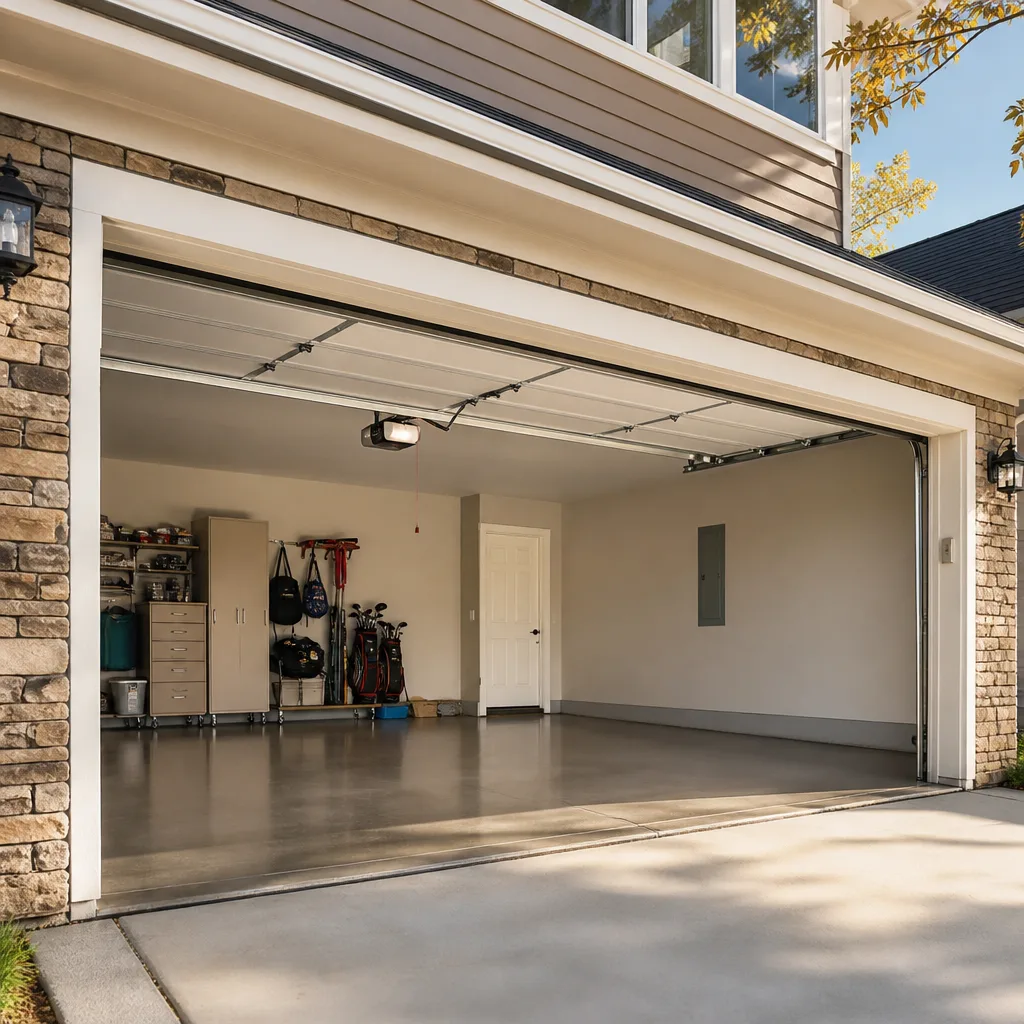 Chamberlain openers
Full 25-point door and opener safety check with every visit - springs, cables, rollers, tracks, and your LiftMaster or Chamberlain opener included
You get a price before we start. It does not change when the truck arrives.
Get your free estimateGarage Door Emergency Preparedness Guide for Brushy Creek Homes
During the February 2021 Texas freeze, one of the most common calls to repair services wasn’t a broken spring. It was homeowners who couldn’t manually open their door because they’d never located the red release cord. Brushy Creek learned a hard lesson that week: a garage door isn’t just a convenience you take for granted. It’s the primary entry point, emergency exit, and vehicle access point for thousands of homes. This guide covers what actually goes wrong during Brushy Creek’s worst weather, how to prepare for it, and what to do in those first ten minutes when the power’s out and your car is stuck. For more guides & resources, see our blog.
Quick Answer
Garage door emergency preparedness for Brushy Creek homes means knowing how to manually release your opener, having a battery backup system that actually works with your door’s weight and balance, preparing the weatherstrip and tracks before freezing weather arrives, and knowing which problems you can safely address versus which need a trained professional. The biggest failure point isn’t the door itself. It’s the homeowner not having practiced the manual release process before an emergency. Most of the repair calls we receive after Brushy Creek storms could have been avoided with fifteen minutes of preparation done the week before. Our Garage Door Repair Maintenance Checklist for Brushy Creek Homeowners walks you through exactly what to check.
Styles & brands we work with
Table of Contents
- How to Manually Open Your Garage Door During a Power Outage
- Battery Backup Openers for Brushy Creek Homes
- Ice Storm Prep: Preparing Your Door for Freezing Weather
- Post-Storm Inspection Checklist for Brushy Creek
- How to Secure a Door That Won’t Close
- Building a Year-Round Emergency Readiness Plan
- What to Know About Your Specific Opener Brand
How to Manually Open Your Garage Door During a Power Outage
Every automatic garage door opener has a manual release mechanism, but the design varies by brand and model. The release cord is almost always a red rope or handle hanging from the trolley carriage on the opener rail. Pulling it disengages the trolley from the drive chain or belt, allowing you to lift the door by hand. This is the single most important emergency skill for any Brushy Creek homeowner, because ice storms and severe thunderstorms knock out power to this area with predictable regularity. The ice storm of January 2023 left portions of Brushy Creek without electricity for over 24 hours, and the February 2021 event affected nearly every household in the region.
Here’s the process, step by step:
- Confirm the door is closed. Never pull the release cord while the door is in the open or partially open position. A closed door keeps the springs under controlled tension and prevents the door from slamming down.
- Verify the spring condition. If a torsion spring has broken, the door will be too heavy to lift safely by hand. On a standard 16×7 foot door, a fully intact spring system supports the weight and lets one adult lift the door. If it feels like dead weight, stop and call a professional.
- Pull the red cord down and toward the door. On LiftMaster and Chamberlain models, you’ll hear a distinct click as the trolley disengages. On Genie systems, the release is a pulled rope or a lever near the motor head. On some newer models, there’s an attached handle with a pictogram showing the pull direction.
- Lift the door using the handle or bottom rail, not the panel edge. Keep your legs and back aligned, not twisted. A properly balanced door should not require significant force.
- Raise the door to the full open position. Most residential doors will stay put once fully raised and supported by the horizontal tracks. If the door drifts downward, the springs need attention.
- To close the door manually, reverse the process. Lower it slowly. If you need to leave it open, make sure the vehicle is clear and no children or pets are in the area.
One thing we see repeatedly in Brushy Creek: homeowners practice pulling the release cord but never re-engage it properly. Before you restore power, pull the cord again or press the wall button to allow the trolley to reconnect automatically. If the opener runs but the door doesn’t move, the trolley hasn’t re-engaged. On LiftMaster and Chamberlain models, running the opener causes the trolley to capture the release mechanism automatically the next time it passes. Genie models typically require the same approach: press the wall button and let the motor run through one cycle while the trolley re-seats. If you’ve never done this before, practice on a day when nothing is wrong. Ten minutes of practice now beats forty-five minutes of fumbling in the dark during a power outage.
If your release cord is missing, tangled, or unreachable, don’t attempt to yank it free with pliers. The plastic handle may snap, and the cord length matters for safety. A technician can replace or reposition it in minutes. The garage door opener repair team at Goldleaf services Brushy Creek homes with exactly this kind of nuisance issue routinely.
Battery Backup Openers for Brushy Creek Homes
A battery backup opener keeps your door fully functional during a power outage without requiring manual operation. The system uses a rechargeable battery unit mounted on or near the motor head. When the grid loses power, the opener automatically switches to battery power. How long the battery lasts depends on the door’s weight, balance, and the number of open/close cycles. For most residential doors, a fully charged backup battery provides 20 to 40 cycles over a 24 to 48 hour period. That’s enough for several days of normal use if you limit unnecessary trips.
Here’s what matters for Brushy Creek specifically:
- LiftMaster models 8550W, 8580W, and 8160W are among the most common battery-compatible openers in Brushy Creek garages. They use a 485LM-style battery and provide audible and visible alerts when the battery is low.
- Chamberlain B970 and B6753 include battery backup as a standard feature, not an add-on. These are popular with homeowners who upgraded after the 2021 freeze.
- Genie Mach Force Connect and SilentMax Connect offer battery backup on select models. Compatibility varies by the specific production year, so checking the model plate before assuming matters.
- Clopay’s partnership with LiftMaster means many newly installed Clopay doors in Brushy Creek come with LiftMaster openers that have battery backup built in or available as an accessory.
The critical thing to know: a battery backup only helps if the battery is still good. Backup batteries have a typical service life of two to four years. Heat is the biggest enemy, and Brushy Creek garages get hot. If your garage regularly exceeds 100 degrees in August, your backup battery degrades faster than the manufacturer’s average estimate. We recommend testing your backup system twice a year: pull the power cord from the wall while the door is closed, then run the opener through a full cycle on battery alone. If the door moves slowly or the battery drains quickly, replace it before winter.
If your current opener doesn’t support battery backup, adding one usually means replacing the motor head entirely. The backup is not a standalone accessory you can bolt onto an older motor. That’s one reason homeowners in Brushy Creek often wait until the opener needs replacement anyway and then opt for a battery-ready model. If you’re considering an upgrade, Goldleaf Garage Door Repair handles complete door and opener installation in Brushy Creek, including current LiftMaster and Chamberlain battery-capable systems.
Ice Storm Prep: Preparing Your Door for Freezing Weather
Brushy Creek’s winter weather is erratic. One week it’s 70 degrees, the next it’s 20 with sleet and freezing rain. The February 2021 storm dropped temperatures into the single digits for days. The January 2023 event brought significant ice accumulation. When ice forms on and around your garage door, several things can go wrong simultaneously, and most of them are preventable.
Start here, before the front arrives:
- Clean the bottom weatherstrip. The rubber or vinyl seal along the bottom edge of the door needs to be free of dirt, leaves, and debris. A clean seal makes solid contact with the concrete. A dirty or cracked seal lets moisture under the door, where it can freeze and bond.
- Apply a dry silicone spray to the weatherstrip. Do not use WD-40 or oil-based products, which can degrade the vinyl over time. A light coating of silicone creates a barrier that makes ice easier to release. This is a cheap, five-minute job that makes a measurable difference.
- Lubricate the rollers and hinges. Use a garage-door-specific spray lubricant. Stiff, rusted, or dry rollers put additional strain on the opener motor during cold weather, which is already working harder against a cold, stiff spring system.
- Test the auto-reverse safety sensors. Clean the lenses and confirm they’re aligned. Misaligned sensors cause the door to refuse to close, which you don’t want to discover during freezing rain at 6 a.m.
- Charge the backup battery. If you have one, make sure it’s at full charge. The test is simple: run the door from battery power once before the weather moves in.
If the door freezes to the ground, do not force it. The most common damage we see in Brushy Creek after ice events is a torn weatherstrip or a bent bottom panel, both caused by someone hitting the opener button on a frozen door. The correct approach: pour warm, not boiling, water along the bottom edge where the seal meets the concrete. Warm tap water from a watering can works. You’re just melting the bond between the rubber and the slab. Once the door releases, open and close it manually once before resuming automatic operation. This ensures the seal didn’t tear and the tracks aren’t obstructed.
Never use a shovel, screwdriver, or any hard tool to chip ice off the bottom seal. The vinyl becomes brittle in freezing temperatures and rips easily. A torn seal lets cold air, water, and pests in and is a straightforward repair, but it’s a repair you don’t need to make if you use warm water instead of force.
Post-Storm Inspection Checklist for Brushy Creek
Brushy Creek gets hail and high wind events every spring, and the garage door is the largest moving surface on your house. After a storm passes, before you run the door through normal cycles, walk through this checklist. It takes five minutes and catches small problems before they become expensive ones.
- Panel dents and punctures. Hail can dent steel panels and crack fiberglass or vinyl panels. Dents in the panel face are cosmetic unless they’re deep enough to affect the panel’s structural integrity. Dents near the panel joints or hinges can cause the door to bind. Look for any visible separation between panels or cracked carriage house overlays.
- Track alignment. Stand inside the garage with the door closed and look down both vertical tracks. They should be straight and parallel. A hard wind gust or flying debris can knock a track several degrees out of alignment. A misaligned track makes the rollers bind and puts strain on the cables.
- Roller condition. Look for cracked nylon roller wheels or bent steel rollers. Run the door and listen for grinding, squealing, or a rhythmic thumping sound. Each of those indicates a different problem: bearing wear, dry roller, or a flat spot.
- Cable seating. The lift cables run along the side of the door from the bottom bracket up to the torsion tube or extension spring. They should be seated tightly in the drum grooves and free of fraying. A cable that’s slipped off the drum is an immediate stop-condition. Don’t run the door.
- Weatherstrip integrity. Check the bottom seal and side jamb seals for tears or compression. A damaged seal reduces energy efficiency and lets moisture wick into the garage, which accelerates rust on hardware and mold on stored items.
- Opener operation. Run the door through two complete cycles. Watch the door speed. It should be smooth, not jerky. Listen for any change in motor pitch. After a storm, a whining motor often indicates a strained gear or a door that’s suddenly out of balance.
The thing about post-storm inspection is that homeowners tend to check the roof and windows and forget the garage door entirely. But the door took the same wind load, and it has moving parts that the roof doesn’t. Hail damage to a garage door panel doesn’t become a safety issue until the panel loses rigidity or pops out of the track. Catching that early keeps a small dent from becoming a door in the driveway. Brushy Creek’s hail season runs March through May, but with the region’s erratic weather patterns, an inspection twice a year, in March and in October, covers both the hail season and any early winter ice.
How to Secure a Door That Won’t Close
This is the most stressful scenario: the door is open or partially open, and the opener won’t bring it down. Maybe a spring broke mid-cycle. Maybe the cable slipped. Maybe the opener gear stripped. Whatever the cause, you now have a wide-open garage full of tools, bikes, and possibly a connected interior door into your home. You need to secure it. Our Garage Door Repair Troubleshooting: Common Problems and How to Fix Them can help you diagnose what’s happening before calling for help.
Here’s the triage sequence we teach homeowners in Brushy Creek:
- Disconnect the opener. Pull the release cord. You’re now in manual operation mode. The door is no longer attached to the motor, so any further damage to internal gears or sprockets won’t affect your ability to move the door by hand.
- Lower the door slowly by hand. If the door is balanced and the springs are intact, guiding it down to the closed position is usually possible. If the door feels dangerously heavy, a spring has failed. Don’t fight it. Let the door stay where it is, or lower it as far as it will go without forcing it.
- Engage the slide locks or add a portable lock. If the door is closed manually and has slide bolts on the vertical tracks, engage them. If the door isn’t equipped with slide locks, a pair of vice grips clamped onto the track directly above a roller prevents the door from being raised. This is a temporary safety measure, not a permanent solution.
- If the door can’t be closed, secure the interior door. If the garage door is stuck open, deadbolt the door between the garage and your house. Move anything valuable out of the line of sight from the street. Consider parking a vehicle in the doorway as a temporary visual barrier if it’s safe to do so.
- Call a garage door specialist. A door that won’t close is a security problem, but a door with a broken spring is also a mechanical hazard. The cable tension and spring under load can release violently. Don’t attempt a DIY spring replacement. We’ll say it plainly: torsion springs store enough energy to seriously injure or kill. This is not a YouTube repair.
The most important thing to remember: a door won’t close for a reason. Sometimes it’s a dirty sensor. Sometimes it’s a broken spring. Forcing the opener to pull against an obstructed, unbalanced, or damaged door by holding the wall button down doesn’t fix the underlying problem, and it can damage the opener gears or burn out the motor. A ten-second diagnosis from a specialist who has seen your exact situation before is cheaper than a burned-out opener. Garage door repair in Brushy Creek is Goldleaf’s core service, and we handle these triage calls throughout the storm season.
Building a Year-Round Emergency Readiness Plan
Brushy Creek doesn’t get Minnesota winters. It gets something more complicated: mild weather punctuated by sudden, severe disruptions. Freezing precipitation, hail, wind, and extended power outages all hit with limited warning. A year-round readiness plan means your garage door is never more than a few weeks out from being storm-ready. Here’s what that schedule looks like in practice.
Spring (March-May): Post-winter inspection of cables, springs, and weatherstripping. Lubricate all moving parts. Test the auto-reverse sensors. Brushy Creek’s hail season starts in March, so this inspection catches winter damage before storm season adds a second layer of abuse. This is when we commonly replace weatherstrips and tune doors that ran dry during the cold months.
Summer (June-August): Test the opener’s force settings. The heat causes metal to expand, and tracks that were aligned in cooler weather can shift slightly. A door that scrapes in August might have been fine in March. Check the backup battery condition, since heat accelerates degradation. This is also the season for new door installation, before fall weather complicates scheduling.
Fall (September-November): The key preparation window. Replace worn weatherstrips, lubricate everything again, test the battery backup, and practice the manual release process. Any spring, cable, or opener repair that’s been pushed off should happen before winter weather arrives. November is the busiest pre-storm preparation month in Brushy Creek for a reason.
Winter (December-February): Keep the weatherstrip clean and lubricated with dry silicone. If freezing precipitation is forecast, disconnect the opener and lift the door manually once before the weather arrives. After each freeze event, check the bottom seal for tears. The cycle repeats.
The homeowners who handle their garage door best in Brushy Creek are the ones who treat it like a system, not a single machine. The door, the spring, the cable, the track, the opener, and the weatherstrip all work together. A failure in any one part puts strain on the others. Our experience across the full door system is exactly why the Goldleaf Garage Door Repair team trains on the door and the opener together, not as separate trades.
What to Know About Your Specific Opener Brand
Different opener manufacturers handle emergency situations differently. Knowing the quirks of your specific system before the power goes out saves you time and frustration. Here’s what we’ve observed working on opener systems throughout Brushy Creek:
LiftMaster. Most current LiftMaster models have a power-lock feature: a deadbolt integrated into the trolley that automatically locks when the door closes. During a power outage, the lock remains engaged until the release cord is pulled. This is secure but can confuse homeowners who pull the cord and still can’t open the door. Pull the cord fully, then lift. On newer models with the yellow release handle, a single downward pull disengages the trolley and the lock simultaneously. LiftMaster battery backup systems are the most common we see in Brushy Creek garages.
Chamberlain. Chamberlain is LiftMaster’s consumer-facing line. The same release mechanism design applies. Chamberlain’s battery backup models beep every few seconds when running on battery power as an audible indicator. This isn’t a malfunction; it’s a feature designed to alert you. If you find the beeping aggravating, Chamberlain models allow you to silence it by pressing any button on the wall console once.
Genie. Genie uses a different release mechanism on many models: a short rope pull, not a long cord. It’s mounted on the motor head itself rather than on the rail. Homeowners who are used to a LiftMaster often look for the cord in the wrong place. On Genie models, look for the red handle near the motor unit, not along the rail. Genie’s auto-seek system re-engages the trolley automatically on the next opener cycle.
Clopay. Clopay manufactures doors, not openers, but many Clopay doors in Brushy Creek are installed with LiftMaster or Chamberlain openers as part of a bundled package. If you have a Clopay door, your opener is almost certainly one of those two brands. Check the motor housing label to confirm. The door itself follows the same manual release process regardless of opener brand.
The practical takeaway: know which brand you have, know where the release cord is, and test it before an emergency. This matters in Brushy Creek because your neighbors won’t all have the same system. Advice that works for a Chamberlain owner may not apply to a Genie situation. We work on all eight of the most widely installed brands in the region, including LiftMaster, Chamberlain, Genie, and Clopay, which means a single call covers whatever system your house has.
Common Mistakes to Avoid
- Forcing a frozen door open. The February freeze produced a wave of torn weatherstrips and bent panels from homeowners hitting the opener button on an ice-bonded door. Warm water releases the bond. Force creates a repair bill.
- Never practicing the manual release. The red cord isn’t intuitive when you’re in a dark garage at 5 a.m. with no power. Practice it twice a year. The skill is only useful if it’s automatic.
- Assuming the battery backup is still good. Backup batteries die of heat stroke in Texas garages. If you haven’t tested it in two years, it’s probably not holding a charge. Test by pulling the power cord and running a full cycle.
- Lubricating with WD-40. It’s a penetrating spray, not a lubricant. It strips away existing lubrication. For door rollers, hinges, and springs, use a dedicated garage-door lubricant or white lithium grease.
- Ignoring a slow-opening door. A door that opens slower than it did last month is telling you something: the springs are weakening, the opener motor is straining, or the tracks are binding. Slow gets faster to fix now than it does when it stops entirely.
- Leaving the garage-to-house interior door unlocked. After a storm, when the exterior door is damaged or open, the interior door is your security boundary. Make deadbolting it part of your emergency routine, not an afterthought.
- DIY spring or cable repair. These are not handyman jobs. Torsion springs under load contain enough stored energy to cause serious injury. If a spring is broken or a cable has slipped, call a specialist. The risk is not worth the savings.
See the difference
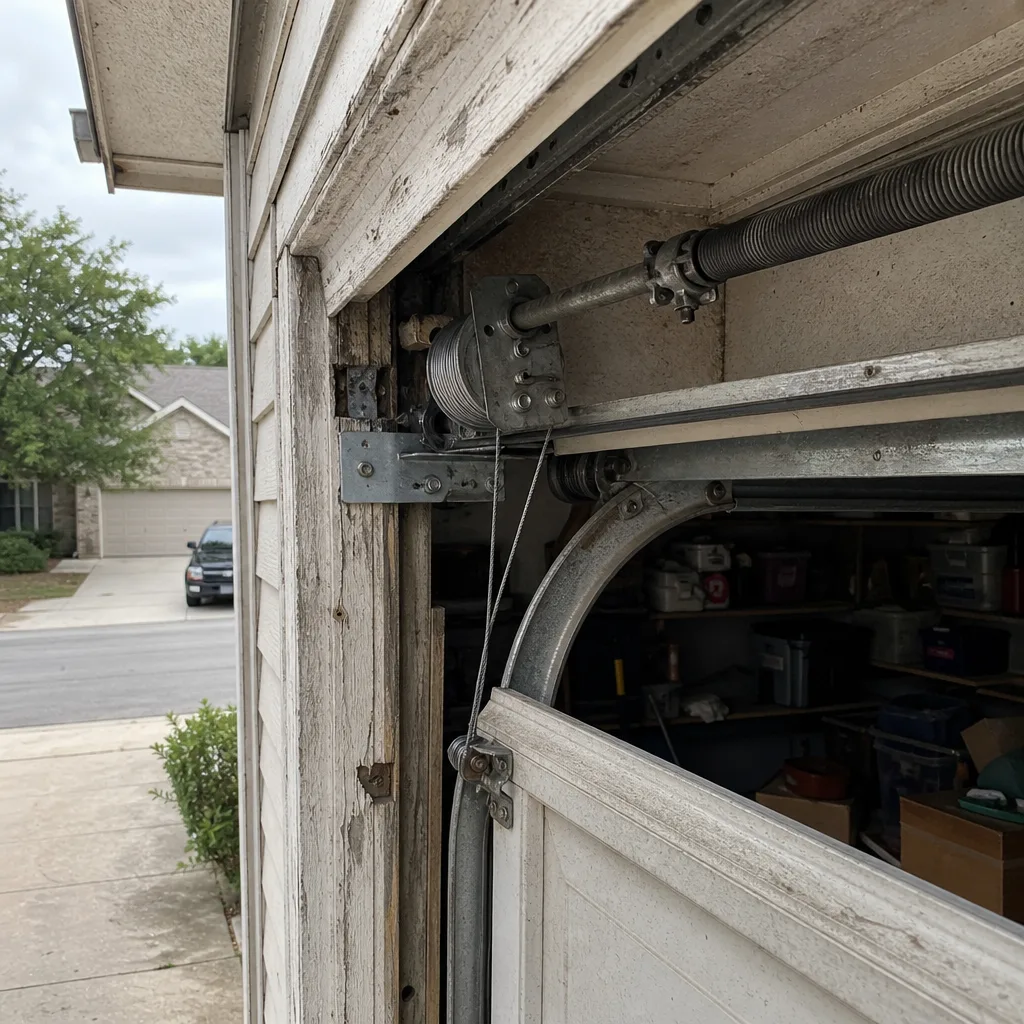 Before
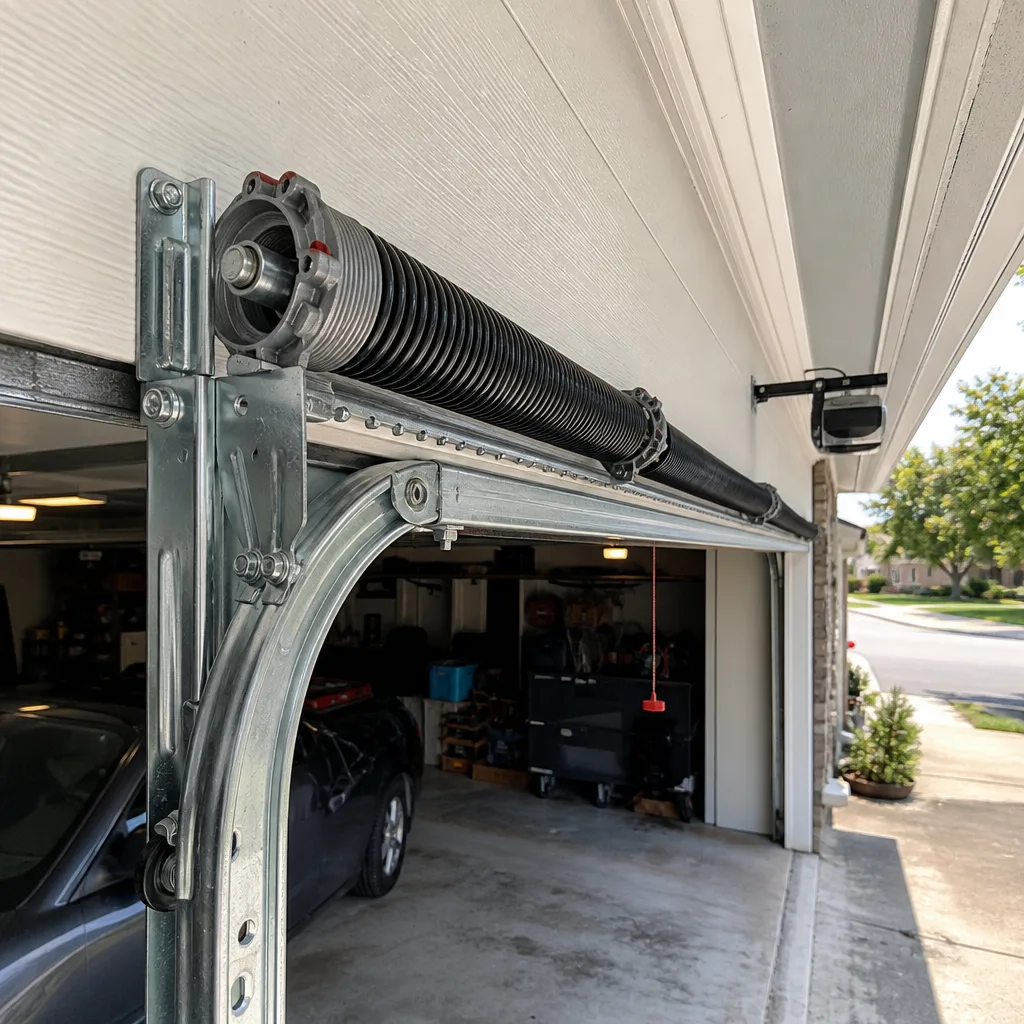 After
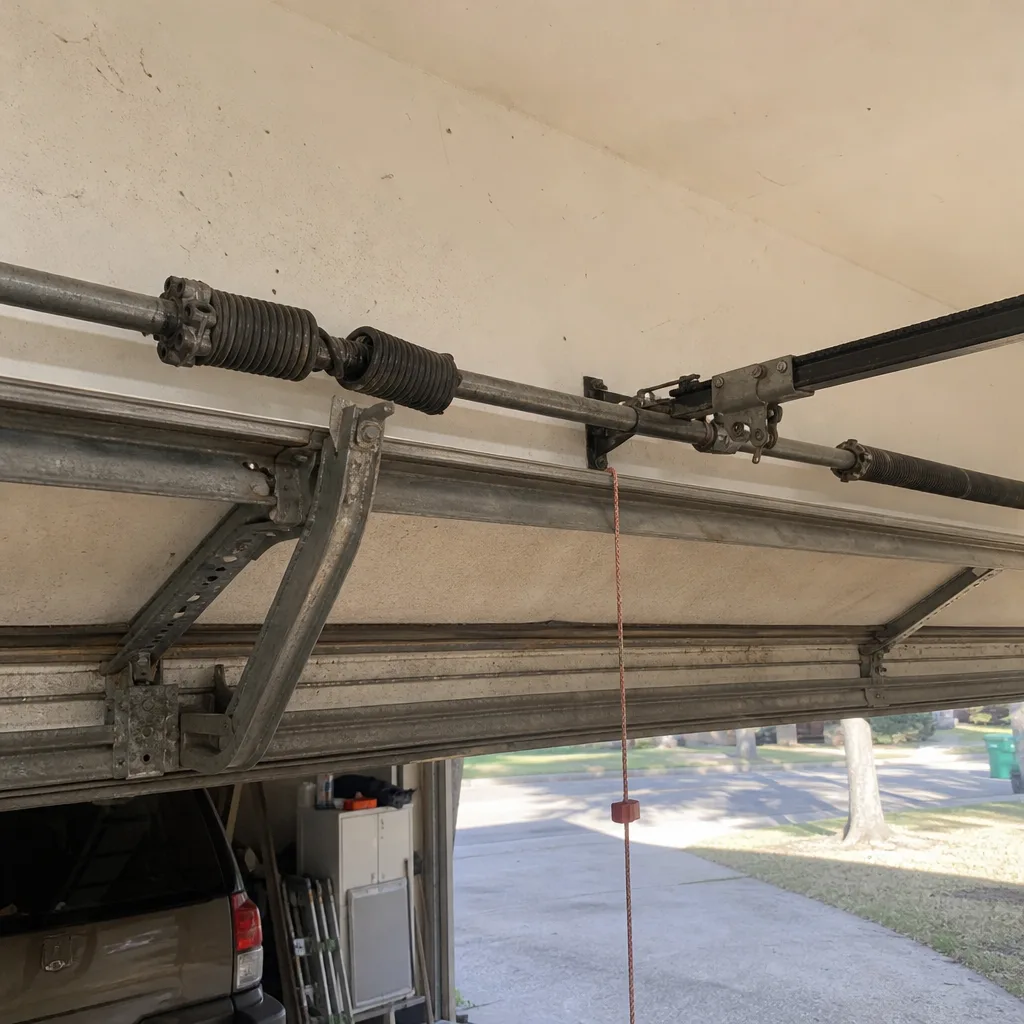 Before
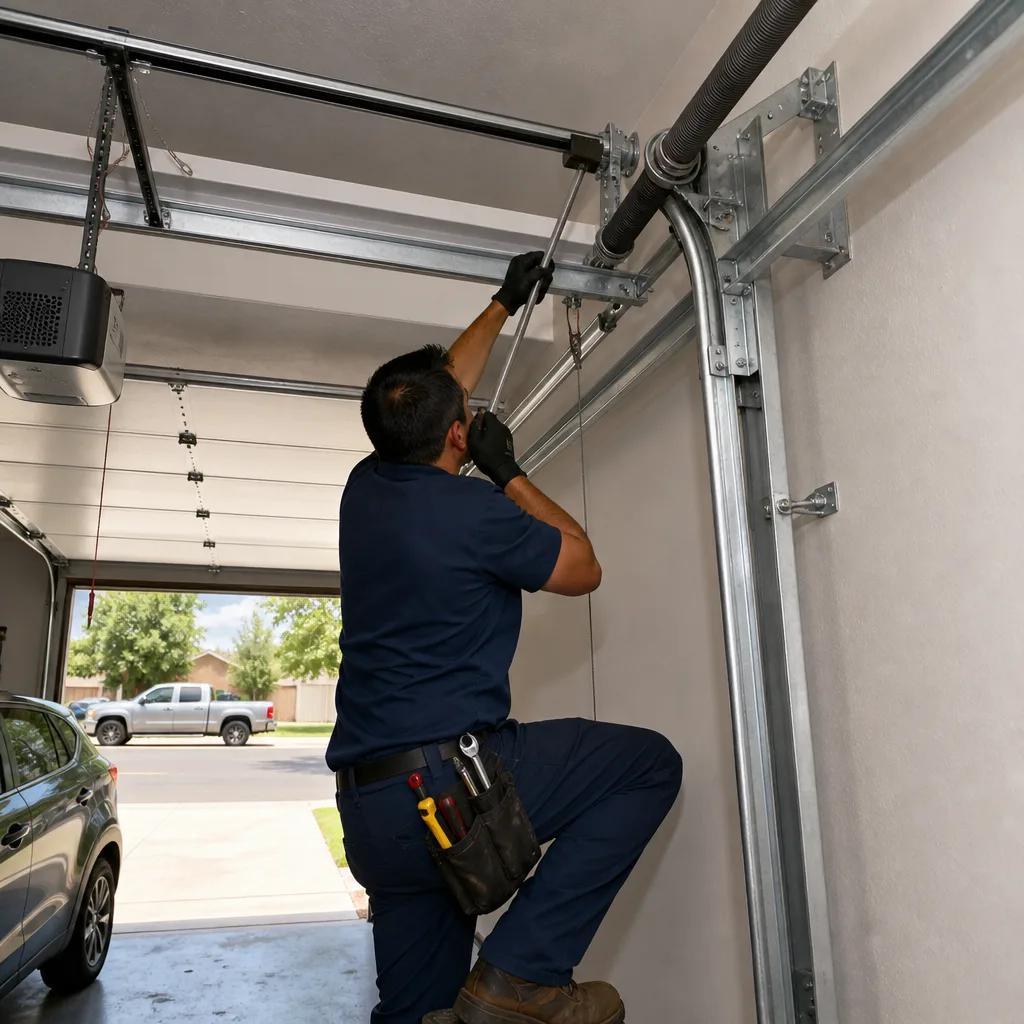 After
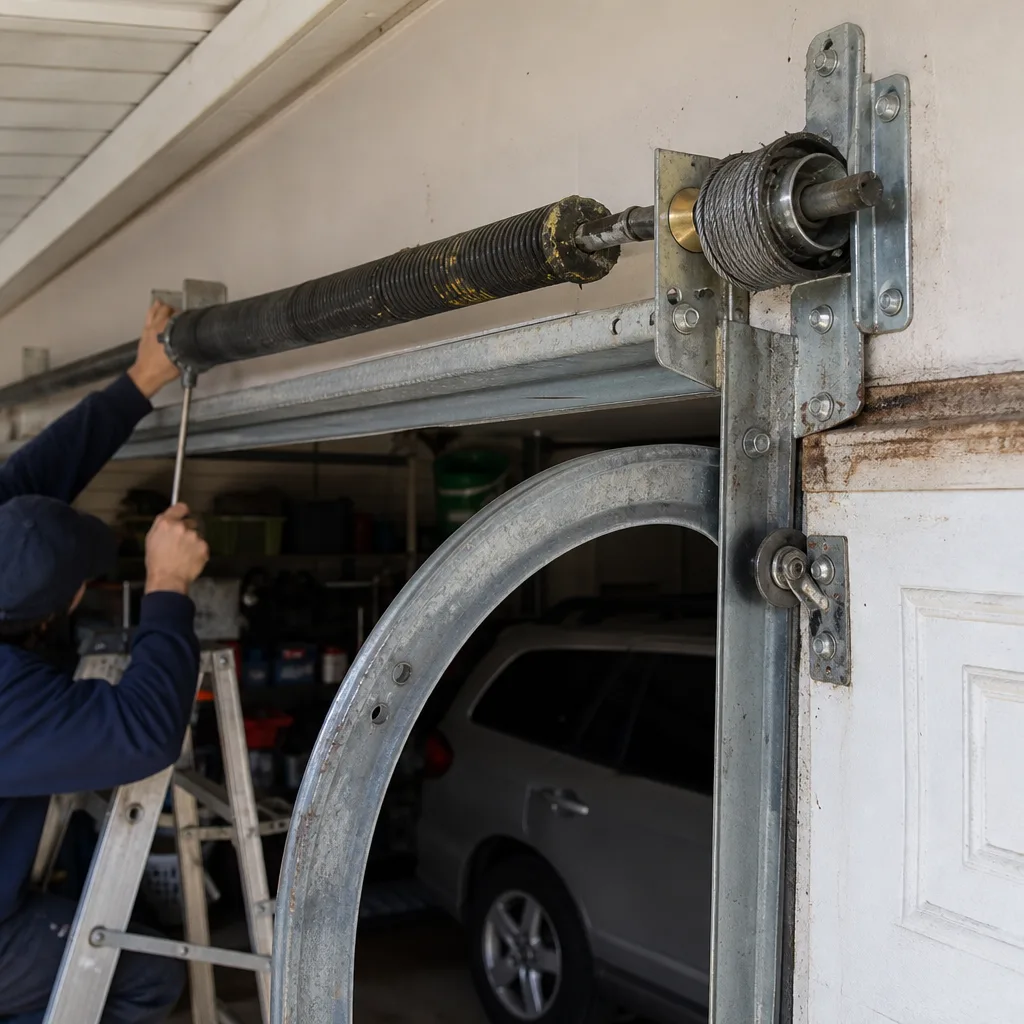 Before
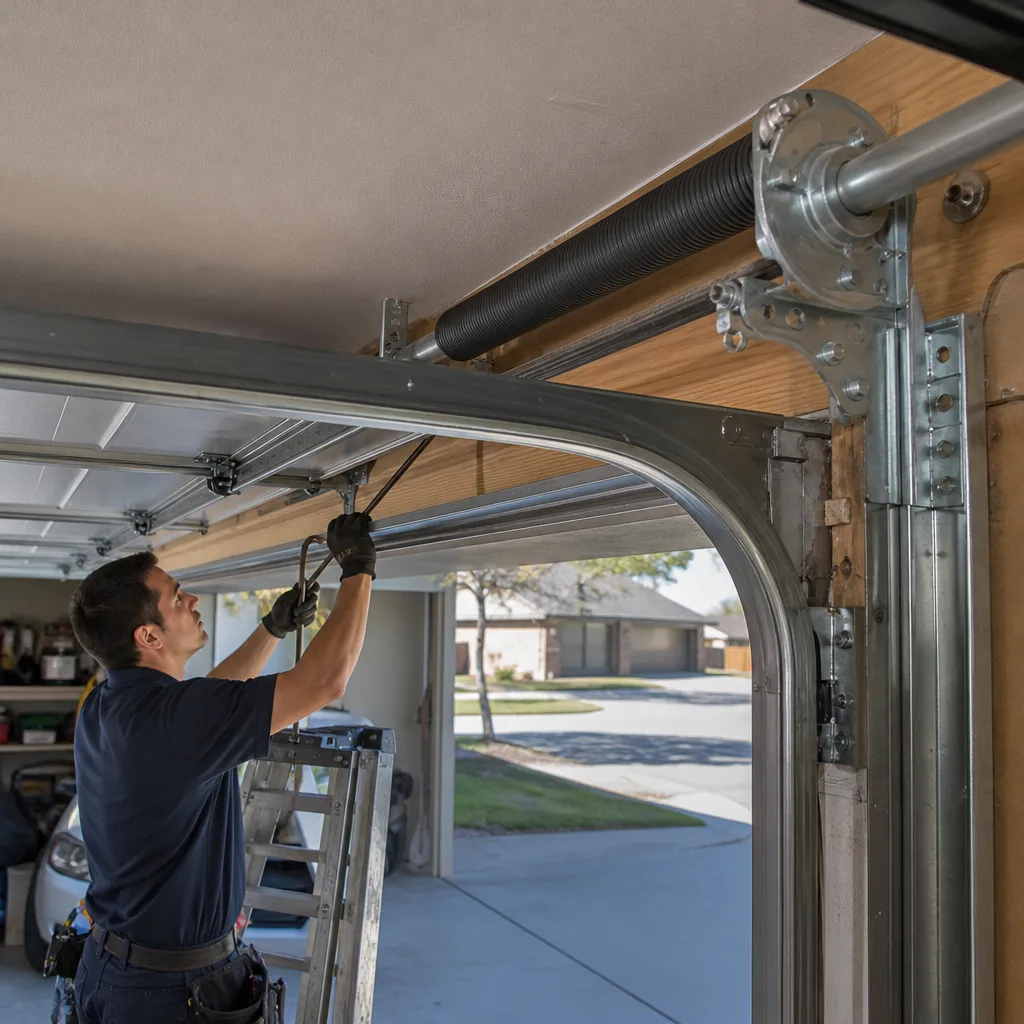 After
When to Call a Professional
There’s a line between what a homeowner should handle and what needs a trained technician. You should call a professional when a spring breaks, when a cable slips off the drum, when the door is visibly misaligned in the tracks, or when the opener runs but the door doesn’t move correctly. These situations involve stored mechanical energy or misdiagnosis risk that a specialist is equipped to handle safely. A buckled panel, a stripped opener gear, or a door that’s suddenly become loud all warrant a professional look before the problem cascades into additional damage. Be sure you understand Garage Door Permits, Codes & Inspections in TX: What You Need to Know if you’re considering any major repair or replacement work.
If you’re in Brushy Creek and you’re not sure whether your issue is a simple fix or a safety hazard, calling for a diagnosis is the right move. Goldleaf Garage Door Repair offers free estimates in Brushy Creek, call (855) 412-0407, and we’ll tell you what’s actually wrong without pushing unnecessary work. We’d rather answer a question than have you take a risk with a loaded spring.
Frequently Asked Questions
Yes, if the door is in good mechanical condition. Pull the red release cord hanging from the opener rail to disengage the door from the motor, then lift the door by hand. A properly balanced door should open with moderate effort. If the door feels extremely heavy or won’t stay up, a spring may be broken. Stop and call a professional rather than forcing it.
A fully charged battery backup typically provides 20 to 40 open-and-close cycles over 24 to 48 hours. The exact number depends on the door’s weight and the battery’s age. In Brushy Creek’s hot garages, battery life degrades faster than the manufacturer’s estimate, so testing twice a year and expecting a two to four year service life is realistic. Call (855) 412-0407 if you need help checking your specific system.
Pour warm, not boiling, tap water along the bottom edge where the door seal meets the concrete. The goal is to melt the ice bond, not to flood the track. Never force the door with the opener, and never chip at the ice with a tool. Both cause damage to the weatherstrip and the bottom panel. Once the door releases, open and close it manually once to confirm the seal is intact.
Storm debris in the track, a misaligned safety sensor, or a shifted panel are the three most common causes in Brushy Creek. Start by checking for visible obstructions in the track and cleaning the sensor lenses. If those are clear, the door may have been knocked out of alignment. Running the door repeatedly against an obstruction damages the opener and doesn’t fix the problem. A professional diagnosis is faster than guessing.
Twice a year is the right cadence for Brushy Creek homeowners. Do it in the spring and again in the fall, before storm season. The test takes two minutes: close the door, pull the release cord, lift the door manually to the full open position, lower it, and re-engage the opener. If anything feels stiff or unresponsive, you’ve found a problem before an emergency did.
On most models, no. Battery backup is built into the motor head at the factory. Retrofitting one to an older opener isn’t practical. If backup power matters to you, which it should in Brushy Creek given the freeze events in 2021 and the power grid’s vulnerability, plan to replace your opener with a battery-ready model from LiftMaster, Chamberlain, or Genie. We also handle opener repair and replacement throughout Brushy Creek.
The Bottom Line
Emergency preparedness for your garage door in Brushy Creek comes down to three things: knowing how to manually disengage your opener, having a working battery backup, and keeping the door system in good condition before weather turns bad. The February 2021 freeze exposed how many homeowners didn’t have even the first item covered. The homeowners who’ve since addressed all three are the ones we don’t hear from during storm events. They’re not calling because their doors work. The ones who ignore it until the power’s out end up with a stuck car, a torn seal, or a broken opener at the worst possible moment. A little preparation in fair weather makes all the difference.
If you’re in Brushy Creek and want to get your garage door ready for whatever the next season throws at it, Goldleaf handles complete installation as well as repair and opener service. Call (855) 412-0407 for a free estimate. The consultation is free, and the peace of mind from knowing your door will work when you need it is worth the phone call.
Written by the team at Goldleaf Garage Door Repair, serving Brushy Creek since 2012.