

Last updated October 30, 2026
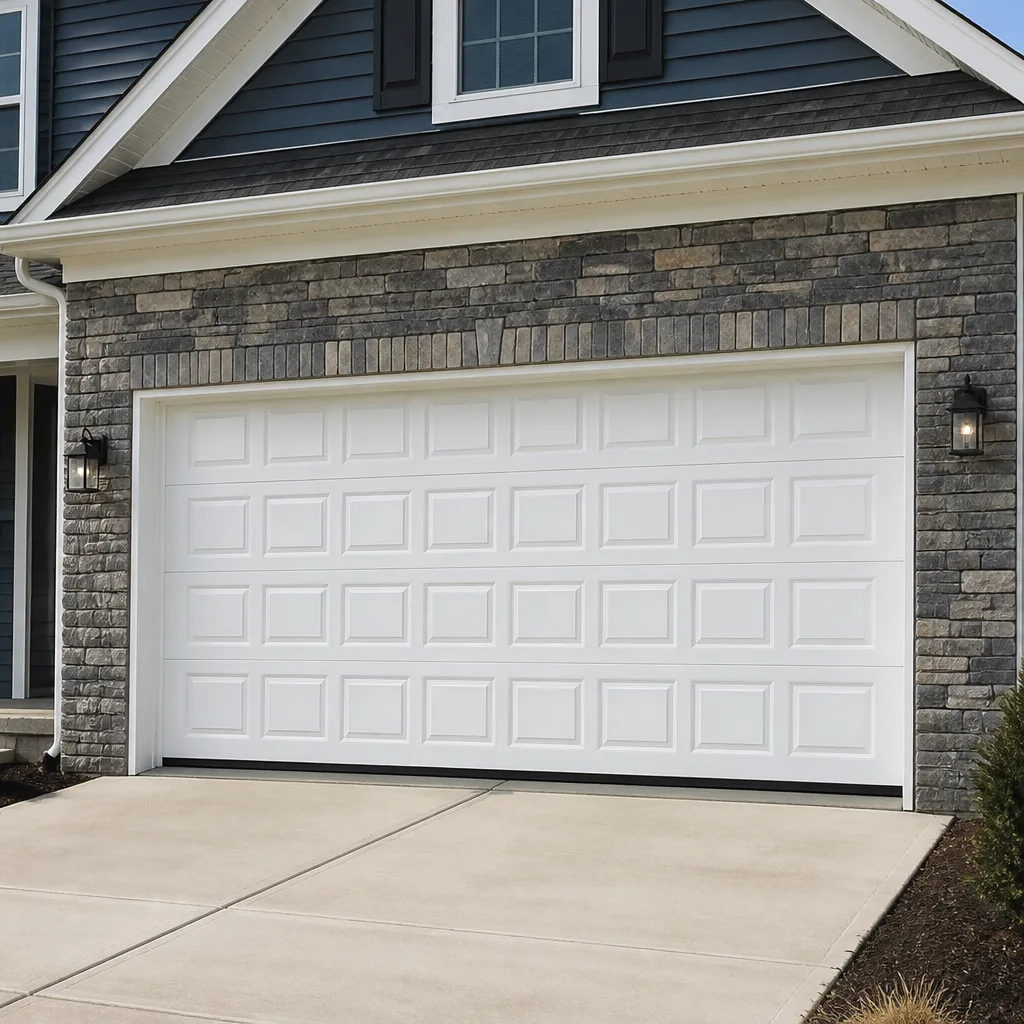 Raised-panel steel
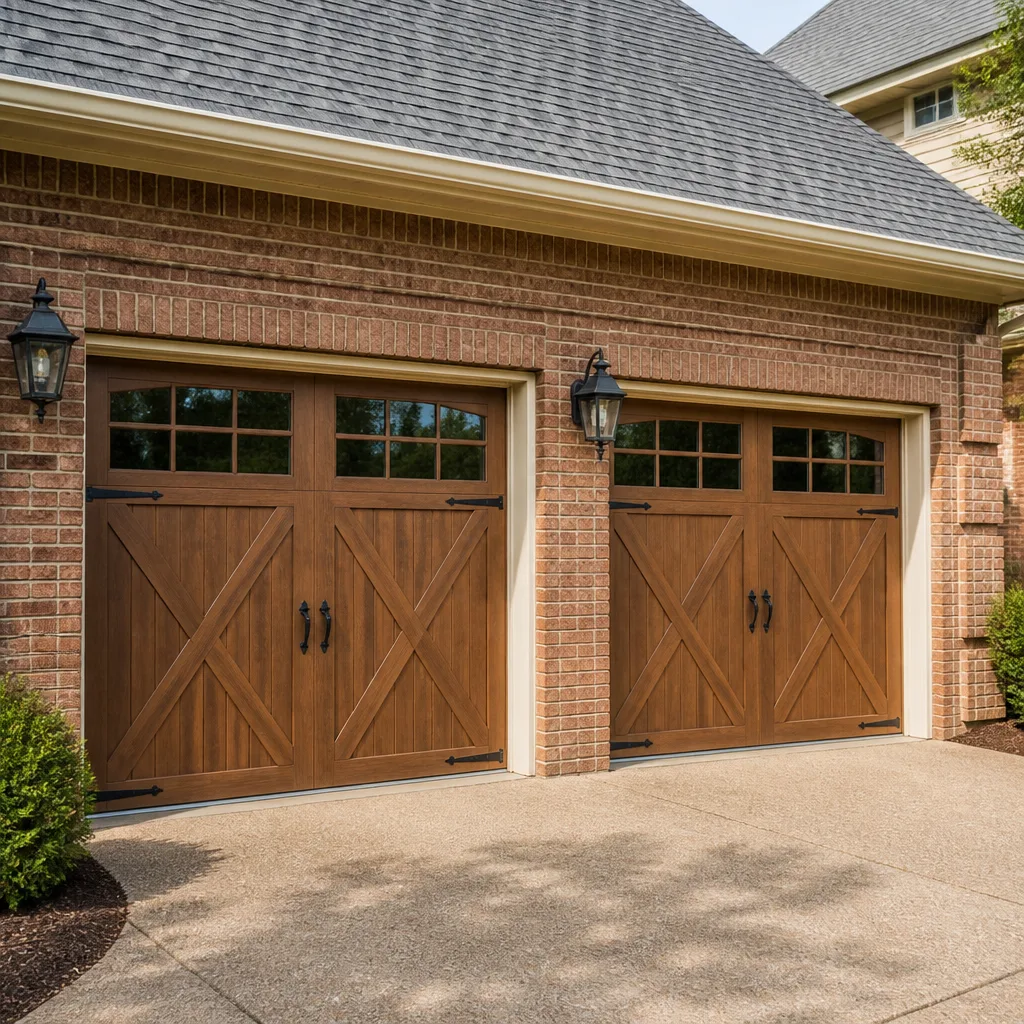 Carriage house
 Modern flush
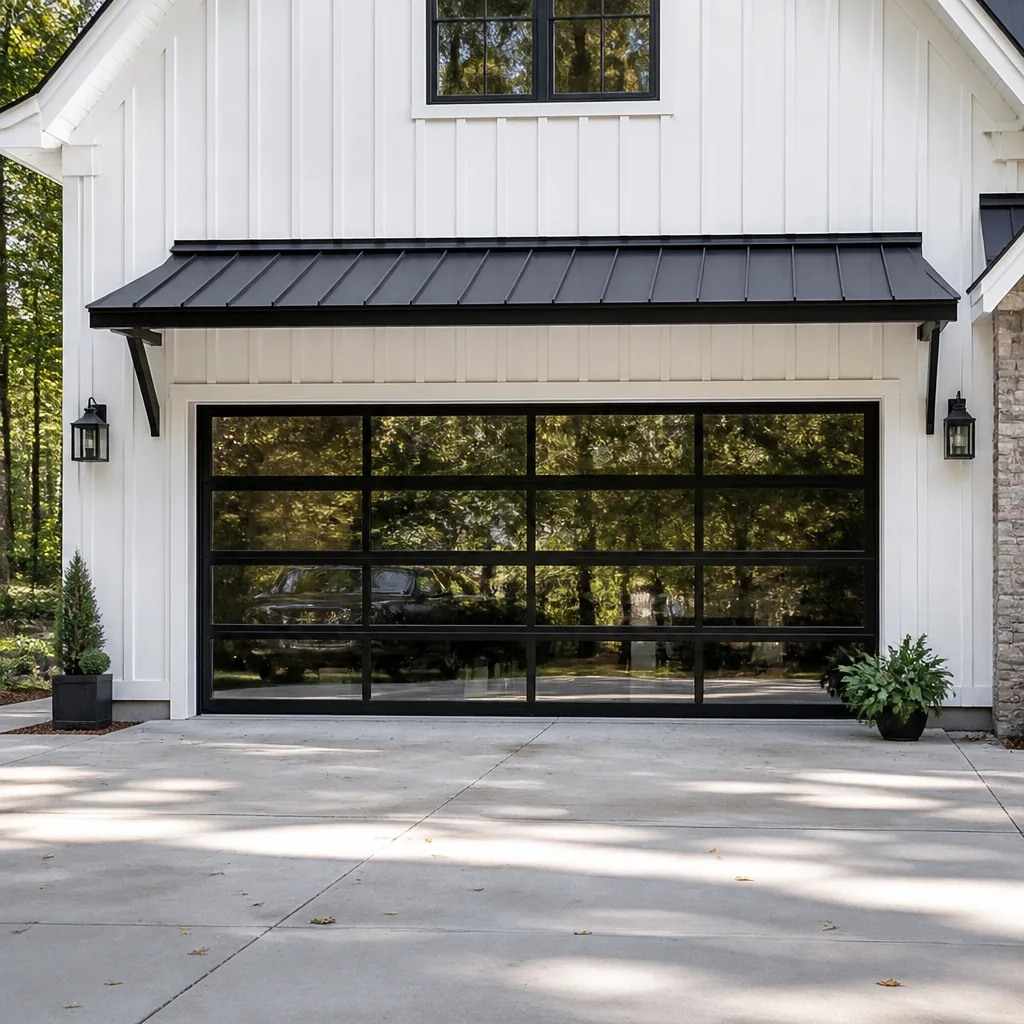 Full-view glass
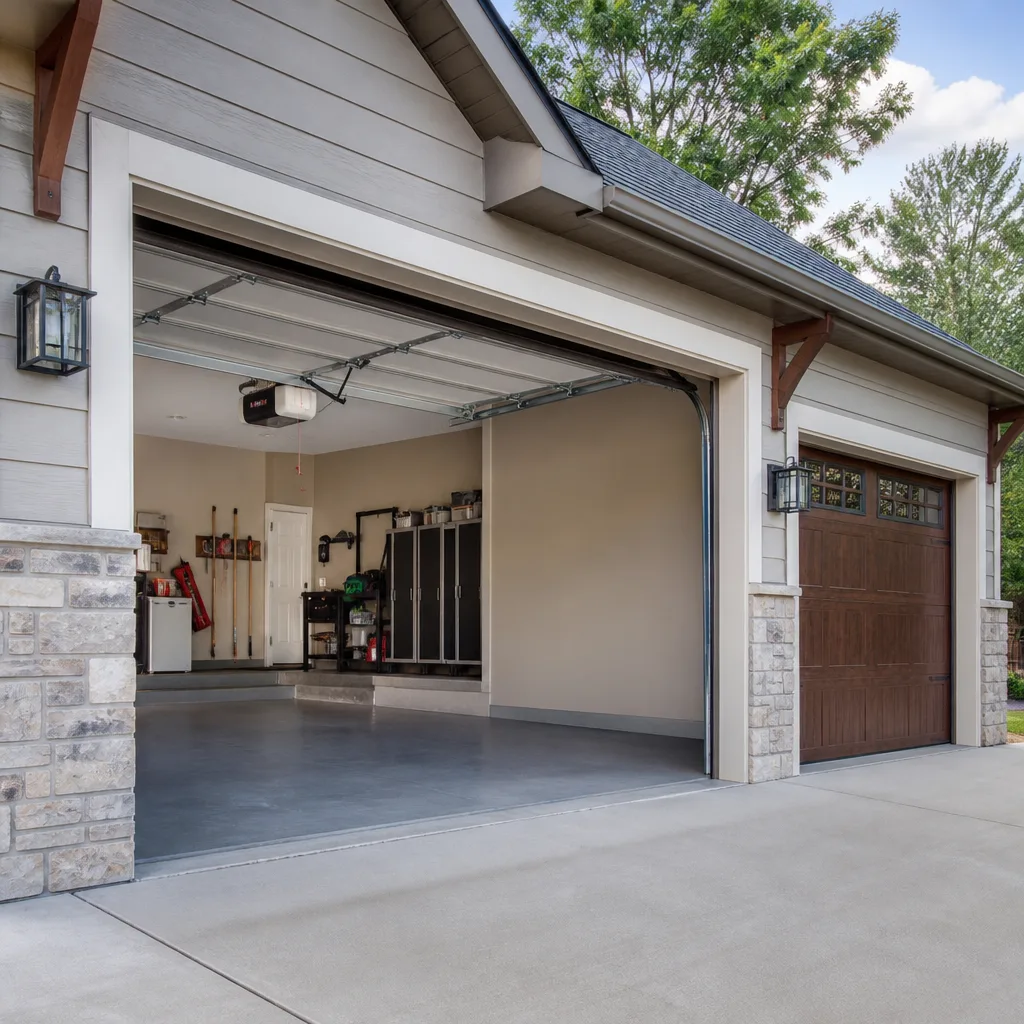 LiftMaster openers
 Chamberlain openers
Full 25-point door and opener safety check with every visit - springs, cables, rollers, tracks, and your LiftMaster or Chamberlain opener included
You get a price before we start. It does not change when the truck arrives.
Get your free estimateHow to Hire a Garage Door Contractor in Brushy Creek: A Step-by-Step Guide
A contractor can replace your spring in 45 minutes and still leave your door 20 pounds out of balance, and you won’t know until the opener burns out six months later. That’s the uncomfortable reality of garage door repair in Brushy Creek and everywhere else in Texas. The problem isn’t finding someone with a truck and a tool belt. The problem is finding someone who treats your door as a system, not a single broken part. This guide walks you through the exact process we’d recommend to a neighbor, a family member, or anyone in Brushy Creek who wants the job done right the first time. For more guides & resources, see our blog.
Styles & brands we work with
Quick Answer
To hire a garage door contractor in Brushy Creek, verify they work on your specific door and opener brand, ask three diagnostic questions before booking (detailed below), require an itemized written quote before work begins, and confirm in writing how long parts and labor are covered. For more on this topic, read The Complete Garage Door Repair Guide for Brushy Creek Homeowners. Skip the cheapest bid. Choose the contractor who can explain what’s wrong, why it failed, and what they’re going to do about it in plain language.
Table of Contents
- Step 1: Understand Your Door and Opener Brand Before You Call
- Step 2: Ask the Three Questions That Separate Specialists From Generalists
- Step 3: Know the Hidden Limitation of Single-Brand Dealers
- Step 4: What a Proper Diagnostic Visit Looks Like
- Step 5: How to Read a Quote for Transparency
- Step 6: Warranty Language to Require in Writing
- Step 7: Brushy Creek-Specific Considerations That Affect Your Door
- Common Mistakes to Avoid
- When to Call a Professional
- Frequently Asked Questions
- The Bottom Line
Step 1: Understand Your Door and Opener Brand Before You Call
Before you start dialing contractors in Brushy Creek, take 60 seconds to look at your garage door and opener. The opener brand is printed right on the motor housing, usually in letters you can read from a step ladder. The door brand is often stamped on a sticker near the bottom panel or on the inside edge of the door. Knowing these two names changes the entire conversation you’re about to have.
Why does this matter? Because a contractor who knows your brand is a contractor who has likely diagnosed the exact problem you’re experiencing dozens of times before. A contractor who doesn’t know your brand is going to spend the first 20 minutes of the visit figuring out how the hardware is put together. That’s time you’re paying for. It also increases the chance of a misdiagnosis.
We’re factory-familiar with 8 of the industry’s most widely installed residential door and opener brands: LiftMaster, Chamberlain, Genie, Clopay, Amarr, Wayne Dalton, Craftsman, and Raynor. That includes the Wayne Dalton TorqueMaster spring system, which many generalist technicians have never opened before and will incorrectly tell you needs a full door replacement. It includes older Craftsman openers that have been out of production for a decade but still run in thousands of Brushy Creek garages. And it includes Raynor doors, which use a slightly different track profile than other manufacturers. Knowing the brand is the starting point, not a nice-to-have.
A door is not a generic object. It’s a system of panels, springs, cables, tracks, hinges, weather seals, and an opener. Each manufacturer engineers those components slightly differently. When you call a contractor, the second sentence out of your mouth should be, “I have a [brand] door with a [brand] opener.” The right contractor will have a reaction. A blank pause is your first red flag.
Step 2: Ask the Three Questions That Separate Specialists From Generalists
You can learn more about a contractor in a 90-second phone call than in an hour of reading online reviews. Keep these three questions in front of you when you call anyone in Brushy Creek.
- “What’s your process for diagnosing the problem?” A specialist will describe a systematic check: the balance of the door, the condition of springs, cables, rollers, hinges, and the opener’s force settings. A generalist will say something vague like, “We’ll take a look and see what’s wrong.” The difference is the difference between finding the root cause and replacing whatever part looks most visibly worn.
- “Do you work on [your door brand] and [your opener brand]?” Listen for specifics. “We work on most brands” is a non-answer. “We’ve serviced hundreds of Wayne Dalton and LiftMaster setups in the Brushy Creek area” is a real answer. The brand-specific question also tells you whether they’ll be able to source the correct parts, not just whatever is on the truck.
- “Do you quote the job before doing the work?” The only acceptable answer is a direct yes, with a number, in writing, before any wrenches turn. If they quote a range, pin them down. A $100 door repair is not the same job as a $450 door repair. “We’ll see once we get in there” is the open door to an invoice that surprises you. The price is quoted and agreed before any work starts, period.
One of the most telling signs during that phone call is whether they ask you questions in return. A specialist will want to know what the door sounds like when it opens, whether the opener is straining, whether the door is jerking or pausing midway. A generalist will just book the appointment. The quality of the initial conversation predicts the quality of the service call.
Step 3: Know the Hidden Limitation of Single-Brand Dealers
A single-brand dealer isn’t necessarily a bad choice, but you need to understand what you’re getting. If a company is an authorized dealer for one manufacturer, they typically receive training, parts access, and possibly incentive structures tied to that brand. That’s excellent when they’re servicing the brand they carry. It’s less excellent when your home has a different brand installed.
Here’s what happens in practice. You call a Clopay dealer because they have a strong local reputation. But your door is an Amarr. The dealer comes out, looks at the door, and tells you that the spring you need is “hard to find” or “no longer made.” That may be true from their parts channel. It is not true in the real world. What they’re actually telling you is that they don’t have a relationship with Amarr’s parts distribution network, and it’s easier for them to sell you a new Clopay door than to chase down an Amarr spring. That’s not dishonesty. It’s a structural limitation of being tied to one brand.
The same applies to openers. A company that’s deeply invested in one opener brand may recommend replacing a perfectly repairable opener from another brand because their technicians aren’t trained to open it up. If your opener in Brushy Creek is making a grinding noise but still lifting, the fix might be a $150 gear replacement. But if the contractor is a single-brand dealer, the answer you hear could be a $500 replacement recommendation.
This is why brand-agnostic expertise matters. The recommendation should be based on what the door actually needs, not on which product a technician is commissioned to push. A multi-brand specialist can look at your Raynor door and your LiftMaster opener and give you an honest assessment of which components are failing and which have years of life left. One call, full system.
Step 4: What a Proper Diagnostic Visit Looks Like
You can learn to spot the difference between a real diagnostic visit and a quick visual that results in parts-first guessing. Some of it is observable body language. Some of it is what the technician does with their eyes and hands. Here’s what a thorough diagnostic looks like, and what to watch for.
A proper diagnostic visit starts with a conversation. The technician asks you what you’ve noticed: strange sounds, jerky movements, door binding, opener struggling. The answer gives them a baseline. Then they watch the door work. They stand in front of it and run a full open-and-close cycle with their eyes on the track alignment, the cable tension, and the way the door rounds the curve of the track. They’re looking for hesitation, for one side lifting before the other, for cables that slacken at any point.
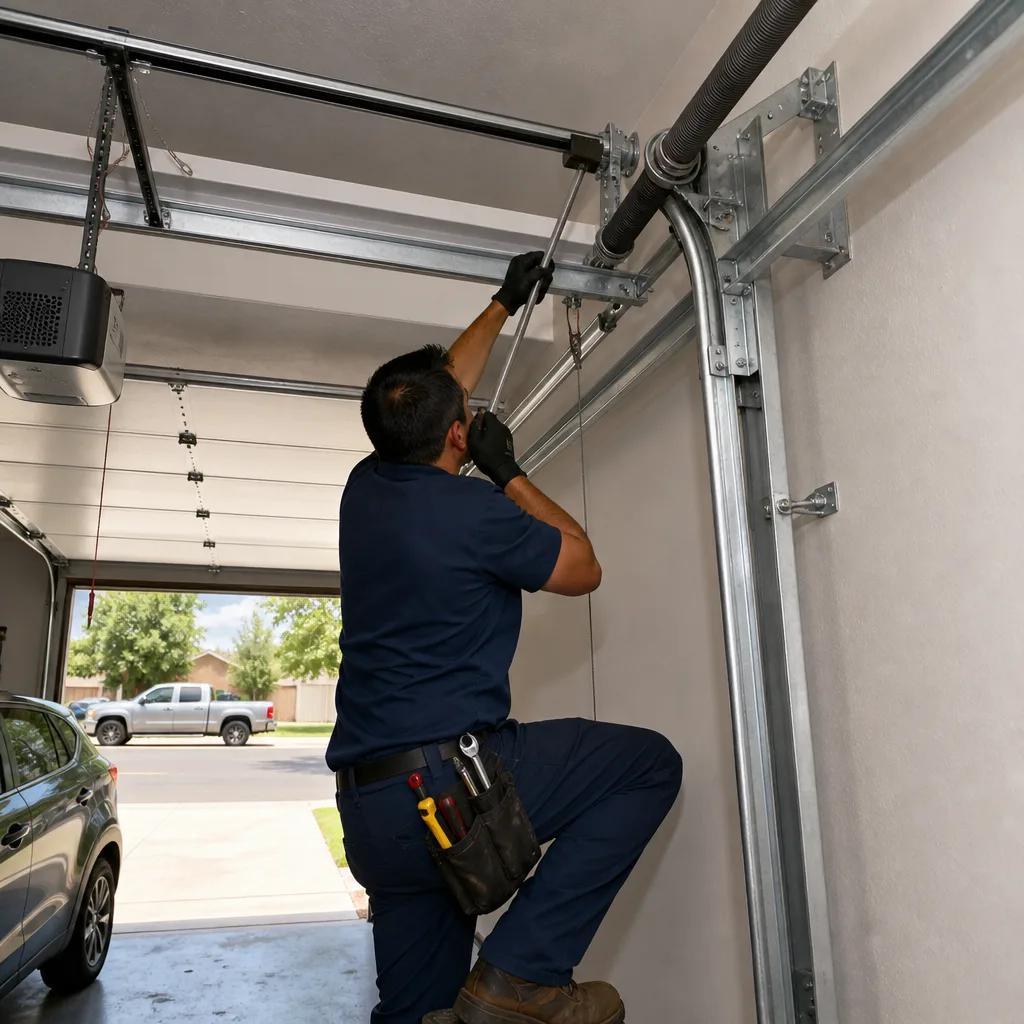
Then they check the balance. They pull the manual release on the opener (with the door in the down position) and lift the door by hand. A balanced door should rise smoothly with roughly the same effort through the entire travel. A door that’s heavy at the bottom, or that drops when they let go, is telling them something about spring tension. This is not an optional check. If your technician never puts a hand on the door to test its balance, they’re not diagnosing the system, they’re just looking at the broken part.
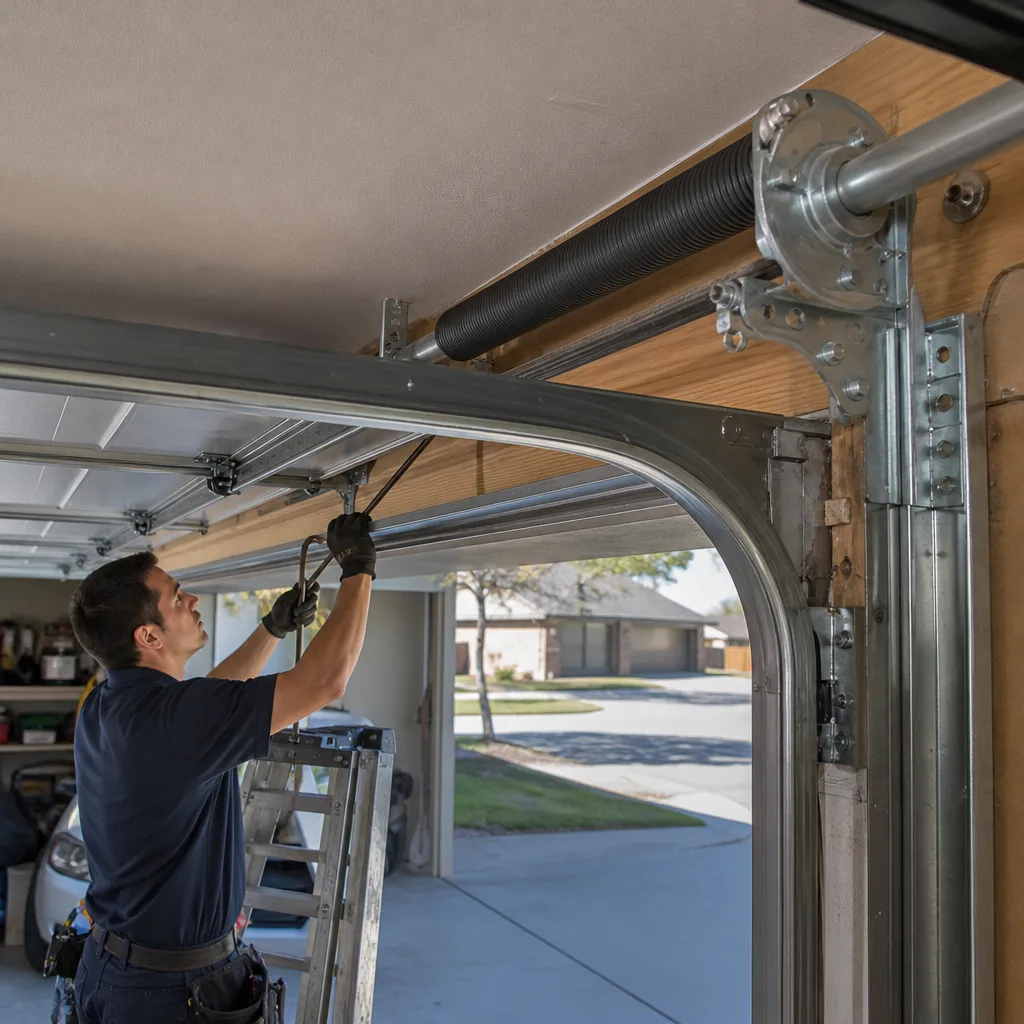
Then comes the hardware inspection. Hinges, roller stems, roller bearings, cable condition, spring coils for gaps or deformation, the opener’s force settings and limit switches. A specialist checks these even if the customer only called about a noisy opener. Why? Because the noisy opener is often the symptom of a door that’s binding, and the binding door is a symptom of aging springs. Treat the cause, and the symptom disappears. Treat the symptom, and you’ll be calling again in a few months.
That’s the test. A 15-minute visual and a fast quote is parts-first guessing. A 45-minute systematic check that moves from watching to testing to inspecting is diagnosis. When you call for your first appointment, ask how long the diagnostic typically takes. The answer will tell you which kind of company you just hired. Your door, diagnosed correctly the first time, is the single biggest money-saver in this entire process.
Step 5: How to Read a Quote for Transparency
After the diagnostic, you should have a written quote in your hand or in your inbox. Reading it correctly tells you as much about the contractor as the diagnostic itself. The structure of the quote, not the total at the bottom, is the transparency test.
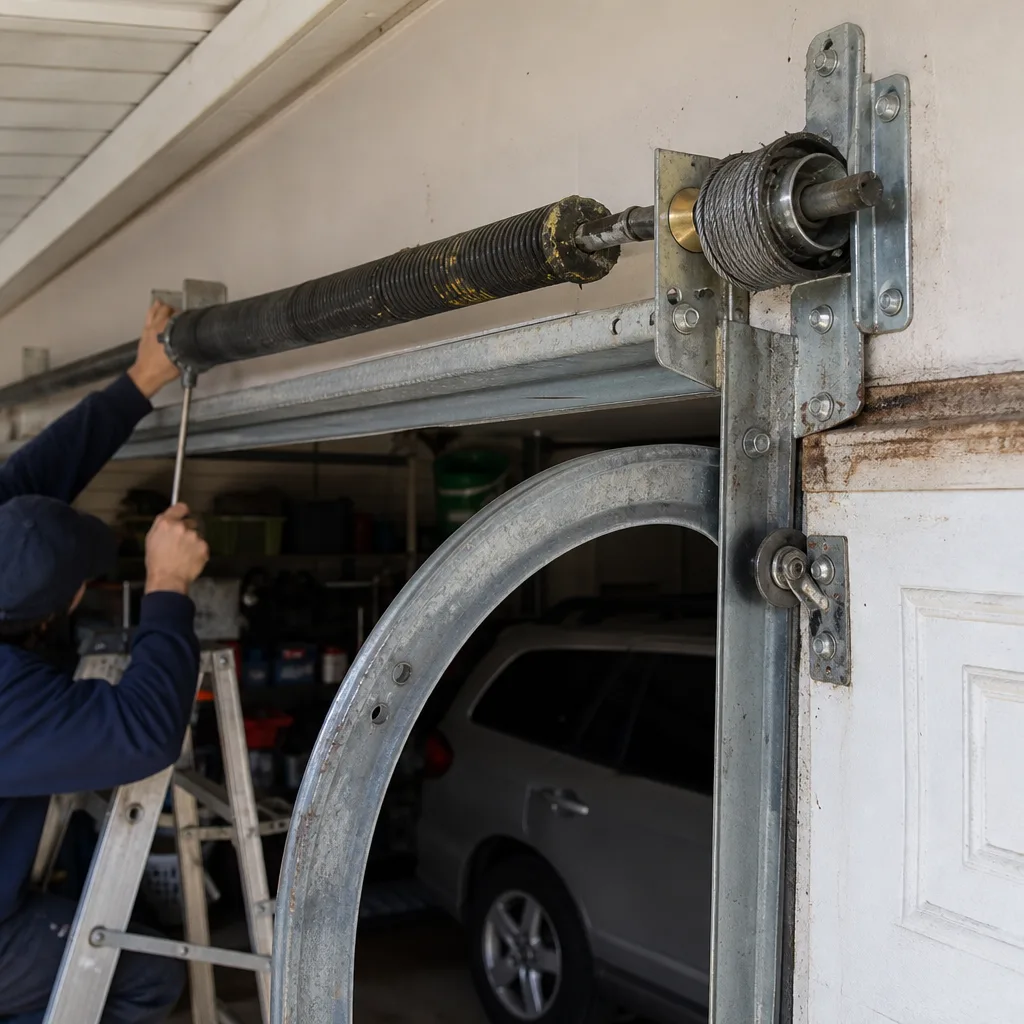
Look for itemized lines. A transparent quote separates the spring from the spring replacement labor, the roller set from the roller replacement labor, the opener logic board from the board installation labor. The parts and the labor are two different pricing universes. A spring might cost $80 to $180. The labor to install it safely is a separate line item. When a quote bundles “spring replacement: $425” without breaking out the part, you’re not being cheated, but you’re not seeing the cost structure either.
Now, there’s a nuance here. Some systems are genuinely quoted as a unit. A torsion spring replacement includes two springs, a center bearing, and sometimes cables, because those components wear together and you don’t replace them piecemeal. That’s legitimate. The key is that the quote should explain why it’s bundled. “Includes both springs, center bracket, and safety cable re-thread” is transparency. “Spring job: $450” with no further detail is not.
Read the scope line carefully. Does it include rebalancing the door after the spring goes on? Does it include a full cycle test? Does it mention cleaning or lubricating the tracks? The difference between a meticulous quote and a lazy one is visible in the scope language. A meticulous contractor writes down what they’re going to do because they know the customer deserves to hold them to it. A lazy contractor writes “fix door” and figures they’ll sort it out on site.
One more thing: ask about the parts. Specifically, are they using manufacturer OEM parts or generic aftermarket? For openers, OEM matters. A LiftMaster logic board is not the same as a no-name clone. For springs, the question is cycle rating: a 10,000-cycle spring lasts roughly three times longer than a 5,000-cycle spring, and the price difference is modest. A specialist can and will tell you what they’re putting in and why. A generalist will say “a spring is a spring.”
Goldleaf Garage Door Repair’s approach is to quote the job in writing before work starts, with the parts and labor separated so you can see what you’re paying for. That’s the gold-standard on every job, and it’s how estimates in Brushy Creek should always look.
Step 6: Warranty Language to Require in Writing
Here’s where many Brushy Creek homeowners get caught. The contractor says, “That comes with a warranty.” What does it actually cover? If the answer is only in the technician’s verbal assurance, you don’t have a warranty, you have a warm feeling. Put it in writing. And ask the specific questions that matter.
The most important distinction is parts versus labor. Most manufacturers provide a parts warranty. If the spring snaps in year two of a supposed three-year spring, the part itself might be covered. But who covers the labor to put the new spring on? If the answer is “you do,” the warranty is worth about half of what it sounded like. Labor is typically the more expensive side of the invoice. Ask: “If this part fails within the warranty period, do I pay for the labor to replace it?” Write down the answer in your own notes, and require the answer in the written quote.
Springs are the most common place this bites. A spring might carry a “3-year warranty” from the manufacturer, but the labor warranty from the contractor is 30 days. If the spring fails at month eight but the part is covered, the contractor may charge you the labor call-out at full price. That’s not a scam, but it’s a gap you should know about before you pay the first invoice. In Brushy Creek, the heat and the cycle frequency (doors opening 4-6 times a day) mean springs work harder than in milder climates. Warranty language matters here.
Ask about the opener warranty specifically. Opener motor failures within the first year are rare but not unheard of. If the contractor replaces an opener logic board or gear kit, will they warranty both the part and the installation labor? For how long? The answer tells you how much confidence they have in their own work.
Here’s the minimum you want in writing: (1) the part being replaced, (2) the manufacturer of the part, (3) the cycle or life rating if it’s a spring, (4) the length of the parts warranty, (5) the length of the labor warranty, and (6) who handles a warranty claim, the contractor or the manufacturer. If all six items aren’t in the written quote, ask for an addendum. A contractor who won’t put it in writing is telling you something important about how they handle callbacks.
Step 7: Brushy Creek-Specific Considerations That Affect Your Door
Brushy Creek sits in the Austin metro area, and that geography shows up in your garage door in ways that a generic online guide won’t tell you about. Understanding these local factors helps you hire smarter.
First, the humidity. Central Texas summers are hot and damp, and the humidity cycle causes metal components to oxidize faster than they would in, say, West Texas. Roller bearings get gritty. Hinges get stiff. Springs, if they’re not coated, develop surface rust that accelerates fatigue. When you’re hiring a contractor in Brushy Creek, ask whether they’re inspecting for corrosion on the hardware, not just the obvious break. A specialist will mention it before you do.
Second, the soil. Austin-area soil is famous for expansive clay that shifts with moisture content. Concrete slabs move, garage floors settle, and doors that were perfectly plumb when installed are now binding against the tracks or sitting slightly angled in the opening. This isn’t a malfunctioning door. It’s a structural reality of the region. The fix is a track adjustment and re-shimming, not a parts replacement. If a contractor in Brushy Creek tries to sell you a new track system because “your door is out of alignment,” get a second opinion. You may just need a tune-up.
Third, the neighborhoods. Homes in the older sections of Brushy Creek, especially those built in the 1980s and 1990s, often have original doors and openers that are 20 to 30 years old. Those setups predate the current safety sensor standards and smart-opener technology. They’re also more likely to have single-spring systems, which are not inherently dangerous but are harder on the door’s balance. Newer construction in Brushy Creek tends to have modern dual-spring torsion systems and belt-drive openers. The age of your home is a useful data point to share with a contractor on the phone.
Fourth, the call frequency. Brushy Creek homeowners use their garage doors more than the national average, partly because the garage is often the primary entry point from the driveway and the door gets cycled for every school run, gym trip, and grocery run. High cycle counts means springs fatigue on a calendar basis, not just a use basis. Plan for a spring replacement every 7 to 10 years in Brushy Creek, and sooner if you’re running an older single-spring setup.
Common Mistakes to Avoid
- Hiring on price alone. The cheapest bid in Brushy Creek is often the most expensive in year one. A technician rushing through installations is more likely to leave the door slightly out of balance, which then burns out your opener motor. That’s the $150 repair that becomes an $800 replacement.
- Not verifying brand familiarity. Calling a contractor who’s never touched a Wayne Dalton TorqueMaster and asking them to diagnose a spring issue is asking for a lecture about how your door is “unusual” followed by an upsell. Ask the brand question on the phone, not after the tech arrives.
- Accepting a verbal quote. If the number isn’t written down, it doesn’t exist. A verbal “should be around $300” becomes $480 on the invoice and you have no leverage. Always get the quote in writing with itemized lines.
- Ignoring the balance test. If the technician doesn’t test the door’s balance manually during the diagnostic, they’re not doing a diagnostic. They’re looking for the most obvious broken thing. That’s how you end up with a new spring and the same grinding noise.
- Choosing a contractor based on ad placement. The top Google result or the biggest yard sign in Brushy Creek is not a proxy for diagnostic skill. It’s a proxy for marketing budget. Ask the three questions. The answers will tell you everything.
- Deferring maintenance until something breaks. In Brushy Creek’s heat, “waiting for the sound to get worse” is the most expensive possible strategy. A $120 tune-up today prevents a $400 emergency call next month. Rust, heat, and high cycle counts punish deferred maintenance hard here.
- Forgetting the opener is part of the system. Many “garage door” companies in the area focus only on the door panels, springs, and tracks. They’ll fix the door but tell you to “call someone else” for the opener. Then you’re coordinating two contractors for one problem. Hire a company that handles the full system in one visit.
When to Call a Professional
Some jobs are worth doing yourself. Replacing a garage door spring, adjusting cables under tension, or rewiring an opener is not on that list. High-tension springs and cables store enough energy to cause serious injury if they release unexpectedly. If your door has a snapped spring, a frayed cable, or an opener that’s arcing or smoking, leave the door alone and call a trained professional. A real expert will always flag the danger, and the cost of a correct repair is far less than the cost of a hospital visit. Goldleaf Garage Door Repair offers free estimates in Brushy Creek, call (855) 412-0407 and we’ll come take a look, no charge for the diagnostic conversation.
Frequently Asked Questions
In Brushy Creek, typical garage door repairs run from $125 for a basic tune-up or minor hardware replacement to $350 to $800 for a full spring replacement or major repair. The exact price depends on the door brand, spring type (torsion vs. extension), and whether the opener is involved. Openers add $200 to $600 if the motor or logic board is failing. The only way to get a real number is a written, itemized quote. Call (855) 412-0407 and we’ll give you a free estimate for your specific door and opener combination.
Ask what their diagnostic process is, whether they work on your specific door and opener brands, and whether they provide a written quote before work starts. The answers to those three questions separate a true specialist from a generalist who’s hoping for an easy parts swap. In Brushy Creek, where heat and humidity accelerate component wear, you also want to ask about corrosion inspection and balance testing.
A fair quote is itemized, separating parts from labor, with the manufacturer of the parts named and the scope written in specific terms. If the quote says “fix door” with a single number at the bottom, ask for detail. You should know exactly what part is being replaced, what brand it is, and what the labor covers before you sign anything.
It depends on the contractor. Many door-only companies in the Brushy Creek area will work on the panels, springs, and tracks but refer you elsewhere for opener problems. A full-system specialist handles both. Opener repair expertise covering the leading smart and legacy opener brands, including LiftMaster and Craftsman, means one call gets your entire garage door system working. That’s a distinction worth asking about on the phone.
In Brushy Creek’s climate, a typical torsion spring lasts 7 to 10 years, depending on usage. Doors that cycle 4 to 6 times a day will wear springs faster than doors used twice a day. If your home is older and still has a single-spring system, expect to replace it sooner. A spring with a 10,000-cycle rating will last roughly three times longer than one with a 5,000-cycle rating, and the price difference is worth it.
First, check whether the opener is getting power, including the GFCI outlet it’s plugged into. If the door is partly open and one side sags, there’s likely a cable problem or broken spring, and you should not try to force the door. Pulling the manual release and attempting to lift a door with a broken spring can be extremely dangerous. For any door that’s jammed, off-track, or showing snapped cables, call a professional. Estimates are free, and a quick call to (855) 412-0407 can tell you whether it’s a simple opener issue or a larger problem.
The Bottom Line
Hiring a garage door contractor in Brushy Creek comes down to one question: does this person understand my door as a system, or are they looking for the most obvious broken part? A specialist diagnoses before replacing, knows the brand already in your garage, handles the full door-to-opener range, and puts everything in writing before the first wrench turns. Avoid the cheapest bid. Ask the questions. Insist on a written quote with itemized parts and labor. And if you’re uncertain, call a company that can answer those questions on the phone. The right contractor saves you from the 45-minute spring replacement that burns out your opener six months later.
If you’re in Brushy Creek and want a straight answer about your door or opener, give us a call at (855) 412-0407 or learn more about our Garage Door Repair in Brushy Creek services. Whether it’s repair, Garage Door Opener Repair in Brushy Creek, or a full Garage Door Installation in Brushy Creek, we’ll walk you through what you need and quote the job in writing before any work begins. You can also explore more about our full range of service at the Goldleaf Garage Door Repair home page.
Written by the team at Goldleaf Garage Door Repair, serving Brushy Creek since 2012.
See the difference
 Before
 After
 Before
 After
 Before
 After