

Last updated October 30, 2026
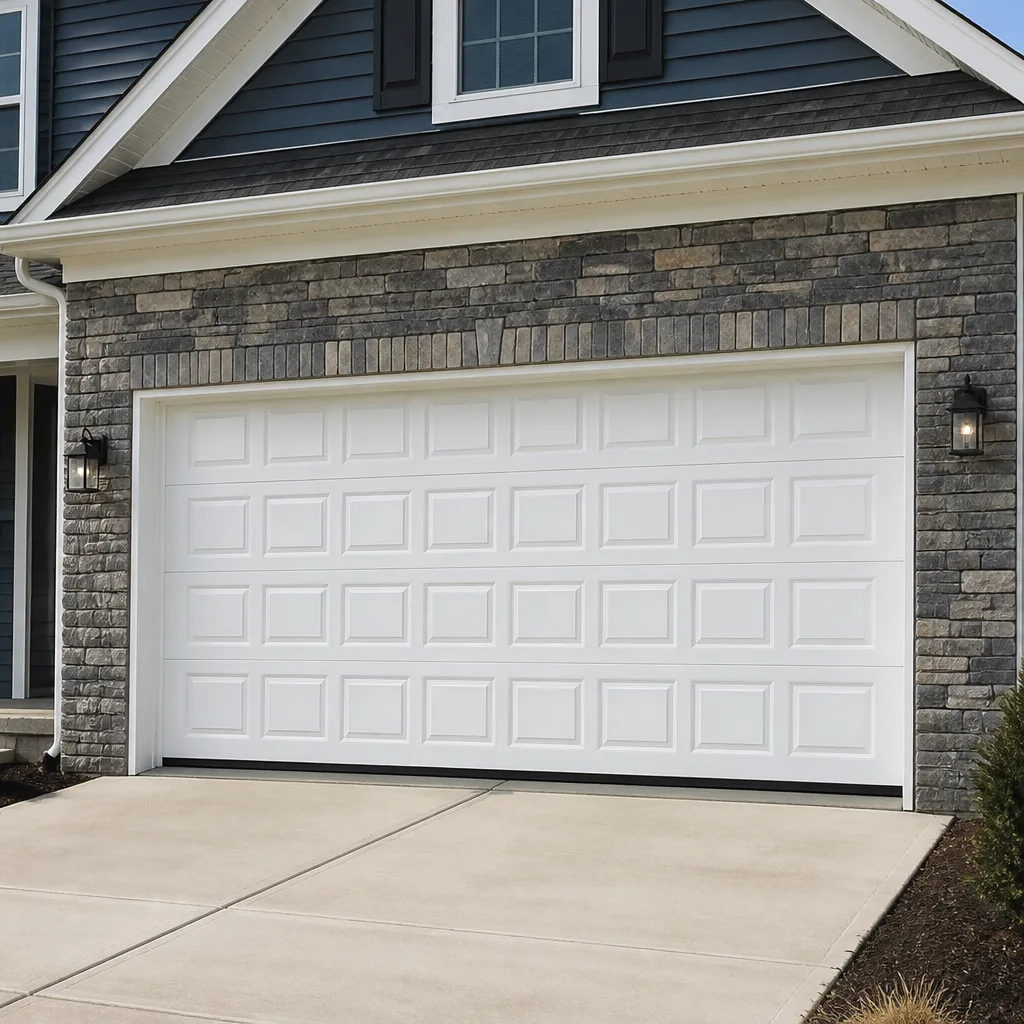 Raised-panel steel
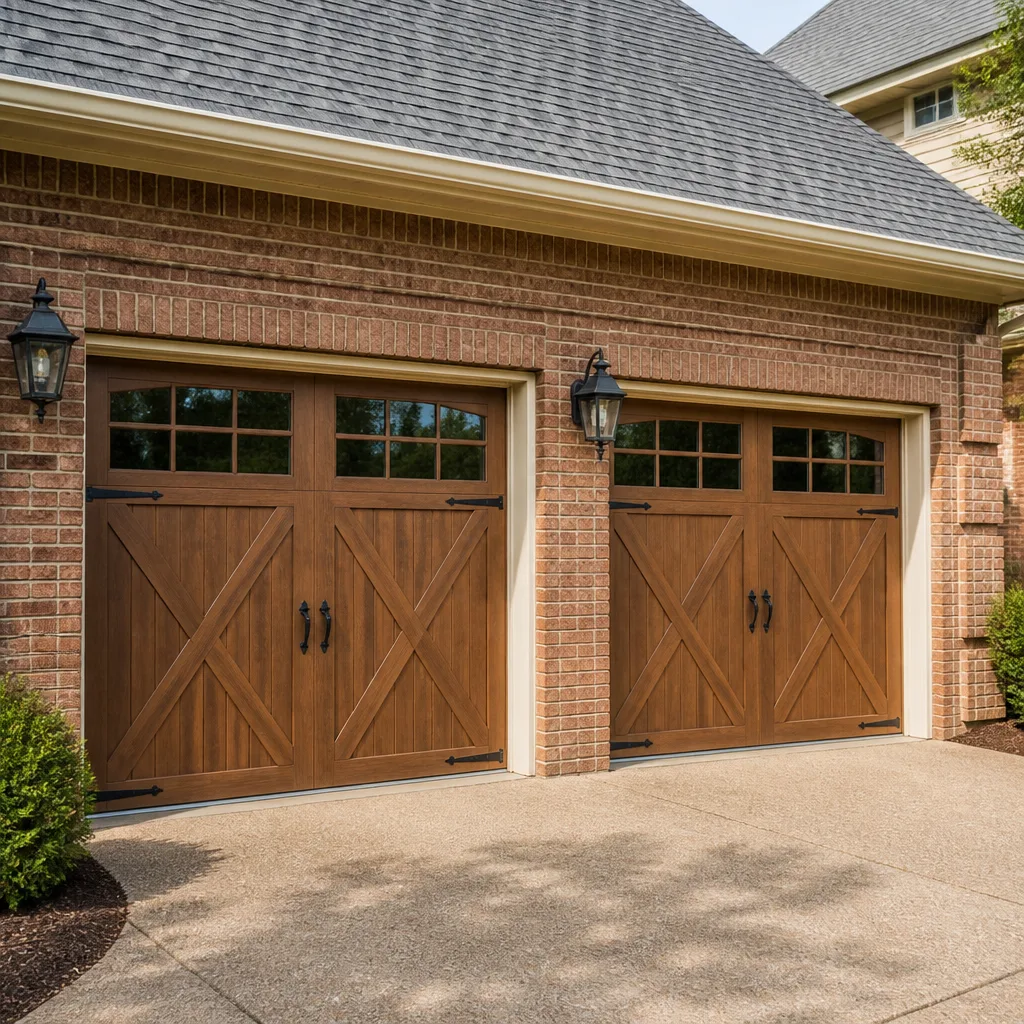 Carriage house
 Modern flush
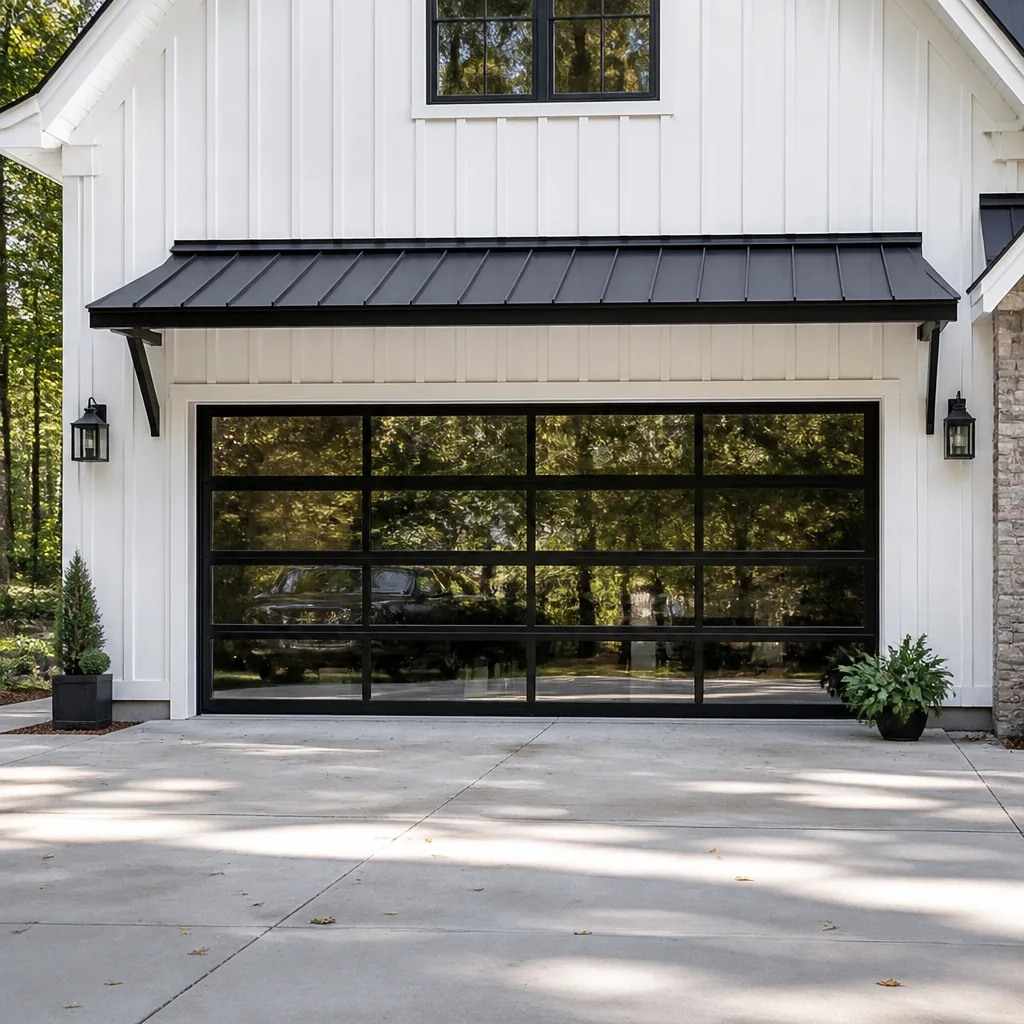 Full-view glass
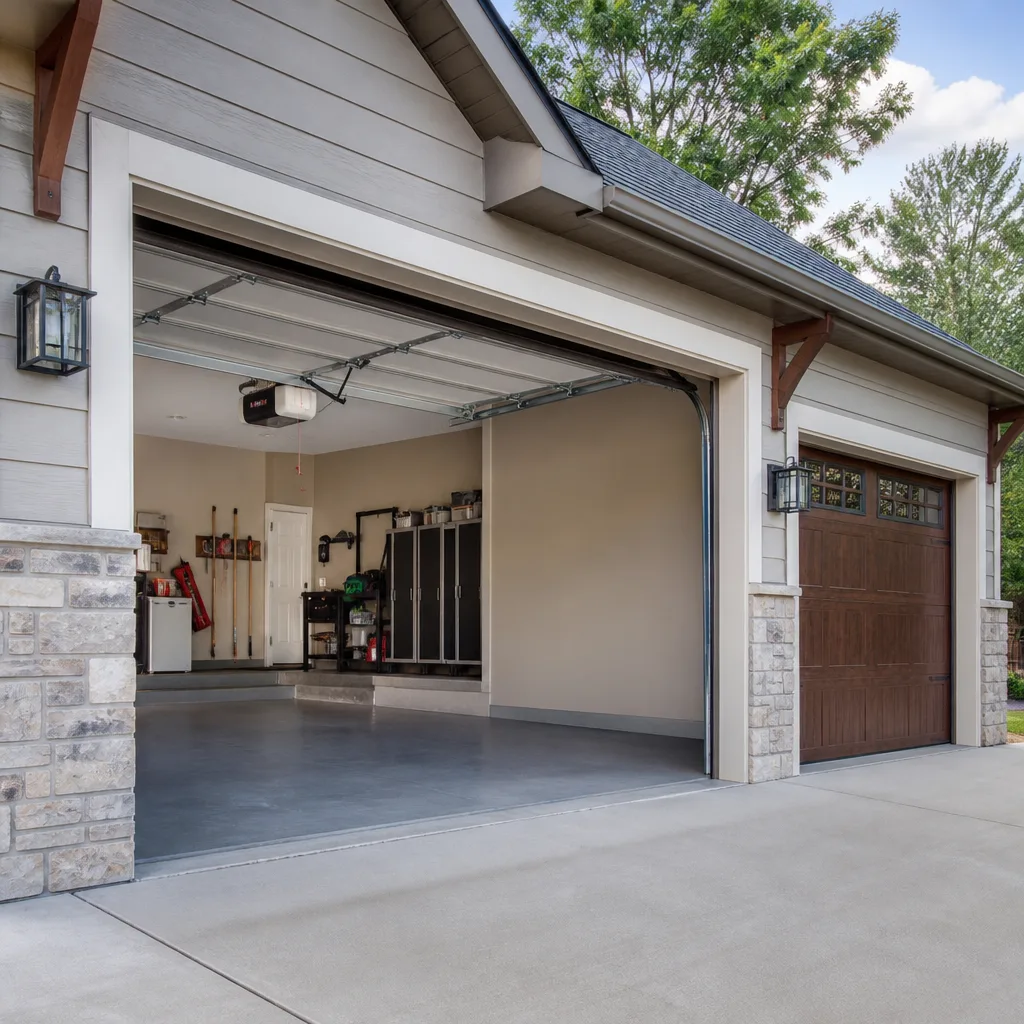 LiftMaster openers
 Chamberlain openers
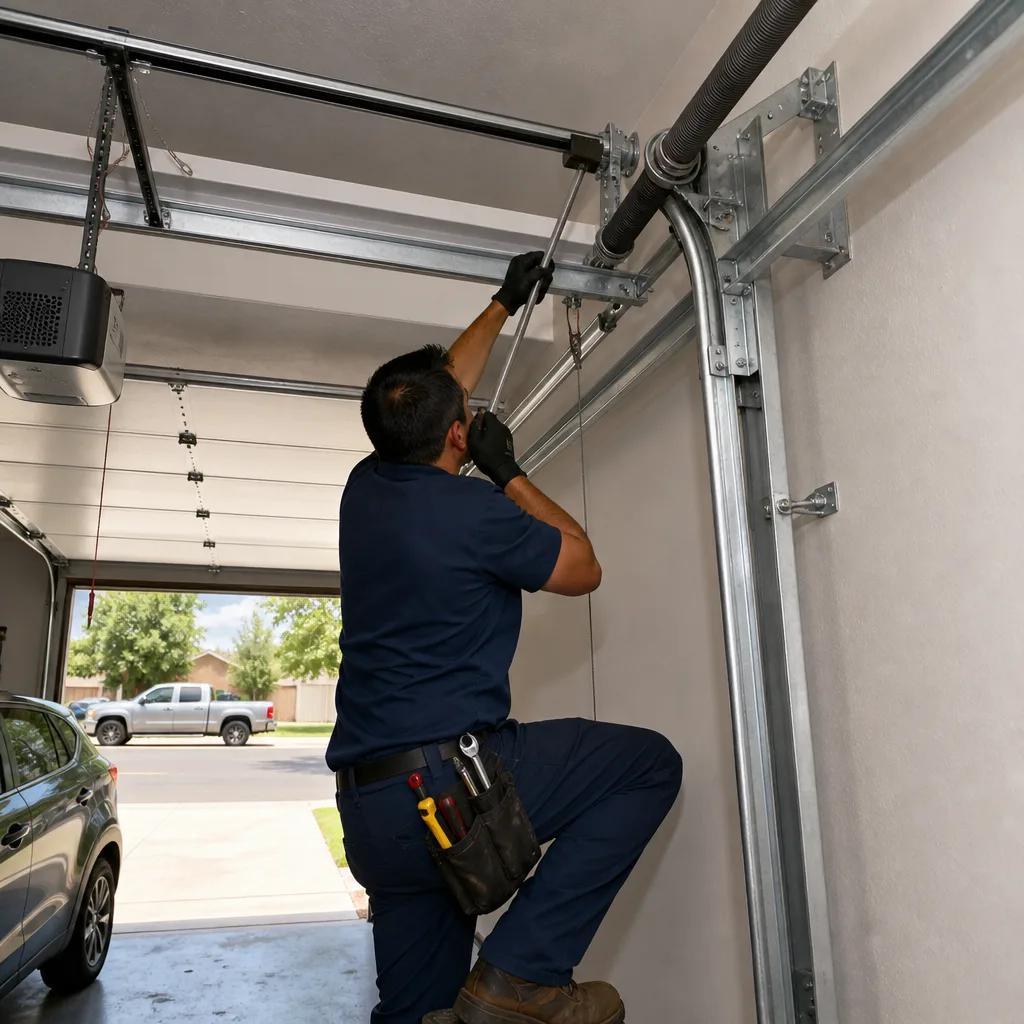
Full 25-point door and opener safety check with every visit - springs, cables, rollers, tracks, and your LiftMaster or Chamberlain opener included
You get a price before we start. It does not change when the truck arrives.
Get your free estimateGarage Door Warning Signs: A Brushy Creek Homeowner’s Reference Guide
A door that hesitates for half a second before moving is not ‘just old’ – it is a garage door describing a specific mechanical condition in the only language it has. Most garage door failures in Brushy Creek do not happen suddenly. They announce themselves through identifiable symptoms weeks or months before anything breaks, and knowing how to read those signals determines whether you spend $200 on maintenance or $800 on an emergency call. This guide walks you through the sounds, movements, and visual cues that your garage door uses to communicate, what each one means mechanically, and when to act before a nuisance becomes a failure. We wrote it because we work on these doors every day in Brushy Creek, and we’d rather see you fix a $40 cable issue than replace a $400 opener.
Styles & brands we work with
Quick Answer
The most common garage door warning signs in Brushy Creek are grinding or scraping sounds during operation, a door that sags to one side, slow or jerky movement, a reversal without an obvious obstruction, and opener behavior changes like reduced remote range or a lagging wall button. Each of these points to a specific component – springs, cables, rollers, tracks, or the opener’s circuit board – and none of them resolve on their own. If you notice any one of these, the next step is a professional inspection rather than continued use, because the second symptom is usually the one that strands your car in the driveway.
Table of Contents
- Sound-Based Diagnostics: What Your Garage Door Is Telling You
- Movement-Based Warning Signs: Sagging, Reversal, and Slow Descent
- Opener Behavior Flags: Remote Range, Light Delays, and Wall Button Lag
- Visual Cues Specific to Brushy Creek: Rust Patterns and What They Reveal
- The Compounding Risk Timeline: Why 30 – 90 Days Matters
- A Brushy Creek Seasonal Inspection Checklist
- Common Mistakes to Avoid
- When to Call a Professional
- Frequently Asked Questions
- The Bottom Line
Sound-Based Diagnostics: What Your Garage Door Is Telling You
Garage doors are loud machines by nature, but within the noise there are distinct patterns that point to specific problems. In our work across Brushy Creek – from Sendero Springs to Cat Hollow – we hear the same four diagnostic sounds repeatedly, and each one maps to a different mechanical issue. Learning to distinguish them is the single most useful thing a homeowner can do before calling for service, because it allows us to bring the right parts on the first trip.
Grinding: Metal-on-Metal Contact
A grinding sound, especially during the middle portion of travel, usually means the rollers are wearing against the track without proper lubrication or with a damaged bearing. Rollers are consumable parts – most are rated for 10,000 to 15,000 open-and-close cycles, which a twice-daily-use door reaches in roughly 7 to 10 years. On LiftMaster and Chamberlain systems we often see nylon rollers that have lost their outer sleeve, exposing the steel core. The fix is straightforward and inexpensive if caught early; left alone, the roller seizes and gouges the track, and the repair cost triples.
Scraping: Track or Panel Misalignment
Scraping is slower and more continuous than grinding, and it usually comes from one of two places: the door edge dragging against the track frame, or the bottom panel skipping over something embedded in the floor line. In Brushy Creek, we see scraping frequently on homes with east-facing garages where afternoon sun has warmed the door unevenly and caused a slight bow. A misaligned track is also a common culprit after a car bumper taps the lower panel in a tight two-car garage. Scraping is an early-stage warning – it rarely causes immediate failure but indicates a geometry problem that will worsen with every cycle.
Popping: Spring and Cable Tension Events
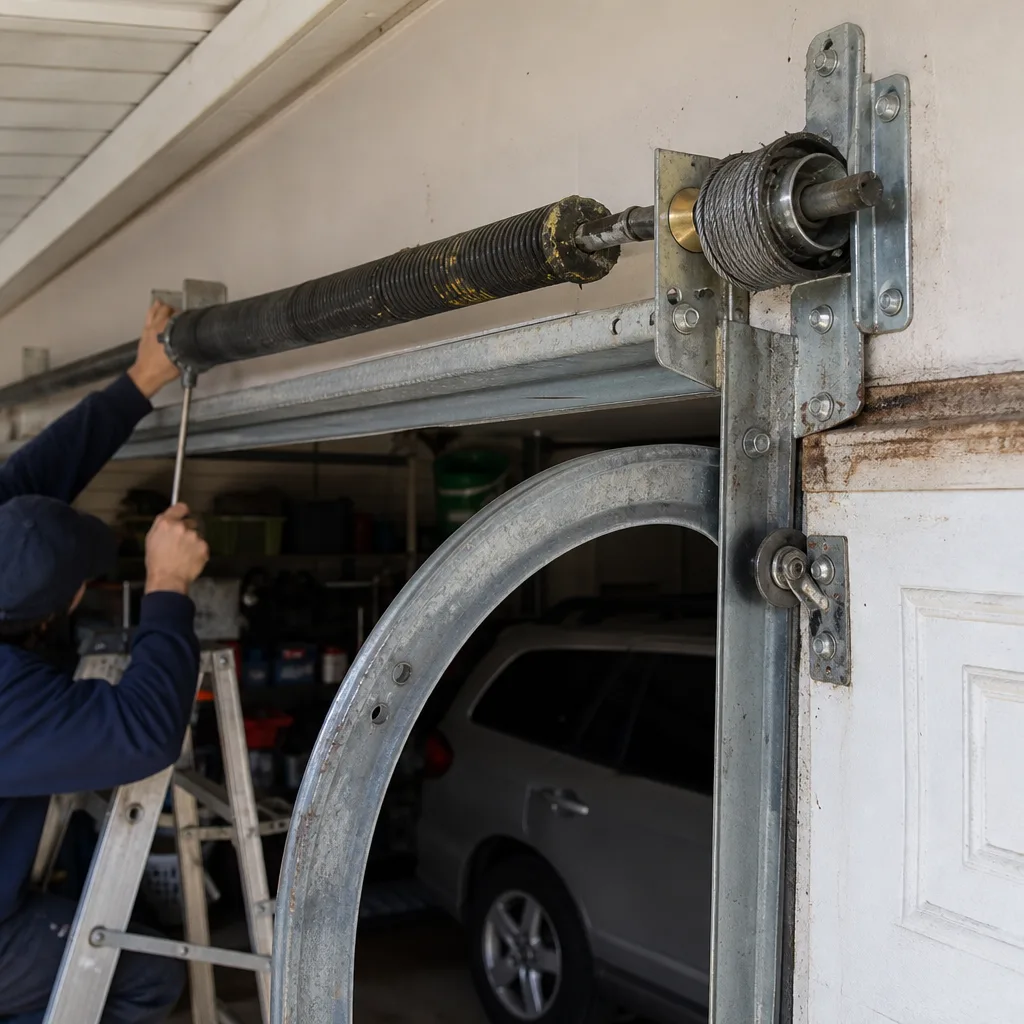
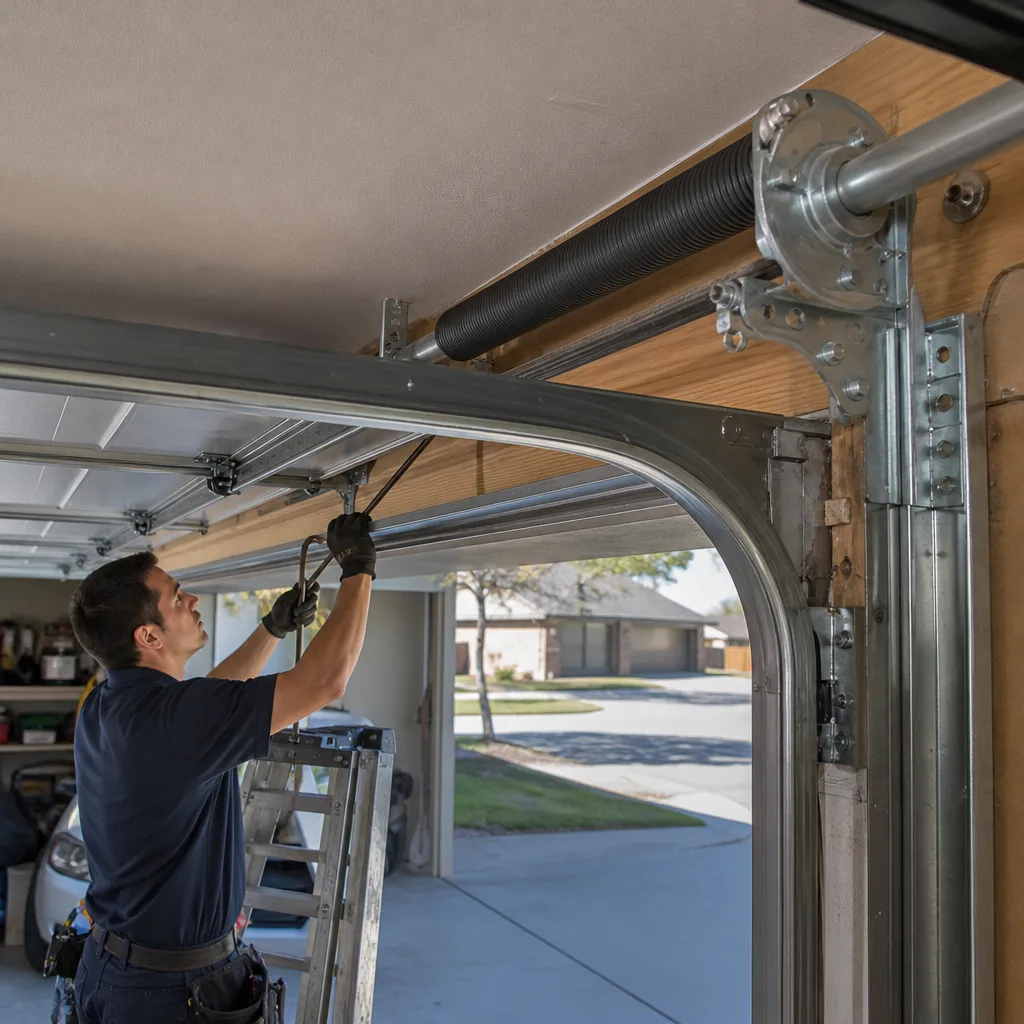
A single sharp pop, often followed by a bang, almost always means a torsion spring has snapped. This is the sound of stored kinetic energy releasing all at once, and it is loud enough to be heard inside the house. Popping can also come from a cable that has slipped a groove on the drum. Both events are dangerous if they happen while you are standing nearby – torsion springs on a standard 16×7 Brushy Creek door hold enough tension to lift roughly 150 to 250 pounds. If you hear a pop, do not operate the door again. Call for spring replacement. This is one area where DIY absolutely ends; the spring remains under partial tension even when broken.
Rhythmic Clicking: Opener Gear or Limit Switch
A steady tick-tick-tick that repeats with each rotation of the motor is usually the opener’s drive gear losing teeth, particularly on chain-drive Genie models from the 2010s. It can also be a limit switch or a trolley carriage catching on a worn rail. Clicking that is intermittent and accompanied by a light flicker points to a relay on the logic board instead. None of these sounds are urgent in the way a spring pop is, but they are progressive – every cycle removes more gear material until the opener simply spins without moving the door at all.
If you can describe the sound accurately over the phone, our Garage Door Repair in Brushy Creek team can usually identify the likely cause before we arrive, which means we stock the truck correctly and you pay for one trip, not two.
Movement-Based Warning Signs: Sagging, Reversal, and Slow Descent
Sound is only one dimension of garage door communication. The way a door moves – or doesn’t move – during its cycle reveals as much about its mechanical condition as anything you’ll hear. These movement flags are often subtler than sound-based ones, but they are just as predictable in what they indicate.
Sagging on One Side
When a sectional door hangs lower on the left or right side when fully open, the lift cables are unequal in tension. This happens when one cable stretches slightly or when one drum slips a partial rotation on the torsion tube. Sagging of even half an inch creates uneven load on the spring, which then fatigues faster. It also forces the bottom seal to contact the floor unevenly, which lets in Brushy Creek’s summer dust and the occasional scorpion looking for cool concrete.
A visual check takes five seconds: stand inside the garage with the door open and look at the bottom edge against the door frame. If it is not parallel, you have a cable or drum problem. This is not a wait-and-see condition. Cables under asymmetric load are exactly the components that snap without warning.
Reversal Without an Obstacle
Every modern opener is built to reverse when it meets resistance, as a safety feature. But when a door reverses at the same point in its travel with nothing in the way, that is not safety – it is diagnosis. The most common cause is an obstruction sensor that has drifted out of alignment, but in Brushy Creek’s summer heat we also see sensors failing from solder-joint degradation on the circuit board, a known weak point on older Chamberlain wall units. A third possibility is a door so heavy from spring fatigue that the opener’s force setting is tripping as though it had hit an object.
The diagnostic sequence is: first, clean the sensor lenses and confirm alignment with the small LED indicators. Second, check whether the door balances manually by pulling the emergency release and lifting it to waist height – it should stay put, not fall or rise. A door that falls is running on a tired spring, and no amount of force-setting adjustment will fix the underlying weight problem.
Slow Descent
A door that closes noticeably slower than it used to, especially in the bottom third of travel, is a red flag for spring fatigue. Torsion springs are rated for a specific cycle life, usually 10,000 cycles for standard springs and up to 30,000 for upgraded high-cycle options. At 4 cycles per day, a 10,000-cycle spring lasts about 7 years. Brushy Creek’s rapid temperature swings – 30-degree mornings in winter, 100-degree afternoons in summer – accelerate spring metal fatigue through repeated thermal expansion and contraction.
Slow descent means the spring is no longer offsetting the door’s weight effectively, which transfers that load to the opener motor. Running an opener against a weak spring is like driving a car with one cylinder firing: it works, until it doesn’t. And when the motor burns out, that’s a $250 to $450 repair bill instead of a $180 to $340 spring replacement.
Opener Behavior Flags: Remote Range, Light Delays, and Wall Button Lag
The opener is the most electronic component on your garage door system, and its failures show up differently than mechanical wear. These behavior changes are easy to dismiss as quirks, but they are usually the first chapter of a longer failure story. This is also where our Garage Door Opener Repair in Brushy Creek capability matters – many companies work on doors only, and will not touch the opener. Opener repair is half of the modern garage picture, especially with today’s smart-capable units.
Remote Range Reduction
If you now have to be within 10 feet of the garage for the remote to work when it used to work from the end of the driveway, the receiver is degrading. This has two common causes. The first is a failing capacitor in the opener’s receiver circuit, which reduces sensitivity over time. The second is interference – newly installed LED bulbs in the opener or nearby garage fixtures emit electromagnetic noise in the same frequency band as many remotes, particularly on older LiftMaster models that operate on 315 MHz.
A quick test: remove the LED bulb from the opener and test the remote range again. If range returns to normal, replace the bulb with a garage-door-rated LED or a traditional incandescent. If range remains short, the receiver is the issue, and the remedy is typically a replacement logic board or a new opener depending on age and brand availability.
Light Delay After Door Movement
Many openers have a built-in delay on turning the garage light off after activation, but a delay before the light turns on – or a light that flickers before stabilizing – has a different meaning. This pattern usually points to a cold solder joint on the light relay, a known issue on Genie units produced between 2012 and 2017. The relay works when warm but hesitates when cold, which means the symptom is more noticeable in Brushy Creek’s winter mornings.
The light delay itself is not damaging, but it is an early-warning indicator that the logic board is developing an intermittent connection. The same board controls motor activation, so a light relay that hesitates today can be a door that refuses to move next month.
Wall Button Lag
A wall console that requires two or three presses before the door responds – or that responds after a visible half-second delay – is different from a slow remote response. The wall button connects by low-voltage wire directly to the opener, so there is no radio signal involved. Lag here points to one of three things: a failing capacitor on the logic board, worn contacts in the wall console itself, or a poor splice in the low-voltage wiring where it passes through the wall.
Raynor and LiftMaster openers manufactured in the last decade use a two-wire serial protocol for the wall console, and we find that a damaged wire or a staple that has bitten into the jacket is the cause in about a third of Brushy Creek lag calls. It is an inexpensive diagnosis, but the fix requires understanding the specific wiring protocol of your opener brand – which is exactly the situation where brand-specific experience pays off. We work on the brand already in your garage, and we carry the right wall console replacements for the major lines.
Visual Cues Specific to Brushy Creek: Rust Patterns and What They Reveal
Brushy Creek half-sits on limestone shelf and half on clay loam, and the garage is usually the least climate-controlled room in the house. That creates a moisture profile that shows up in predictable places on a garage door. Reading those visual cues tells you what is happening before it becomes a mechanical failure.
Rust on the Bottom Panel Corners
Rust concentrated on the bottom panel’s lower corners – and not spread across the panel face – indicates water wicking up from the floor, not rain exposure. This pattern is common in Brushy Creek homes where the garage floor slab sits slightly below grade or where the driveway slope directs water toward the door. The fix is a floor seal or a drainage correction, but the damage to the panel is progressive. Steel panels rust through at the corners first, and once through, the panel loses structural integrity at the hinge points. That corner carries the weight of every panel above it.
White Residue on Track Hardware
A chalky white or gray deposit on galvanized track brackets and bolts is zinc oxidation, and it means the protective galvanic coating is being consumed. This is accelerated in Brushy Creek’s summer humidity, particularly in garages without climate control and on the east side of town where morning sun hits the door before it has fully cooled overnight. The deposit itself is cosmetic, but its presence signals that the hardware underneath is approaching the end of its protective life. Galvanized bolts that rust after the coating wears can seize, which means the next time you need to adjust the track, a simple bolt turns into a drilling job.
Cable Fraying at the Bottom Fixture
Look at the lift cables where they attach to the bottom fixture on each side of the door. If you see individual wire strands separating from the bundle – like bristles on a brush – that cable is in the final stage of its life. This is the single most productive visual inspection you can do on a garage door, and it takes 30 seconds. In Brushy Creek, cable fraying is more common on homes with east- or west-facing doors, where the bottom panel swells and contracts more dramatically across the daily temperature swing, working the cable against its anchor point.
A frayed cable can hold for weeks or fail on the next cycle. When it fails, the door drops on that side and the panel rack can bend the track. What would have been an $80 to $120 cable replacement becomes a $300 to $600 track and panel repair. For this reason, cable inspection is the first thing we do on every service call, and it should be the first thing you look at during a monthly check.
The Compounding Risk Timeline: Why 30 – 90 Days Matters
Garage door failures are rarely isolated. The doors are balanced systems, which means a problem in one component transfers load to the ones around it, and that transfer happens on a timeline measured in weeks, not years. Understanding this cascade is the difference between a $200 repair and an $800 emergency call.
Days 1 – 30: The Primary Symptom
The failure begins with a single component reaching the end of its service life: a spring losing tension, a roller bearing seizing, a cable strand separating. At this stage, the symptom is usually subtle – a slightly slower door, a new sound, a sag that most homeowners don’t notice. The door still works, so the system has not yet begun to cannibalize itself.
Days 30 – 60: Load Transfer Begins
By the second month, the failing component has stopped doing its share of the work, and the excess load has shifted. The most common transfer path is from a weakened torsion spring to the opener motor, which now works against 40 to 60 pounds of additional effective weight on every cycle. The motor’s internal gears and capacitor are not rated for that sustained overload, and wear accelerates measurably. Brushy Creek homeowners who leave a weak spring in place through a summer are effectively trading a $250 spring replacement for a $450 opener repair – and they still need the spring.
Days 60 – 90: Secondary Failure
By the end of the third month, the secondary component fails. The opener gear strips. The roller seizes and the track bends. The cable snaps under asymmetric load and the door racks, bending a panel in the process. Now the repair bill includes the original component, the secondary damage, and often emergency labor. The most expensive phrase in garage door repair is “it was making that sound for a while, but it still worked.”
One phone call at day 15 would have interrupted the entire cascade. That is the economic argument for early inspection, and it is the one we care about most at Goldleaf Garage Door Repair home – because our job is diagnosing the first failure, not the third one.
A Brushy Creek Seasonal Inspection Checklist
You do not need to be mechanical to run through a basic inspection, and you do not need tools beyond your eyes and ears. We recommend doing this twice a year in Brushy Creek – once in March before the summer heat arrives, and once in October before the first real cold snap. Fifteen minutes, two times a year, is all it takes.
- Open the door fully and look at the bottom edge. It should be parallel to the floor. If one side is higher or lower by more than half an inch, you have a cable or drum issue.
- Inspect both lift cables where they meet the bottom fixture. Look for individual wire strands separating from the bundle. Any fraying means replacement is due now, not later.
- Disengage the opener with the emergency release and lift the door to waist height. A properly balanced door stays put when you let go. If it falls, the spring is weakened. If it rises, the spring is over-tensioned (rare but possible after a spring replacement).
- Run the door through a full cycle while standing inside the garage. Listen for grinding, scraping, popping, or clicking that was not there six months ago. Watch for jerky movement or a pause at any point in the travel.
- Check the opener force sensitivity. Place a 2×4 flat on the floor under the door’s path and close the door. It should reverse on contact. Test twice a year – this is a safety system, not an optional feature.
- Inspect the bottom weather seal. Run your hand along the seal with the door closed. Brushy Creek’s summer sun cooks these seals in a single season; a cracked or brittle seal lets in dust, water, and the occasional snake seeking cooler floor concrete.
- Test the auto-reverse sensors. With the door closing, wave your hand between the sensor eyes at ankle height. The door should reverse immediately. If the sensor LEDs are amber or dark, clean the lenses and re-align.
- Spray-lubricate the rollers, hinges, and springs with a garage-door-specific silicone or lithium spray. Do this twice a year in Brushy Creek; dust from the surrounding clay soil works into the bearings and accelerates wear. Avoid WD-40 – it displaces moisture but does not lubricate load-bearing metal parts.
Common Mistakes to Avoid
- Ignoring a new sound because “the door still works.” Every garage door failure we have seen in Brushy Creek was preceded by a warning sound that was ignored. The sound is the cheapest diagnostic tool you will ever own.
- Lubricating a noisy door as a repair. Lubricant quietens a dry roller but does nothing for a failing bearing or a worn gear. If the sound returns within a week of lubricating, the part has failed and lubrication just masked the symptom temporarily.
- Adjusting the opener’s force setting to “fix” a slow or reversing door. This is the mechanical equivalent of covering a check-engine light. Increased force on a door with a weakened spring transfers even more load to the opener and shortens its life faster.
- Replacing one spring when the other is the same age. Torsion springs are installed in pairs and wear at roughly the same rate. If one has snapped and the other is original, the second is days or weeks behind. Replace both and reset the cycle clock to zero.
- Using generic hardware from a big-box store on a brand-specific door. A Raynor door with Amarr-spec rollers or vice versa will not track correctly. The door’s geometry is designed for specific roller profiles. We work on the brand already in your garage because matching parts to the system matters.
- Waiting until the door fails to look up a repair company. The homeowners who get the best outcome in Brushy Creek are the ones who already know who they will call when the inspection checklist turns something up – not the ones scrolling at 7 AM on a workday with a dead door and a car trapped inside.
When to Call a Professional
Some garage door issues are within a homeowner’s reach – lubrication, sensor alignment, weather seal replacement. Others are not, and distinguishing the two is itself a safety skill. Call a professional when you hear a spring pop, when you see cable fraying, when the door sags or hangs unevenly, when the opener makes any sound that resembles grinding metal, or when a door reverses without an obvious cause. Torsion springs, lift cables, and the opener gear train all store or transfer enough energy to cause serious injury if handled incorrectly. These are not DIY components, and in Brushy Creek’s temperature swings, they fatigue faster than most homeowners expect.
Goldleaf Garage Door Repair offers free estimates in Brushy Creek – call (855) 412-0407. We diagnose the full door system, from panel to opener, and we tell you what needs fixing now, what can wait, and what the “fix it later” path will cost. Your door, diagnosed correctly the first time.
Frequently Asked Questions
The most common garage door problem in Brushy Creek is spring fatigue caused by the region’s wide daily temperature swings, which stress the metal through repeated thermal expansion and contraction, and the fix is a spring replacement in the $180 to $340 range. Call (855) 412-0407 for an exact quote – estimates are free.
A spring about to break typically shows a visible gap in the coil when the door is closed, a door that feels heavy when you lift it manually, or a door that opens slower than it used to – all signs that the spring has lost tension. If you see any of these, stop using the door and call us at (855) 412-0407 for an inspection before it fails mid-cycle.
A garage door reverses for no reason because the safety sensors are misaligned or dirty, the opener’s force setting is tripping on a weakened spring, or the sensor’s circuit board is failing – and the fix is usually quick once the cause is identified. Call (855) 412-0407 and we’ll diagnose it over the phone before we come out.
No, replacing a garage door cable yourself is dangerous because the cable is under spring tension, and an improper release can cause the spring to spin the winding bar with enough force to cause serious injury – this is a job for a trained professional with the right winding tools. We recommend scheduling a cable replacement with a Garage Door Repair in Brushy Creek specialist rather than attempting it DIY.
Standard 10,000-cycle torsion springs last 7 to 10 years in Brushy Creek when used for 3 to 4 cycles daily, while high-cycle 30,000-cycle springs can last 20 years or more, and local temperature swings may reduce that slightly. If your springs are past the 7-year mark, an inspection is worth the time.
A flickering or delayed opener light usually means the logic board relay is developing a cold solder joint, a condition that gets worse in cold weather and can eventually prevent the door from operating at all. We repair openers from LiftMaster, Chamberlain, Genie, and Raynor – call (855) 412-0407 to schedule a Garage Door Opener Repair in Brushy Creek diagnosis.
The Bottom Line
Your garage door is the largest moving object in your home, and it cycles more times per year than most people realize – roughly 1,500 cycles annually for a twice-daily use door. Every one of those cycles is a data point, expressed as sound, movement, or wear patterns that are legible if you know what to look for. The checklist in this guide takes 15 minutes, twice a year, and it catches the failures that cost hundreds of dollars more when they are ignored for 90 days. If you find something, or if you would rather have a professional do the looking, Goldleaf Garage Door Repair offers free estimates in Brushy Creek – call (855) 412-0407. One call, full system, from the panel to the opener. We work on the brand already in your garage, and when we upgrade a door, we handle the Garage Door Installation in Brushy Creek work from the first measurement to the final balance check.
Written by the team at Goldleaf Garage Door Repair, serving Brushy Creek since 2012.
See the difference
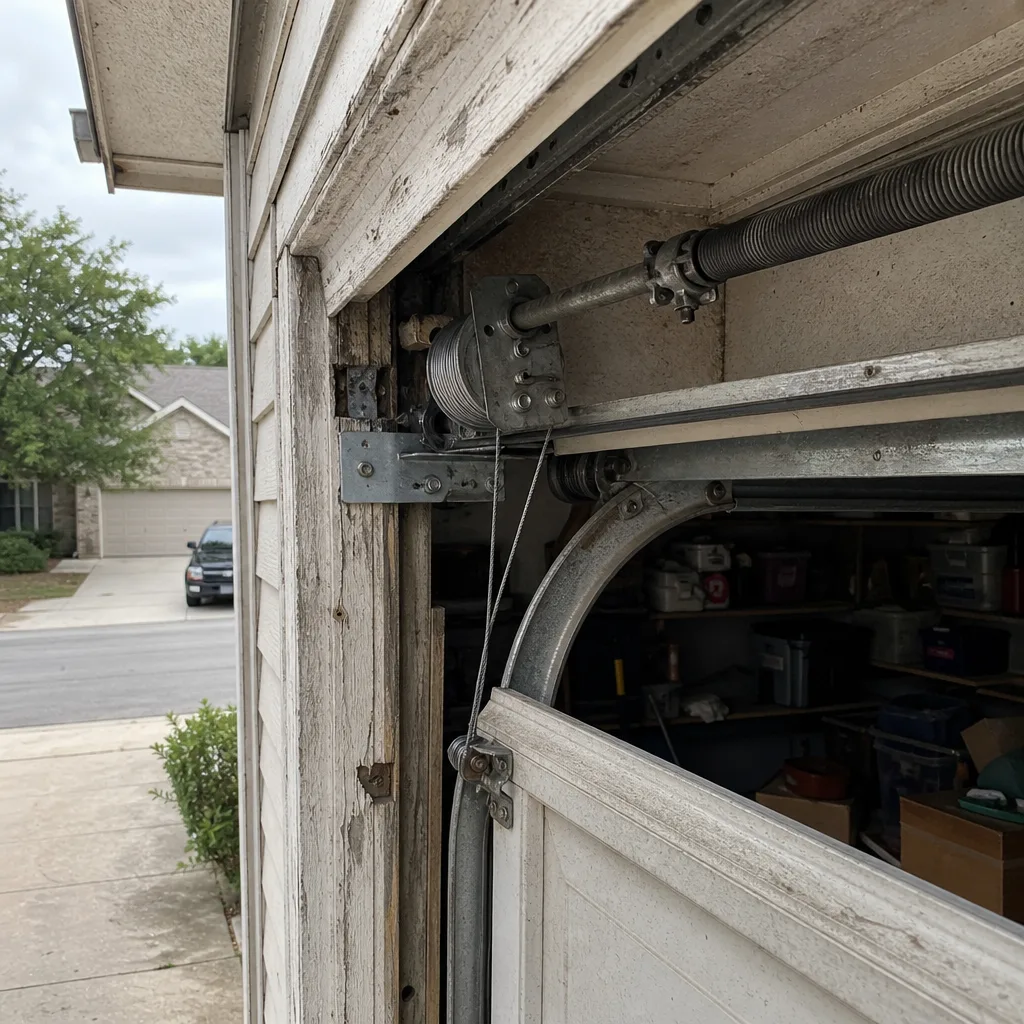 Before
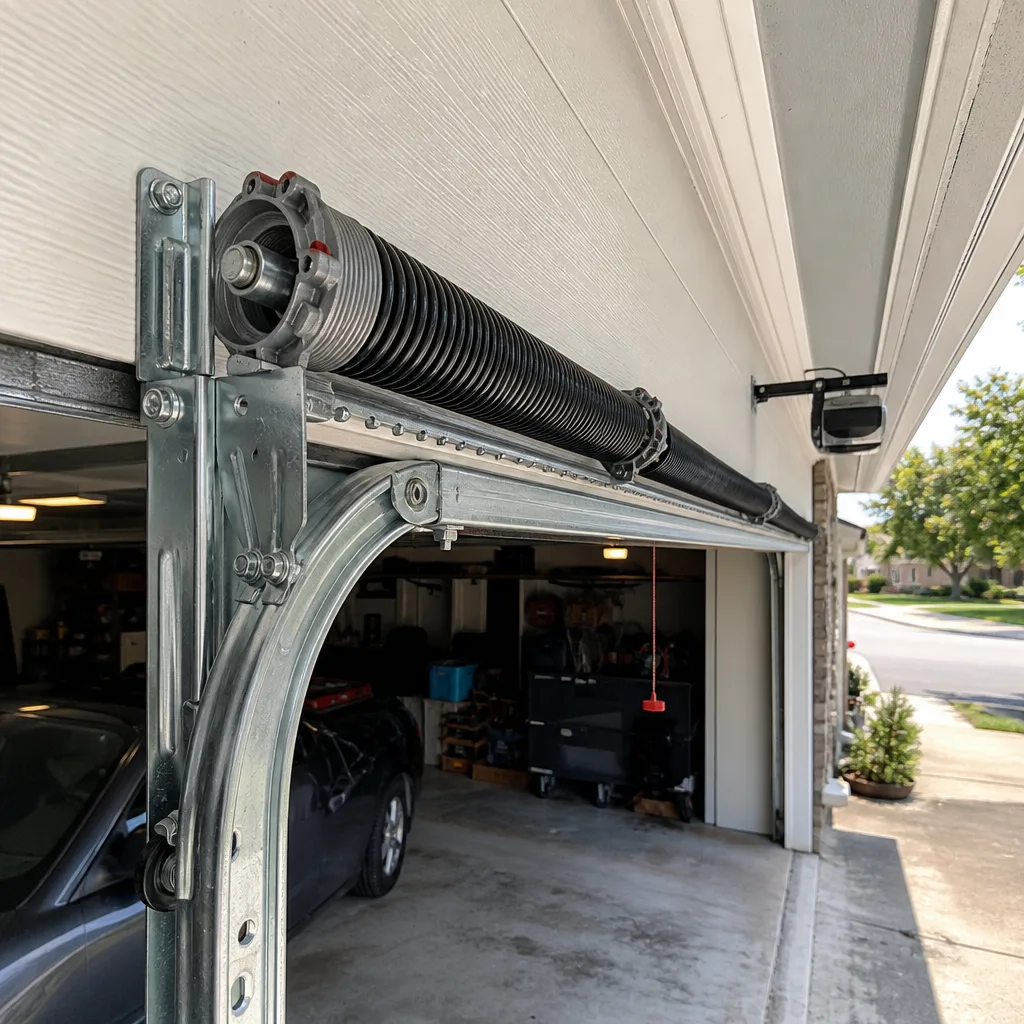 After
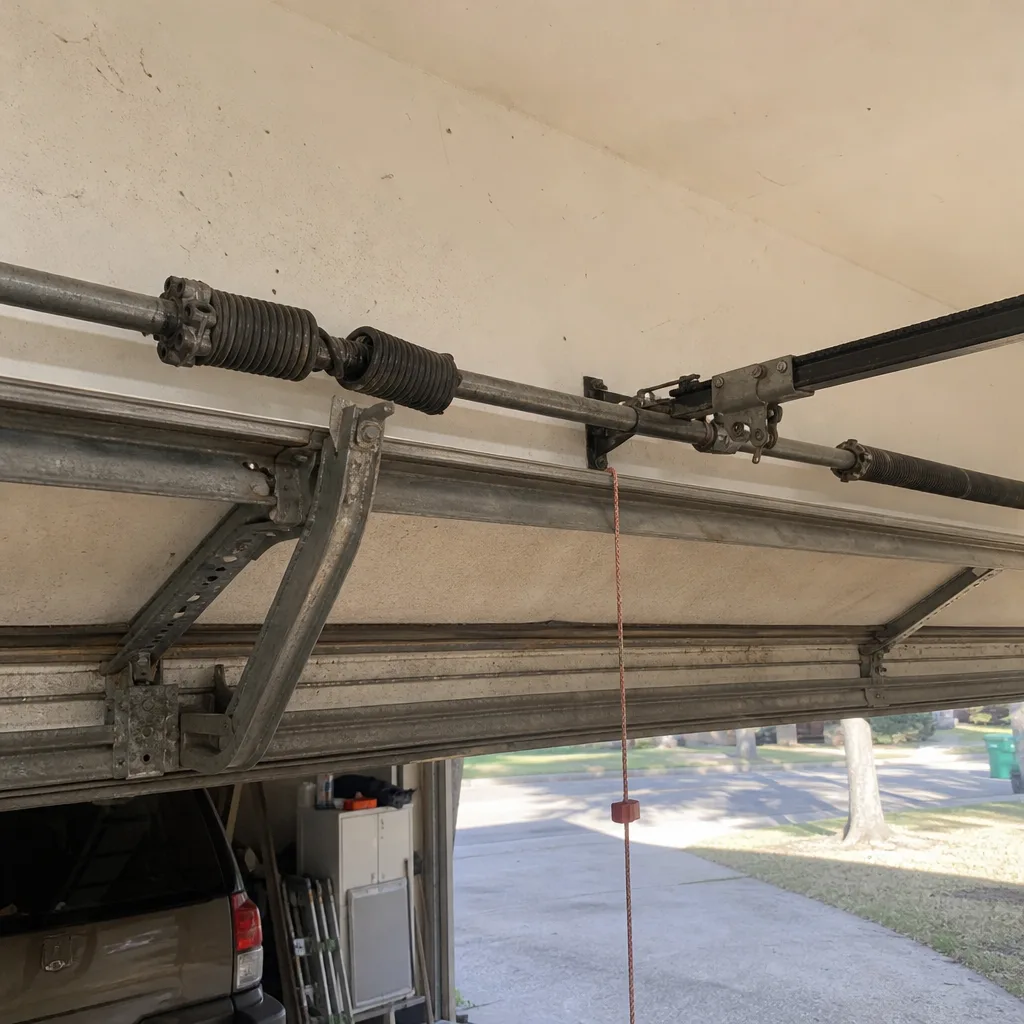 Before
 After
 Before
 After